Posted on

The Paradox of Poverty : a Book Review

The Paradox of Poverty: Why are the poor in spirit “Blessed”:  

Quote from the publisher: ““Blessed are the poor in spirit,” Jesus said, “for theirs is the kingdom of heaven.” And we smile, nod, and think: “Lovely thought.” But if we’re paying attention, it’s a shocking, almost offensive thought. The grieving, the broken hearted, the marginalized, the stigmatized―all blessed, all happy? In The Paradox of Poverty, Susan Pitchford examines the ways in which followers of Christ have understood “poverty of spirit,” and the traditions that have formed around their attempts to follow Jesus on this radical path. 

  Over the centuries, those who have heard Jesus have learned the truth of his promise that we will find the greatest happiness, our deepest fulfilment―the kingdom of heaven, in fact, our blessedness and our belovedness―in the things that seem to impoverish our souls. The Paradox of Poverty looks at some of the wisdom traditions that have formed this understanding: the Scriptures, the desert mothers and fathers, the Franciscans, liberation theologians, prosperity gospel preachers, the 12-Step movement, and more. At both individual and collective levels, these traditions help us understand that varied kinds of poverty can become a “blessing” by bringing us to know our belovedness in God.” 

My interest mounted as I discovered the breadth and depth to which the writer had researched the “Paradox of Poverty of Spirit”. Susan Pritchard has produced a wealth of information and thought-provoking pages. This is a book which I would want to read again and keep for future reference. The writer shows how we become distracted from the meaning Christ set out for us in the Beatitudes. I commend this book for its insight and richness. 

Text © Michael Butler.  A Julian Meetings member. 

Image © Liturgical Press.

THE PARADOX OF POVERTY

Susan Pritchard

Published by Liturgical Press, 2025, paperback/e-book/ Kindle. 

ISBN  9798400802102 

Also available from Amazon

We invite readers to suggest further books for review, and are looking for further member reviewers. Contact us on https://thejulianmeetings.net/contact-for-book-reviews/

We invite readers to contribute to the Blog. Contact us on https://thejulianmeetings.net/contact-for-blog/

The Julian Meetings support in-person and online groups around the country. We make teaching on Contemplative Prayer and Meditation as easily and widely accessible as we can. Articles and reviews express the views only of their respective authors. 

Posted on

Job – the Problem of Suffering and the Problem of God.

tree segments showing damage in the rings Copyright p tyers

Janet has written about how reflecting on the book of Job helped her come to terms with grief. We invite our readers to write reflections on topics that join prayer and life. We would also like to hear about your groups. We hope to publish the next blog at Easter. Philip Tyers, Editor

The photo shows suffering endured by a tree over many years,  invisible to outsiders.  

Janet writes:

Many years ago, as a family, we suffered a grievous loss. It was a body blow of the most radical kind, a happening which severely questions belief. I do not think that I asked, “Why did this happen to me?” Suffering happens to most if not all people at some time in their lives. It caused me to ask questions about the roots of suffering.  

Fortunately, I came across a book, which provided some answers. Harold Kushner was a rabbi. He had suffered the death of a son. His son was born with an incurable and rare disease. The son died when he was fourteen. Kushner, inevitably, had mused upon this death, had asked questions of God. It was his chapter on the book of Job that helped me most. Kushner made three statements: 

  1. God is all- powerful and causes everything that happens in this world. Nothing happens without him willing it. 
  1. God is just and fair, and stands for people getting what they deserve, so that the good prosper and the wicked perish. 
  1. Job is a good person. 

He postulated that we cannot make sense of all these statements. We must sacrifice one in order to believe in the other two. His answer, which has become mine, is that God is not all-powerful. There are things which God cannot control. When disasters of any kind occur, we should not regard them as “acts of God” but turn to God to help us to live through them. God does this in many profound ways. That is a simplistic and inadequate comment on this wise book, but it helped me, as it has helped others for many years.  

This returned me to the Book of Job itself. It has been called the “most wonderful poem of any age and language; our first, oldest statement of the never ending problem – man’s destiny and God’s way with him in this world” (Thomas Carlyle). The saga of Job’s suffering, the arguments of his friends and the magisterial arguments of God need to be read repeatedly.  

Recently, I came across Andy Roland’s ‘The Book of Job.’ The author has abbreviated the text and arranged it for private reading, for group study and for public performance. The concluding chapter discusses the meaning of Job as the author finds it. He suggests, as does Kushner, that it not only discusses the problem of suffering but also the problem of God.  

A reading of all three books requires deep and searching thought and helps us to  

  • “Forgive the world for not being perfect,  
  • Forgive God for not making a perfect world,  
  • Reach out to the people around us  
  • Go on living despite it all” (Kushner). 

REFERENCES: 

Harold Kushner: When Bad Things Happen to Good People. Pan Books; 1st published 1981, and again with new introduction 2002. ISBN 9780330490559 Also available on Kindle.

Author unknown: The Book of Job – The Bible. 

Andy Roland: The Book of Job. Filament publishing. 2019 ISBN 9781913192501  Also available on Kindle.

Photo © Philip Tyers 2026

 Text ©Janet Robinson 2026. 

Editor: Philip Tyers

Posted on

Review of A Pilgrimage of the heart: Walter Hilton and the English Mystical Tradition

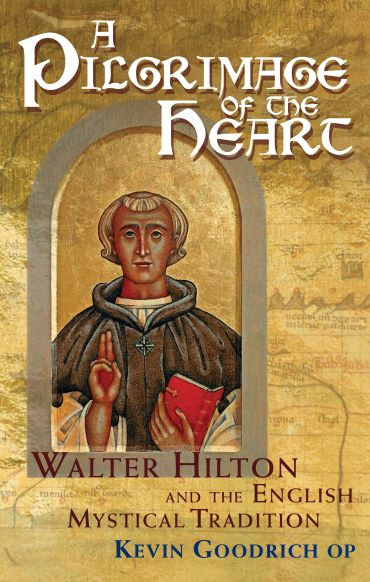
Book cover.

Kevin Goodrich: A Pilgrimage of the heart: Walter Hilton and the English Mystical Tradition.

Darton, Longman an Todd. ISBN978-1-915412-13-3 published 2024 Available in Kindle and Hardcover

Review by Janet Robinson

This is an engaging and attractively produced book. It tells of the life and story of Walter Hilton of Thurgarton entwined with other mystics of the fourteenth century: Richard Rolle, the author of the Cloud of Unknowing, Julian of Norwich and Margery Kempe. The author has provided a useful background of the turbulent history of the times. He suggests that the book can be used as a virtual pilgrimage, making one’s way towards a deeper understanding of the spiritual road. Besides the narrative the author includes kindly but searching, practical questions and exercises for the reader. He laces the text with interesting narrative of his visits to the places where the mystics lived and adds helpful illustrations.

This makes altogether a very useful adjunct to one’s time of stillness. I have read the book through in order to review it but I believe that when I read it again, trying to answer some of the questions and exercises, it will deepen my contemplative prayer and expand my knowledge of the men and women whose stories he tells. I found it helpful where there is a discussion of the contemplative, the active and the “mixed” life of the spirit – something that Walter Hilton clarifies. Indeed I have just been to our local secondhand bookshop and found a copy of The Ladder of Perfection by Hilton!

Two small quibbles: I cannot feel entirely sure that Margery Kempe was a true contemplative. Certainly a pilgrim, a character larger than life, extremely active and noisy. The author himself calls her the “weeping mystic.” However, the story of her life and spiritual endeavour is appealing. My other quibble is a slight lack of proof reading. For example: St Catherine’s monastery, where John Climacus may have written The Ladder of Divine Ascent is in Sinai not Greece. But I digress. Do consider A Pilgrimage of the Heart as a valuable aide for your contemplative life.

Posted on

Healed by Love Daniel Chowning OCD. Review

Daniel Chowning: Healed by Love: Contemplation as a path of healing according to St John of the Cross

Liturgical press 2025

Blackwells £18.99. Amazon Kindle £16                                   ISBN: 9798400800122, 0012244
            eISBN: 9798400800139, E00139

The title of this book engaged my interest since, while a beginner in accessing the work of St John of the Cross, I have found the foothills of his work inspiring.

Written by a fellow Carmelite who has immersed himself in St John’s life and writings it offers a deep reflection on the healing power of contemplation to be found in his work. My review only touches the surface of the work as I will need so much more time and prayer to absorb and benefit from its teaching.

Initially I was attracted by the account of the saint’s life. Born into a very poor family and as a teenager employed as a nurse’s aide and alms seeker for the sick poor of a charitable hospital, he learned compassion and tenderness at first hand. He cared for the physically and the spiritually ill to the end of his life. Encouraged to study he was drawn to the Carmelite order and made his profession in 1564. His religious life and thought was much bound with the thinking and inspiration of Teresa of Avila and though of very different personalities they supported each other through difficult times. There being much opposition within the Church to the reforms which Teresa instigated, John was “kidnapped” and imprisoned for nine months in extreme deprivation. He escaped and lived for ten years in Andalusia where he was confessor and spiritual director to both religious and laity and there wrote all his major works. Later he became prior of a monastery in Segovia.

To the end of his life he was hounded by traditionalists who tried to destroy his reputation. He died in 1591 at the age of 49. As the author says: “He responded in love to every circumstance in life, good or bad, joyful or painful” His abiding words were

“Where there is no love, put love, and you will draw out love.”

So far, I have described only the first chapter of this remarkable book. The remaining ten chapters are a serious investigation of John’s understanding of the spiritual and psychological ills of we humans and how, despite the fact that he lived more than 400 years ago, he can still offer guidance and help for healing and forgiveness. As Sr.Elizabeth Obbard writes in her review (and I cannot do better):

“In this beautiful and very readable book, Fr. Daniel Chowning has distilled the teaching of St. John of the Cross for a new generation, linking it with his own personal, pastoral, and psychological insights. Under St. John’s guidance all are encouraged to surrender to the process of healing and transformation in Christ. It is a contemplative journey that leads to freedom and the integration of the whole person. Chowning’s writing is the fruit of many years of studying and teaching the Carmelite saints, and I was hooked from page one. Be enthused, inspired, and challenged to make the journey of contemplative love a way of life ‘costing not less than everything.’ It’s never too late to set out.”

(© 2025 by Daniel Chowning, OCD. Published by Liturgical Press, Collegeville, Minnesota. Used with permission.)

Janet Robinson

Posted on

Book Review The Art of Spiritual Writing

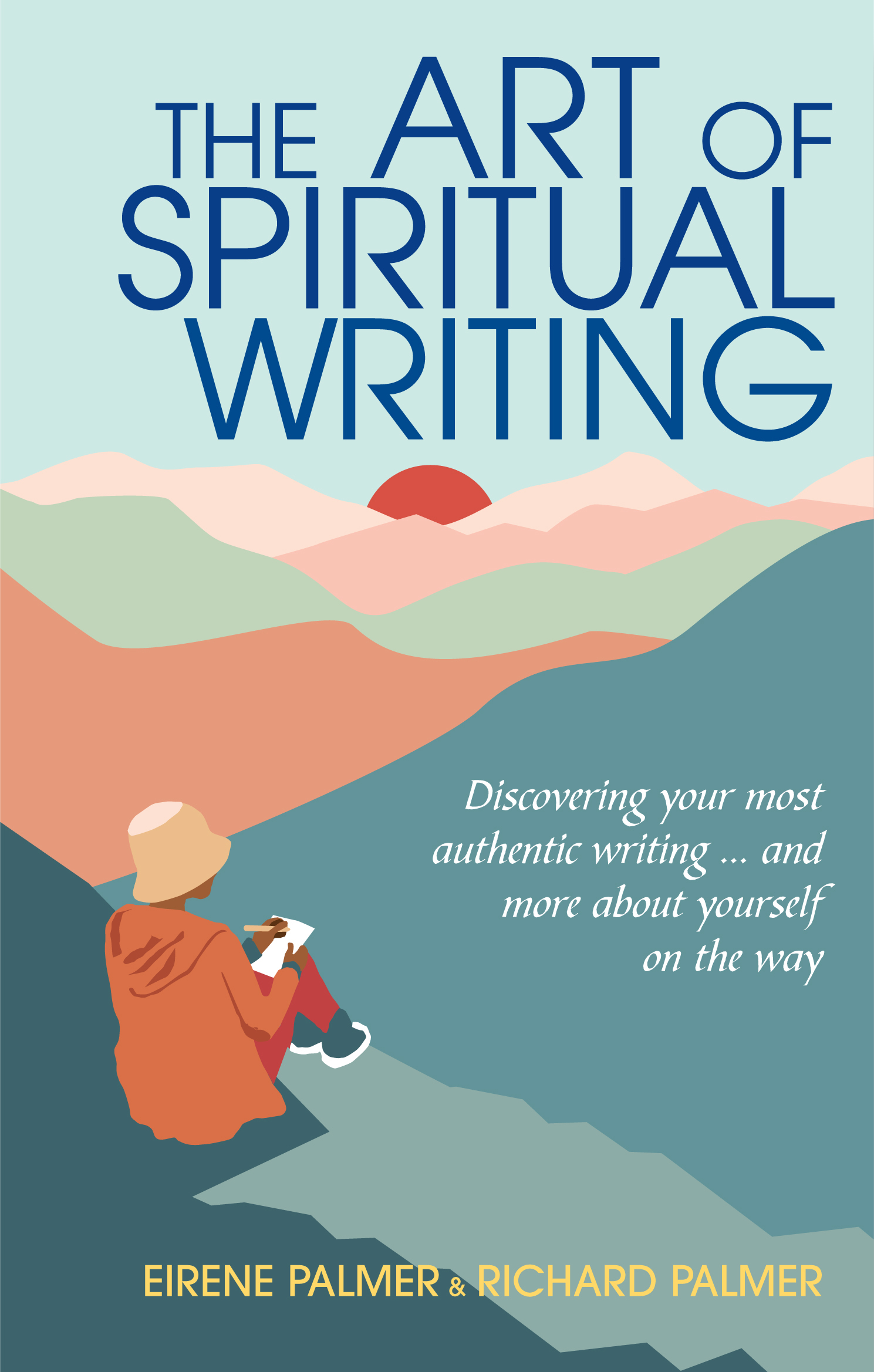
Authors Eirene Palmer and Richard Palmer. Published by DLT (Darton, Longman, Todd)

Reviewed by Angela May

This book is the work of a couple who are both authors and retreat leaders, experienced in helping others to write, specifically including writing about things that I’m interested in:  life’s journey, one’s spiritual life, and journalling in general.  I’ve always found it difficult to find the time to keep a diary, but in recent years I’ve wanted to write my autobiography, however briefly, and to take up the practice of spiritual journalling.  But somehow life always gets in the way. 

So it seemed a good idea to read this ‘transformative book (which) offers a treasure trove of ideas to help you write about your spiritual life …. maybe recording your story for others …. (providing) invaluable advice, good journalling practices, and tips for encouraging readers to get into the habit of daily writing and reflection’.  This book is all about finding yourself and finding your voice, writing from ‘that deep reflective place inside each of us’.

The authors make it clear that we don’t need to worry about perfect grammar or punctuation:  we just need to write and get things down.  Also that all writing can be considered spiritual.  
The authors encourage us to begin with the use of story-telling as a means of getting into writing, delving into our own lives, and writing things down for the interest of other people.  They recommend starting a story with a small detail.  This immediately grabbed my attention, because I’d thought to begin my biography in exactly that way, with a tiny flower.  So I was only a few pages into reading this book when I managed to write down the title of my autobiography for the first time, having carried it in my head for at least a decade.  I had taken the first step!

The book is full of prompts and tips, including the basic advice to have a notebook with you always, including at your bedside, to capture stray thoughts and ideas, interesting dialogue, dreams, etc, which you think you’ll remember but don’t.  These are good resources for writing about.  

Another prompt:  undertake a simple Examen, a technique used in Ignatian spirituality, and write about it.  Also suggested:  a SWOT exercise, writing some paragraphs on one’s Strengths, Weaknesses, Opportunities, and Threats.  Undertaking this, the Opportunities section reminded me of all the exciting potential for developments in my area..  The advice to write about anything you are passionate about got me writing about my favourite colour, how it all began, and its long-term impact on my happiness.  The book is full of interesting thoughts and ideas.  

Eirene’s apparent preference for referring to God as ‘She’ made me begin to consider the feminine side of God, who is after all El Shaddai, the All Sufficient, encompassing everything, and I wondered whether I might relate better to God as Her rather than Him.  I began a prayer to El Shaddai, using the free-writing technique, just relaxing, open to God, and letting thoughts and images emerge into my mind and putting them down on paper, to be honed later into a completed prayer.  There are sections on free-writing, which gives you access to your subconscious, and on writing prayers, and also encouragement to try writing psalms relating to your own life.

Keeping a journal is a long-established way of getting to understand more about ourselves, and keeping track of how far we have come, and what God has been doing in our lives.  It was encouraging to be told that one doesn’t have to write a spiritual journal every day, and I’ve managed to complete a few entries in my new journal since starting to read this book, inspired by events.  Success with this will come down to prioritizing, and it is important. 

This easy-to-read book has been interesting and encouraging, and has helped me to get going in several areas of writing.  Hopefully, it will also be helpful for others who are having trouble pinning themselves down or who could do with some encouragement and nudges.

Posted on

“Lectio Divina – The Sacred Art” Book Review

Paintner, Christine Valters, Lectio Divina – the Sacred Art: Transforming Words & Images Into Heart-Centered Prayer, SPCK,  2012

Publisher’s Information:

Lectio divina, which means sacred reading, is an ancient contemplative practice of listening deeply to the voice of God in sacred texts. In recent years there has been a reclaiming of the riches of contemplative prayer forms of Western traditions. Through the practice of lectio divina you become present to each moment in a heart-centred way. Gradually, the practice of lectio expands your capacity to sense God’s presence until all of life becomes a cascade of prayer. Drawing on her own experience as a monk in the world, Christine Valters Paintner breaks open the movements of this spiritual practice. She makes them accessible to the contemporary reader who longs for a more pervasive experience of the holy in the everyday but lives far away from the sanctuary of a monastery.

Sample review from Amazon.co.uk

“I found this book to be a very helpful refresher on the practice of Lectio Divina. I have followed this practice on and off for several years, but this book applied the ideas and practice to a wide range of texts and also introduced ways of applying it to visual arts, music, nature, and our own life stories. The afterword says: ‘The whole world is, in fact, a text of sacred revelation. All experience has the potential to be revelatory, and God is singing one unending song seducing each of our hearts. So the call is to listen, to attune to the words God utters in the world.’
Every chapter has a suggested way of practising the ideas that have been discussed. If you are looking for a book that will give you practical help in refreshing your prayer life, or a book to take away on retreat, this would be a good start.”

Photo-Monique, CC BY-SA 3.0 <https://creativecommons.org/licenses/by-sa/3.0&gt;, via Wikimedia Commons

Posted on

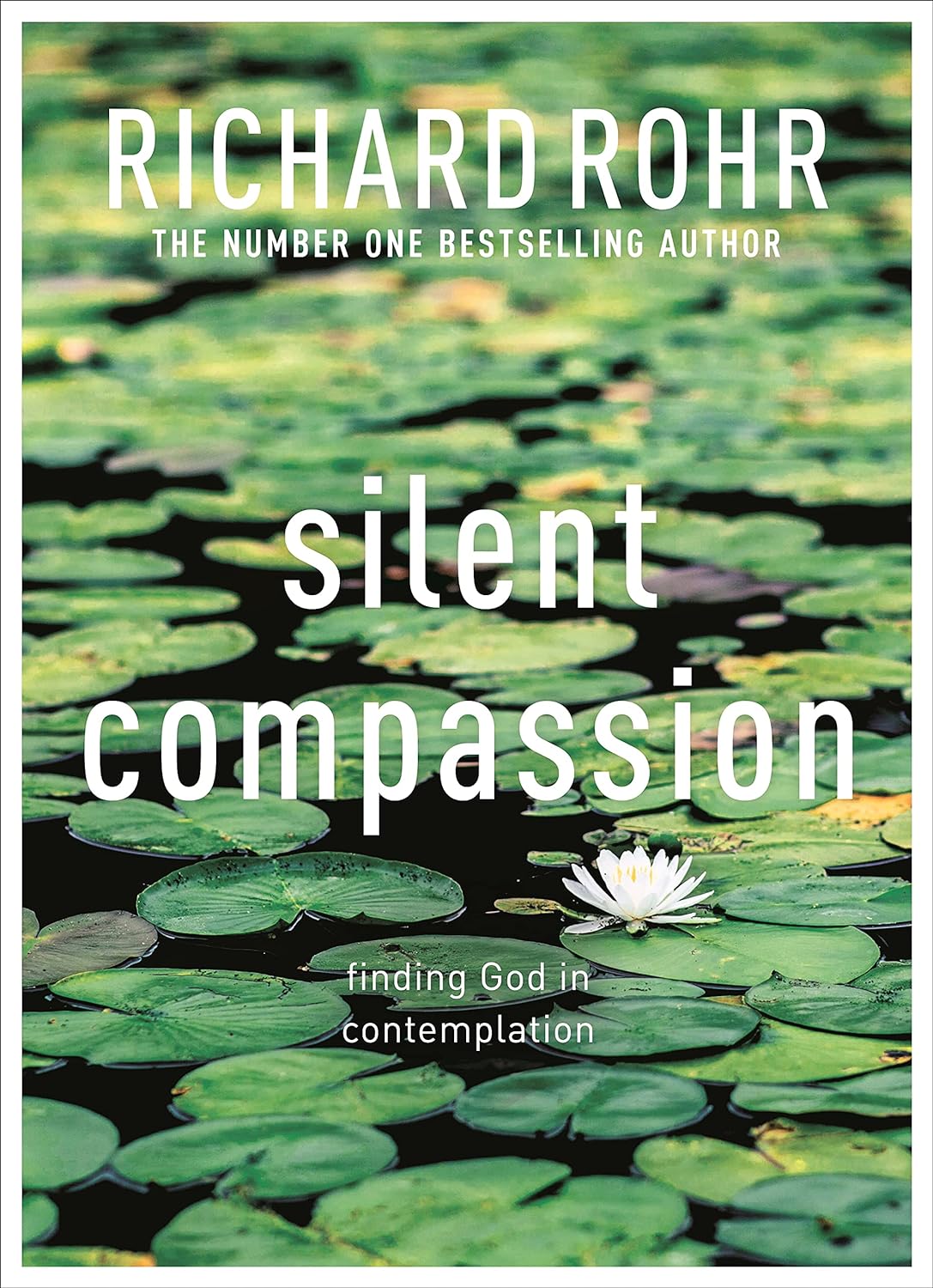
Silent Compassion: finding God in contemplation by Richard Rohr

Richard Rohr OFM (b. 1943) hardly needs any introduction. He is an American Franciscan priest and communicator. Based in Albuquerque, New Mexico, he was the founding director and academic dean of the Living School for Action and Contemplation, founded in 2013. In 2023 he retired and is now Faculty Emeritus. Having published over 30 books (17 in print at the time of writing through SPCK) – most notably, perhaps, The Universal Christ and Falling Upward – he is undoubtedly one of the most popular authors and speakers on spirituality in the world.

Silent Compassion was published first by Franciscan Media in the USA back in 2014. It came on the heels of the City of Louisville’s occasional Festival of Faiths, attended by Buddhists, Christians, Hindus, Jews, and Muslims, including Richard Rohr and the Dalai Lama. Nearby, in Kentucky, is the Roman Catholic monastery of Gethsemani whence Thomas Merton travelled across the world to South-East Asia for another interfaith event some fifty years previously, where he met the younger Dalai Lama. Again, not far away, is the corner of Fourth and Muhammad Ali Boulevard where Merton had a mystical experience concerning the oneness of humanity.

The book has a Preface by John Feister, Editor in Chief of St Anthony Messenger magazine, an Introduction focusing on the Perennial tradition (‘affirm[ing] that there are some constant themes, truths, and recurrences in all the world religions’ (xi)), five short chapters, a really helpful Appendix listing an interfaith timeline of mystics, Notes, and Sources for the chapters. The chapters are headed (1) Finding God in the Depths of Silence, (2) Sacred Silence, Pathway to Compassion, (3) The True Self is Compassion, Love Itself, (4) Looking Out in Prayer with Contemplative Eyes, and (5) The Path to Non-Dual Thinking. Each is sourced either from the talks given by Richard Rohr, together with their Q and A sessions, at the conference, or from interviews given by Fr Richard published in the St Anthony Messenger magazine. Chapters that assuredly feed our minds – and our hearts.

SPCK, 2022. Paperback ISBN 978 0 281 08660 3. Price £8.99.
Luke Penkett

Posted on

The Word Within the Words Malcolm Guite

Darton, Longman & Todd 2021 £8.99 ISBN 978 1 913657 38 3

Given that Julian meetings are held in silence, ‘The Word within the Words’ may seem an odd choice for reading. We forget that words are distinguished by the silence, however brief, between them, which gives them space for their meaning to emerge. John’s gospel begins, ‘In the beginning was the Word’; and what follows tells us that this word is a verb, not a noun. It does not describe God; it opens the path for God to act, and interact, with His creation.

And this is the theme which runs through Malcolm Guite’s book. He draws on his experiences as a scholar working on medieval poetry, much of which had a religious context, which led him to discover his faith. He uses poetry, both his own and that of a variety of other sources, to illustrate the power of words, provided they are given the silence they need to grow in our hearts and minds, and to enable God to act in and through us.

This is a short book – less than 90 small pages – and can be read in about an hour and a half. But I should have said, ‘mis-read’; it is not a book to be read and then gather dust on the shelf; you need to allow the spaces between the words to have their effect, too. Think of it as a spiritual fertiliser, to be thinly spread and dug in; its effects will be seen later, in ways we may not have anticipated. Because, for words to grow and bear fruit, silence is essential.

Brian Morris