Posted on

A Reflection for Advent

Lead-in at a Julian Meeting in Australia in December 2013 

An Advent message in the Book of Lamentations? Unlikely as it seems, some verses seem to hold a messianic significance.  

In Lamentations the first four chapters are written in acrostic form: each verse – or in chapter 3, each triplet of verses – starts in order with a letter of the Hebrew alphabet. The book, attributed to Jeremiah, comes just after his prophecies. The poetic form of lament is common in the Old Testament, and there are more laments than praises in the Psalms.  

Jeremiah and Lamentations is a tale of judgment on God’s chosen people because of their sin and rebellion. However there are promises that some will be saved, that God has not utterly abandoned them and they will be restored. Their very existence was testimony to God keeping his promises. While the people agreed that they deserved punishment, they were impatient for the good bits of the prophecy to take place.  

Chapter 3: 22-26: Because of the LORD’s great love we are not consumed, for his compassions never fail. they are new every morning: great is your faithfulness. I say to myself, The LORD is my portion; therefore I will wait for him.The LORD is good to those whose hope is in him, to the one who seeks him; it is good to wait quietly for the salvation of the LORD.  

Jeremiah is expressing his hope in God. Prophecies can have multiple fulfilments and so the prophecy fulfilled in Jeremiah’s time has its ultimate fulfilment in the birth of Jesus Christ.  

Advent is a season of preparation and waiting. We wait for the One who brings salvation to the world. An angel tells Joseph, Mary’s betrothed, in a dream you are to name him Jesus, because he will save his people from their sins. (Matthew 1:21)  

It is good to wait quietly for the salvation of the LORD.  

Two things come together to make Christmas necessary. The first is our need to be saved – not a popular idea today. We are self-made men and women who can chart our own course and settle our own destiny. We believe the hollow promise that ‘anyone can change the world.’ But it just isn’t true. We don’t all have the opportunity, the ability, or the desire to do that. Our desire is the problem – not only do we desire the wrong things, but we do not desire the One who made us, do not desire to know Him or honour Him. We cannot escape our web of guilt, decay and death. We cannot change ourselves, let alone the world. And we need someone to save us.  

Yet that alone would not explain Christmas. We could have been left to take the consequences of our own decisions. But Christmas is necessary because God won’t give up on us. He is true to Himself, and won’t abandon us. His determination to rescue his people, to eventually gather them round His throne and shower them with his blessings, is the great explanation of why Mary fell pregnant and Christ was born.  

So let us focus on God’s gracious gift of love and salvation that came to us in Jesus Christ, our Lord and Saviour.  

I conclude with the beautiful words from Isaiah 9:6,7. Notice how often the word “will” appears in this passage. These are the Lord’s precious promises to us, to encourage us in a confused and turbulent world.  

For unto us a child is born,  

to us a son is given,  

and the government will be on his shoulders.  

And he will be called  

Wonderful Counsellor, Mighty God,  

Everlasting Father, Prince of Peace.  

Of the increase of his government and peace  

there will be no end.  

He will reign on David’s throne  

and over his kingdom,  

establishing and upholding it  

with justice and righteousness  

from that time on and forever.  

The zeal of the LORD Almighty  

will accomplish this.  

©John Ryall 
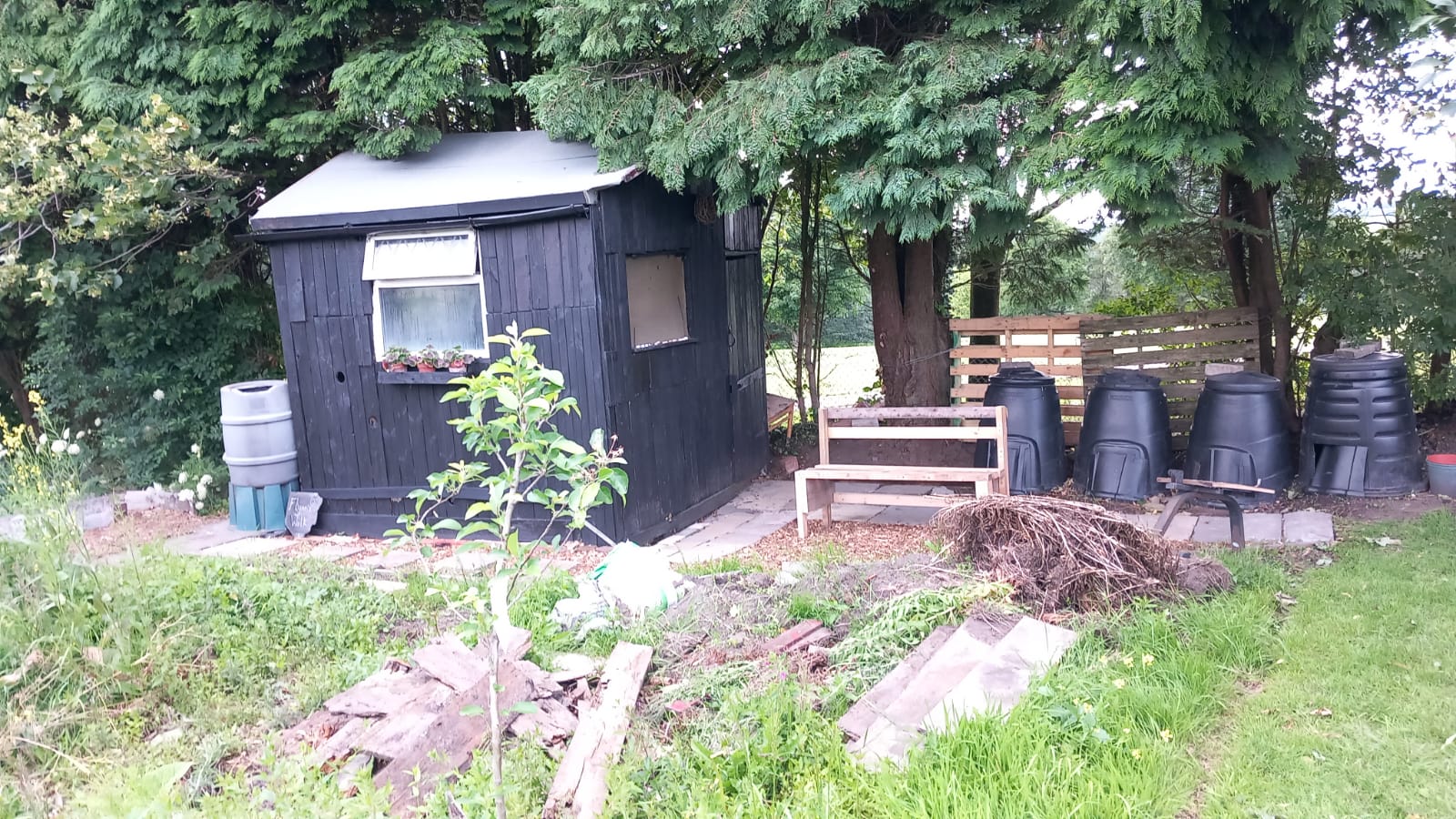
Photo https://www.pexels.com/@nubikini/

Posted on

Pondering the Julian Meetings

But when the Lord comes, will he find faith on earth? Luke 18:8

I was sitting in my allotment, pondering what I should be doing. I noticed that there was a slight slope and the earth at the top kept on wandering down to the bottom, where the shed is. The soil had enveloped the bottom of the shed and it was rotting. So I loaded the wheelbarrow up with the excess soil and took it to the beds higher up. It sounded like a command. Prevent soil erosion!. I made sides for the beds to keep the soil still.

I also heard it as a call to the next stage of my life. What acts as a barrier to prevent the continuing erosion of the soil of faith? Prayer. Maintaining the continual link with God. I could be like marram grass, anchoring the shifting sands of faith, giving my neighbours something to cling to. That is one reason I asked the Dean whether I could start a contemplative prayer group in Blackburn Cathedral. He put the Canon Missioner onto me, and we agreed a monthly time, and started up. 

Recently, the Archbishop, Stephen Cotterill, conducted a series called ‘faith in the North’, where he visits each diocese with instruction on the Lord’s Prayer. It is one of the few bits of the Bible many people have memorised. He said that it is a guide not only for prayer, but also for Christian living. The first word is ‘Our’. A Christian lives in the presence of other people, and FOR other people. And God if father of all people. His kingdom invites all to benefit, ‘on earth as in heaven’. 

Matthew precedes it with Jesus’ instructions on private prayer. There seems an implicit with those who make a show of prayer within a religious culture. Today in England we have a predominantly non religious culture. There are sizable pockets of Muslims and other where things are different, but the main flavour of our society excludes religion. That does not mean that we should therefore change Jesus’ teachings. The cathedral itself is a private space, where one can be hidden. The staff and congregation do all they can to ensure open public access and run events that encourage all sorts of people to come in. 

In the contemplative prayer group we come together and sit down. Each of us goes into our private space inside, and closes the door. We focus on God, knowing that around us others are doing the same. Instead of being closed off, we come together into the shared space, but each is in their own heart, where we always meet not only our Lord and ourselves, but The World. By going in, we reach out. And when we go out, we reach in. It is by paying serious attention to what is going on around us, seeing how it is all held in God, that we meet God as He is. We find he is in our individual hearts and in everyone else too.The Creator is always at work. By tuning in to the One, we find the All.

So what is the future of Julian meetings? Our founder pondered this in her Fiftieth Anniversary address, She recalled how in the early days, she had contacted the other groups exploring and teaching Contemplative Prayer. She found they were elderly and dwindling. She asked us whether we felt we should continue, and gave us silence to invite the Spirit to guide us.

The future will start where we are. My impression is that we are a group of individuals, continuing silent prayer, and some of us are lucky enough to belong to a group. The improving material on our web page is our gift to the Church, especially to those exploring silent prayer.

I’m not sure about the future concrete fulfilment of the coming of the Lord. I have always felt he is here and now, in a different mode to Judah AD 30, but as real. I expect this to continue. But to answer the hypothetical question, “if he came, would he find faith on earth?”, Julian meetings do their bit to ensure the answer ‘yes’. We do not impose faith. We open ourselves to the One in whom faith may be had. We discover, in the silence, what he has to offer. We give ourselves to the waiting, turning back again and again as our attention drifts, to the source of life itself. We are like Marram grass, anchoring the sand dune of faith against erosion.

Text and image ©Philip Tyers

Blackburn Cathedral Contemplative Prayer Meeting

November 2025

NB Philip Tyers is a JM member. The Blackburn Cathedral Contemplative Prayer Group is not a registered Julian Meeting but is organised on similar principles as appropriate for the Cathedral.

Posted on

All Saints and All Souls, Reflecting on Loss and Grief.

Nothing is Lost

When my friend was in the final stages of dementia and both speech and cognition were lost, I wondered what it must be like to lose control of one’s mind. Was it like a deep state of meditation where one is beyond thought? Where do all the memories go, all the relationships and experiences of a lifetime? I found these deeply comforting and appropriate words in a book by John O’ Donohue, where he wrote this blessing following a chapter on the subject of absence in all its forms:

May you know that absence is alive with hidden presence, that nothing is ever lost or forgotten.                                                          

May the absences in your life grow full of eternal echo.                  

May you sense around you the secret Elsewhere where the presences that have left you dwell.                                                      

May you be generous in your embrace of loss.                                  

May the sore well of grief turn into a seamless flow of presence.                                       

May you be embraced by God in whom dawn and twilight are one.

May your longing inhabit its dreams within the Great Belonging.

As I meditate on these words it reminds me that when I come to God in stillness and silence, all my experiences of life, love and loss are always present in the vast, eternal Presence which holds all of creation, beyond time and space, in peaceful and loving embrace. Nothing is ever lost, I am never alone, and there is nothing to fear.

From:         ‘Walking in wonder’ John O’Donohue

photo and text © K Marsh

All Saints’ Day, also known as All Hallows’ Day, the Feast of All Saints, the Feast of All Hallows, is observed by Christians from the eve 31st October and November 1st in honour of all the saints of the Church.

All Souls’ Day, also called The Commemoration of All the Faithful Departed, is a day of prayer and remembrance for all the faithful departed. Observed by Christians on 2 November.

Allhallowtide includes the three days from October 31st to November 3rd inclusive,

NB Dates can vary depending on the tradition of the particular Church. This is in accordance with the Western Christian tradition.

Posted on

Laughing with God a poem by Hafiz

Two Giant Fat People (by Hafiz a 14thC Persian poet and mystic see links at the end for details)

God and I have become
Like two giant fat people
Living in a tiny boat.

We keep
Bumping into each other
And laughing.

Image generated by AI

From Read the Spirit A review of Daniel Ladinsky’s A Year with Hafiz: Daily Contemplations.

“‘In the 19th Century, (Ralph Waldo) Emerson wrote that one of Hafiz’s greatest gifts was “his intellectual liberty, which is a certificate of profound thought. We accept the religions and politics into which we fall; and it is only a few delicate spirits who are sufficient to see that the whole web of convention is the imbecility of those whom it entangles—that the mind suffers no religion and no empire but its own. It indicates this respect to absolute truth by the use it makes of the symbols that are most stable and revered, and therefore is always provoking the accusation of irreligion.”

Below a blog post reflecting on the poem. Well worth reading.

Posted on

Overcoming Distraction in Contemplative Prayer

The practice of contemplative prayer in the face of distraction


So here in the midst of the world
With all its present pain and madness
You are not the sponge soaking up carbon emissions
Rather you are the channel of God‟s peace
Let that peace arise within you
Deeper than the sea of your own need or desire
Let that peace be a purity
A swept room
A tidied house
A simple order
An inner spaciousness
A forgiven, merciful place
Released from clawing need
Let go of the castles you have dug for yourself in the churned sand
Be washed flat by the beauty of the incoming waves
Let God‟s goodness in
Like a sparkling incoming tide
Smoothing the sand
And leaving a sheen of silver
Now you have cleared your near distance of the debris of your mind

See the expanse
Where heaven and earth meet
And all, all from east to west
From north to south
Is filled with light


Richard Carter
From ‘The City is my Monastery’
published by Canterbury Press ISBN: 9781786222138
© Used with permission. August 2024 Magazine.

Posted on

Exploring the Spiritual Labyrinth Experience

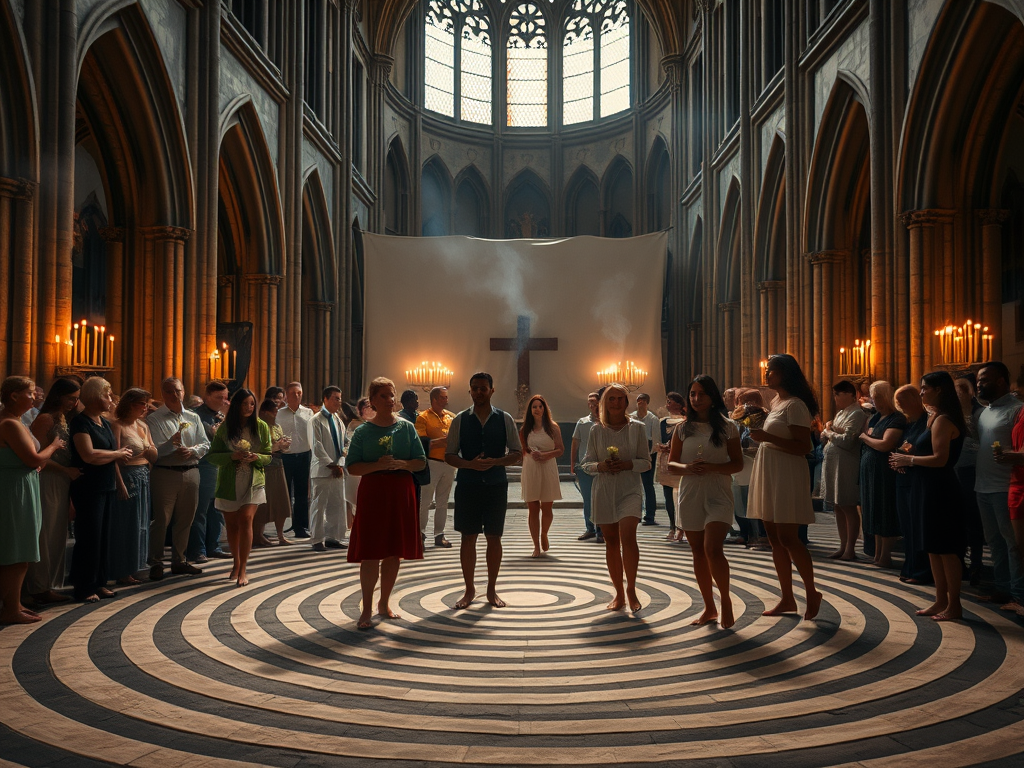
Saturday 4 August 7.30pm. The cathedral nave is clear of chairs, the lighting is subdued. Two dozen of us gather in a circle in the north transept. At the centre of our chairs is a bunch of carnations, and a ball of twine with its free end curling in a spiral away from the flowers. A flautist quietly plays variations on Taize chants.

Judith, the Cathedral chaplain, welcomes us and explains the history of labyrinths and mazes as spiritual aids. Following the path occupies your mind, while walking occupies your body, and your spirit is free to be with God. For some there is great significance in working towards the centre – of yourself, of God, of… – and then working outwards again back to your everyday world.

The labyrinth we are to walk is laid out in the centre of the nave. It is a 36-feet diameter canvas on which is a copy of the labyrinth at Chartres Cathedral. Because it is on canvas we are asked to remove our shoes before we enter it. While Judith is explaining to us, a verger is walking the labyrinth, censing it as he goes.

We are each given a flower, to be a symbol of whatever we choose and to do with as we choose. Judith explains that we are free to use all the cathedral, the cloisters, the cloister garden and the crypt as we choose, and to join in with others as much or as little as we wish. She then picks up the end of the twine and sets off slowly out of the transept and down the north aisle. Each of us in turn picks up and holds on to the twine so that eventually we are spread out along it like beads on a string. It gives me an unusual experience of connectedness.

Judith leads us down to the back of the nave, across to the west doors and then up the centre of the cathedral towards the labyrinth. In the subdued lighting the labyrinth looks very mystical, surrounded as it is with nightlight candles and wreathed in the smoke of incense.

There is a limit to how many people can physically walk the maze at any one time, and I am a long way down the line, so I leave the string and walk quietly out to the cloisters and the garden. In the evening light the stones glow, while the pool at the centre is darkly reflective.

When I return to the nave I remove both my shoes and my socks. It seems right to walk the labyrinth barefoot. It is a tightly interlocking pattern. At first I head towards the centre, and then the path turns away from it, and continues on a complicated twisting route. I need to concentrate, or I wobble or nearly miss the path. I try looking up and out across the labyrinth, but this confuses my eyes as there are so many lines. So, unless I am very near the edge of the maze, I keep my gaze within quite close limits. I am short­sighted: I wonder how it feels to someone with long sight?

As I walk I keep passing some people regularly, others I never encounter, and yet more are near at intervals and then at a distance. I often have to turn sideways, or dip aside so that someone on an adjacent path and I can pass without knocking each other off our route. One lady is dancing her way around the labyrinth, swaying along to the music she can obviously hear in her head.

It takes a surprisingly long time to reach the centre – it is quite a long walk. Most people seem to stop there for a while, sitting or standing in the small space to pray, or reflect. I feel quite claustrophobic at the centre of the labyrinth, perhaps because of the number of people in a small space.

I would like to walk it alone, or with one or two others only, to see how different an experience it might be.

Some people have placed their flowers round the edge of the labyrinth. Many leave them at the centre, but mine is still in my hand as I start on my return walk. I have realised what it signifies for me, and therefore where I wish to leave it. There are fewer people on the labyrinth as I walk back. At times I go quite a distance without meeting anyone, and I am aware of the pattern stretching away from me, and then the shadowy spaces of the cathedral beyond. I feel a sense of relief when I reach the end, almost as though I am escaping…

Perhaps I am escaping to something. Still barefoot, I walk across the cold stone floor, and up the steps into part of the cathedral that is unlit. But I know where I am going, and there is enough light shining through the arches and tracery to find my way. I take my flower and place it quietly, gently, in my chosen place, and open my heart to God, and make a promise. This is why I came. This is why I am here.

After a while I return to the nave and reclaim my shoes and socks. I walk towards the west door and sit in one of the stone seats built into the west wall. The building is transformed by the dim light, the wafts of incense: the lack of chairs or furnishing. A lady is dancing quietly, caught up in the atmosphere of this magical, mystical space. One person is walking the labyrinth alone, moving within the circle of lights and flowers.

We all move towards the maze, and gather round it. We can just reach to hold hands and encircle it. There is chance for people to speak, to pray, to share. Then we bless each other in the words of the Grace, eyes meeting eyes across the maze, the candle flames flickering on our hands, on our faces. We know we have been blessed indeed.


©Deidre Morris August 2001 magazine

Image generated with AI

Posted on

Poems by Angelus Silesius OFM,  1624 – 1677

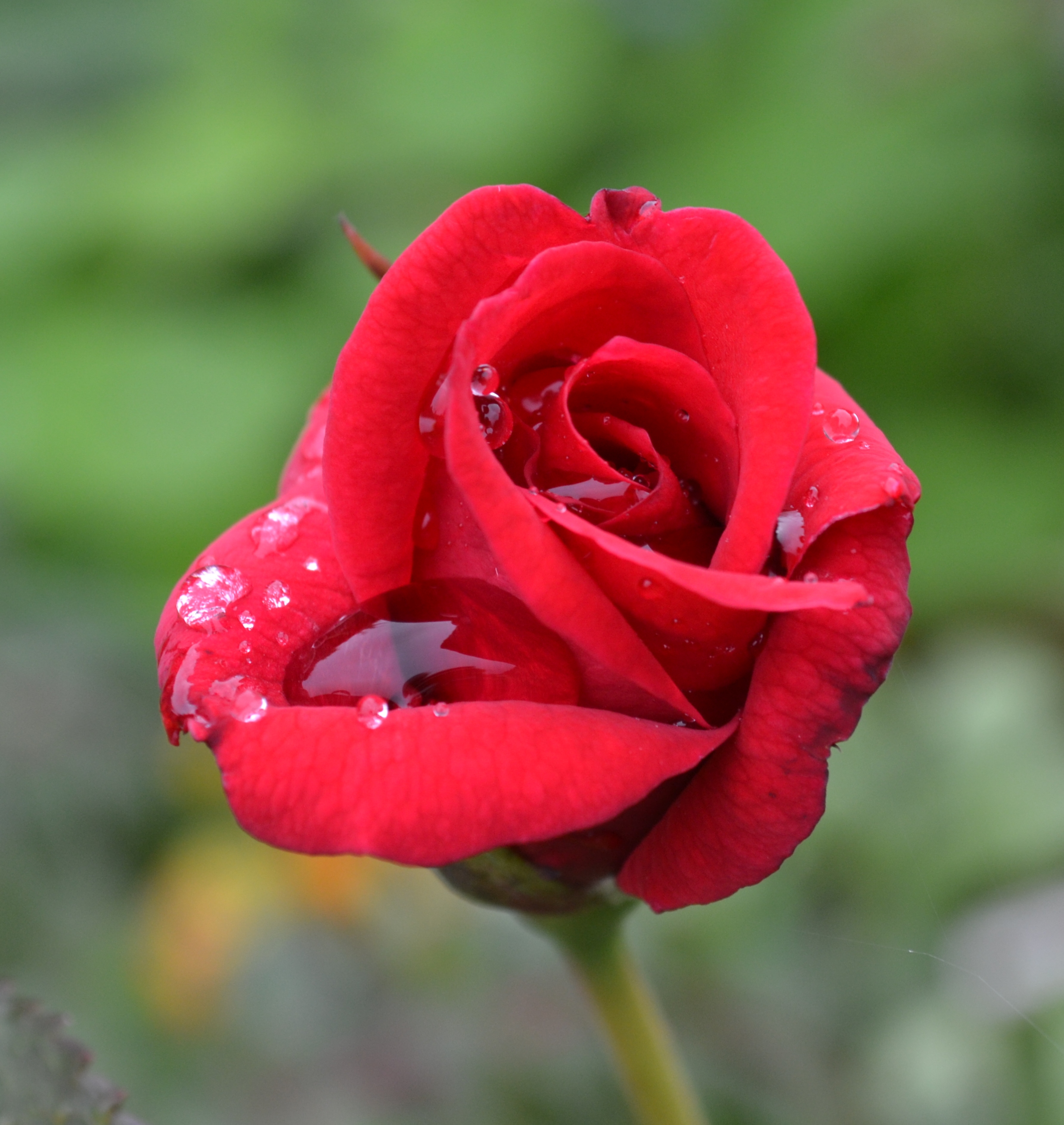
Red Rose with raindrops by K Marsh

These are two lovely, contemplative poems by Angelus Silesius, a 17th century Franciscan whose theology has similarities with that of Meister Eckhart, the 14th century Dominican mystic who said:  ‘God is God and has no why. God has no why but yet he is the why of everything.’

The rose:

The rose is without why, it blooms because it blooms. It does not pay attention to itself, asks not whether it is seen.

The heart:

Thy heart receives thy God and all that with Him goes when it expands towards Him as does an opening rose.

K Marsh    

Text & Photo ©K Marsh

Posted on

Becoming

Although we often see life as a series of beginnings and endings; life and death, the seasons of the year, night and day, we are really in a constant state of becoming. The apostle Paul says that we were ‘chosen before the creation of the world’ Ephesians 1:4. The Psalmist says ‘You (God) created my inmost being; you knit me together in my mother’s womb’ Psalm 139:13. Our ‘seeding’ and ‘flowering’ is an intrinsic and ongoing part of God’s eternal outpouring of love. All that is required of us is an ‘awakening’ to and an acceptance of the presence of God not just in creation but in us individually and corporately.  

In contemplative practice we come to stillness and silence and, in the words of Thomas Keating, “Recognise the presence and action of God and consent to it. We do not have to go anywhere; God is already with us… Faith tells us that we already have God – the divine indwelling”.  From: The daily reader for contemplative living by Thomas Keating. 

And so, as we stand at the ‘end’ of 2024 and the ‘beginning’ of 2025 we are simply in the eternal present moment and the eternal presence of God. And in our surrender to and growing awareness of His will we are each in a state of becoming the unique manifestation of His presence according to His eternal plan. 

Closing prayer: 

Lord we thank you for the gifts of life and love and fellowship; with you, each other and with all creation. And as we reflect on our lives we thank you for your grace at work in and amongst us and we echo the prayer of Dag Hammarskjold.  ‘For all that has been, thanks. And for all that is to come, Yes’………Amen 

Text ©K Marsh 29 December 2024. Bexhill JM 

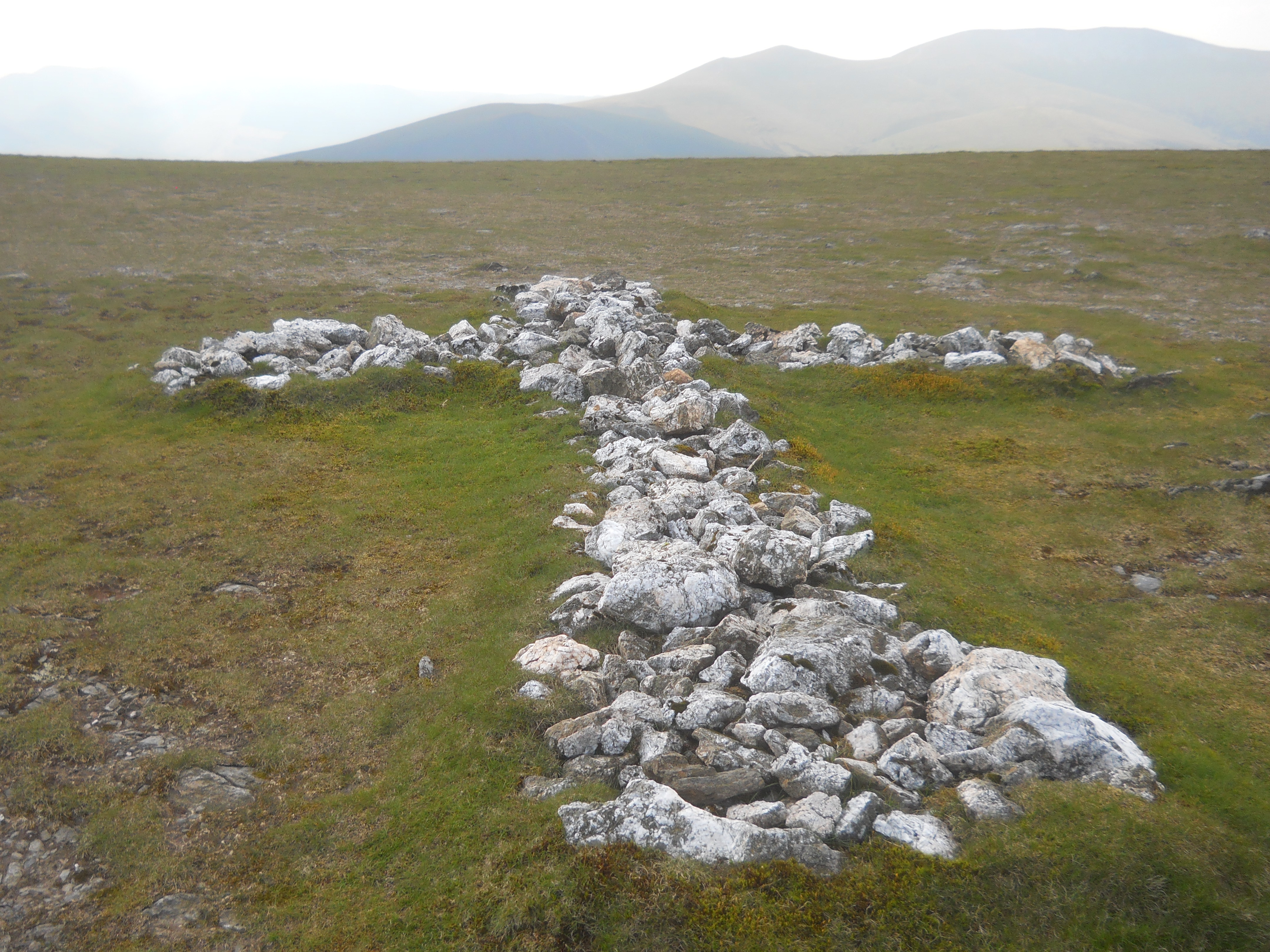
Photo©K Marsh.  White quartzite stone cross, Lake District. 

Posted on

The Language of Prayer

An opening meditation and closing prayer used at the Bexhill Julian Meeting.

The language of prayer, as with all forms of communication, is deeper than just words; it is layered with meaning. It is the language of love, of the heart. When I speak to someone who is dear to me it’s not necessarily what they are saying that I love, it’s that I love the fact that they want to say it to me. In a loving relationship there are underlying depths, of joy, love, a harmony of heart and mind. 

When we come to God with all our neediness, hopes and aspirations there is a resonance beyond dialogue. When we surrender into stillness and silence it is as if God would say ‘I’m so glad you are here’ and we would respond ‘I’m so glad I am here’. 

Such love is contingent on nothing, we are fully known and yet fully loved not just with, but for all our imperfections because they drive us to God. Such a love reaches beyond actions or words, it is much more an affair of the heart which longs to know and be known. 

Over time there is a sense in which we become the prayer, the lived understanding that we are accepted as we are which frees us to accept others as they are. This communion is how we come to know oneness both with God and with all of creation. With continued practice the awareness of this wordless communion remains with us beyond our times of quiet reflection and we can draw on the inner peace throughout our day. It becomes to us, an endless resource in times of both joy and tribulation. 

Closing prayer: 

May rivers of peace, harmony, security, equality and freedom flow to all humanity. May your sacred light dispel all spiritual darkness and ignorance. And may harmony between spirit, mind and body found by the one, extend to the many. Water the seeds of peace among nations, and spiritual awakening to the people of the world.  Amen 

JM  Meditation  20 August 2024. Text and Photo © K Marsh ( Bexhill meeting) Photo of statue at Herstmonceux Castle close to the Village of Herstmonceux in East Sussex

Posted on

My Dream

When I was a boy of about seven, I had a recurring dream which, at the time, was quite perplexing. It is difficult to describe, the words do not do it justice, but I seemed to be floating, and I remember there being some kind of ‘wire’. It was the sensations which were most odd; there seemed to be a sensation of ‘tingling’ and weightlessness. A sense of ‘being ‘ without any volition or thought. All that there seemed to be was an awareness of space without beginning or end. I could recall it in my awakened state but, over time, the dream faded.

Later in life, in my mid thirties to forties, I went through a phase of writing poetry. It was a period of my life when I found this form a way of exorcising powerful emotions both positive and negative, a way to release physical, emotional and spiritual, joy and trauma.  I remembered the dream and believed it to be a memory of being in the womb, the ‘wire’ being the umbilical cord. My description of it at that time was ‘The place of pins and needles’; because of the remembered tingling sensation. As with so many experiences and ideas, ‘life’ seems to overtake and bury some of one’s deepest sensitivities.

I now find myself reconnected to the dream. Often when I sit to meditate the memory surfaces and I have come to believe that what I was experiencing was my earliest contemplative experience. I simply knew myself ‘to be’, in the most primal way. This state required no conscious knowing or understanding, no words or description.

Now, as I think of it, there are significant parallels with being a manifestation of the divine essence. It makes sense of the way in which I feel ‘held’, almost a feeling of being cocooned, safe, at one with both ‘God’ and the universe. This seems to be the underlying feeling of peace which Jesus described as ‘beyond understanding’:    a sort of divine umbilical cord, the sustaining source of my being, my life. All this whilst experiencing and witnessing the best and worst of human endeavour, including my own.

Just as, in the womb, I was fully alive but yet to experience consciousness and self, whilst the universe was  unfolding about me, So now I find myself able to access this sacred encapsulation, this inner sanctum which, in which God, in the words of James Finley, ‘protects us from nothing and yet sustains us through everything’.

What I draw from this is that nothing was required from me, either at the moment of conception or during the gestation period. Everything required, not just to sustain me but to set up every conceivable possibility for the unfolding of my life in the world, was there from the beginning. I, and the divine source of my being, are one. And, this oneness is as true today as it was then.

That stage of being which all of us experienced in the womb, whether remembered or not, I believe has parallels in our relationship with who and how we conceive God to be. To meditate on, or contemplate the fact that all we ever need is, and always has been provided, by our source, for our being, to bring us to our destination. We, in essence, float in the endless abundance of the Divine life which is the source of all that we will ever need, physically, emotionally and spiritually. Just as in the womb everything required was supplied to us, no conscious request, no words, hopes or desires were necessary, so in this moment we can rest in being; certain that all we need  for the fulfilment of our life’s unfolding is constantly ours. Such is the power of letting go into stillness and silence. The silence is, as it were, the womb, the perfect encapsulation of our being. As we originally emerged from the womb to become who we are, so we emerge from the silence restored and renewed; in order to manifest the one Divine life: to live the silence, to carry the stillness and bring the Divine essence into the world and those around us.

Text and Photo © K. Marsh Bexhill Julian Meeting

Photo taken at Scotney Castle UK. A National Trust property just off the A21, it is listed as in Tunbridge Wells but is close to the border of East Sussex.