Posted on

Musing on Lent and Easter music. 

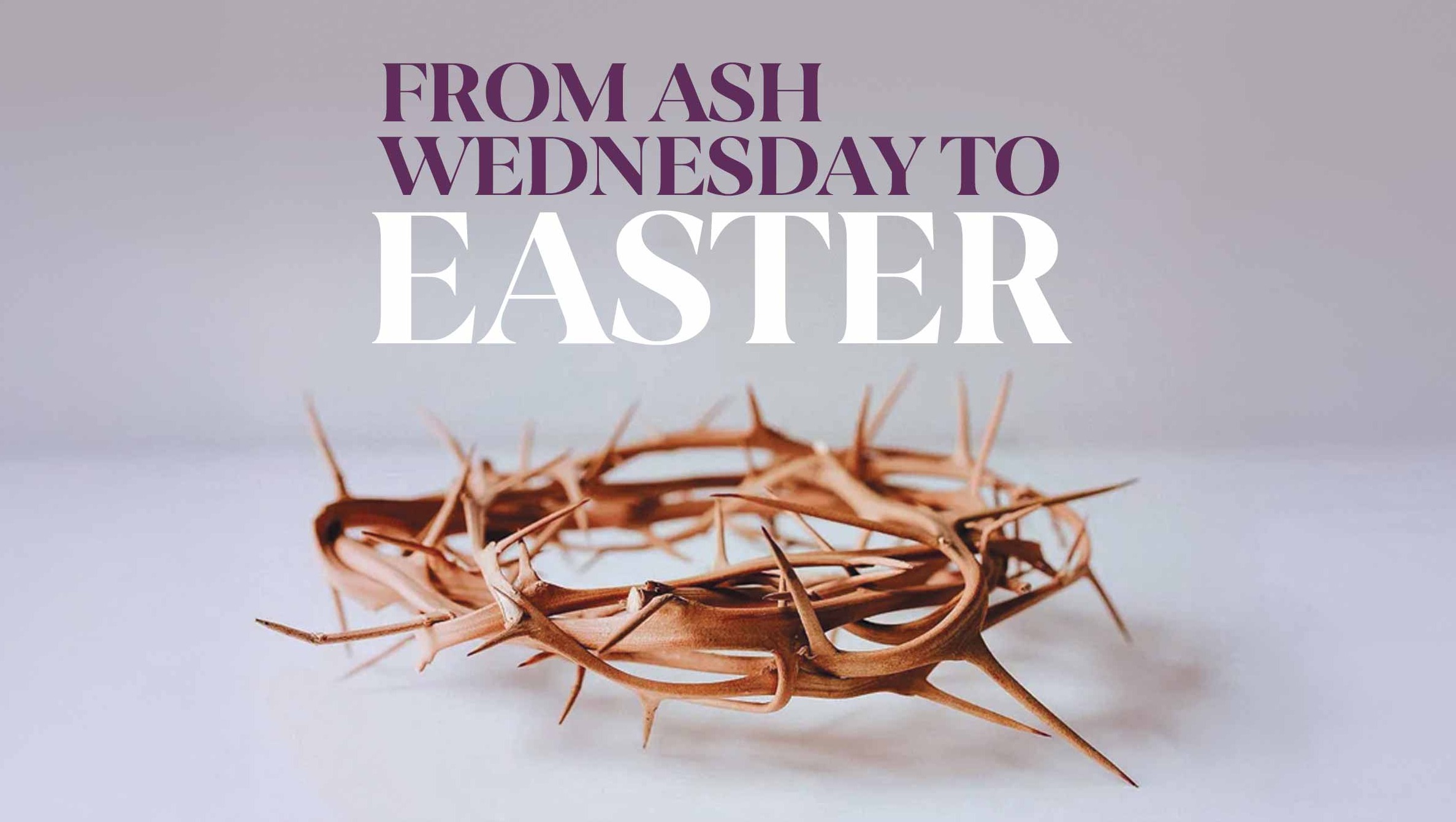
crown of thorns with title lent and easter © Blackburn Cathedral

During the installation of Abp. Sarah Mullally, lines were sung from the words of Julian of Norwich. The composer Joanna Marsh had compiled these words in her anthem All Shall Be Well in 2021. Lyrics and music © Joanna Marsh

Without love we may not live 

And in this love our life is everlasting.                                            

Love was without beginning, is and shall be without ending. 

All shall be well and all manner of thing shall be well. 

Ah! Good Lord, how might it all be well? 

For wickedness hath been suffered to rise  
contrary to the Goodness. 

 I it am, the Might and the Goodness of the Fatherhood; 

 I it am, the Wisdom of the Motherhood; 

 I it am, the Light and the Grace that is all blessed Love. 

The Blackburn Chamber Choir sang a programme of music for Lent and Easter. Various pieces gave different views of God and his work with us.  

One prayed that God “will not hide his face from us or cast us off in displeasure.” It pleaded with God to forgive all our sins. Another, by the same composer (Richard Farrant d. 1580), asked God to remember his tender mercy and loving kindness, instead of “the sins and offenses of our youth.”  

A twentieth century piece, “Solus ad Victinam”, by Kenneth Leighton (d.1988) used words by Peter Abelard who died in 1142. It reflected on Christ giving himself as a sacrifice for our sin. It asked that we will suffer Christ’s pain for the 3 days. By doing so, we aim to win his mercy. This allows us to share his glory and “the laughter of his Easter day”.

These concepts seem alien today. The idea of pleading for forgiveness seems foreign. The sense that God is displeased with us and would punish us is also unfamiliar. The yearning to suffer with Christ is even more so.  

Our Bishop said that Jesus had sought us. He saved us. Then, He sat down after completing His task (Hebrews 1:3). God is all loving kindness. We do not need to plead for what he has already given. 

Another more popular piece from the Romantic era (Mendlesson d. 1847), asked God to listen because the godless and wicked oppress the writer. It then yearned for ‘the wings of a dove: far away would I rove… In the wilderness build me a nest to remain there for ever at rest’. It felt like sheer escapism, more the self-indulgence of the composer than the spiritual resourcing of the listeners.  

Do we come to Julian meetings or meditate at home, to have time ‘at rest’? Or do we meditate because, as another piece (Ubi Caritas Ola Gujielo b. 1978) reminded us, “where love is, there is God,” who binds us together in unity? in Christ we are one with each other and with God. We come to experience that, not merely assert it .  

Richard Rohr and others expand that unity. In Christ, we are one with people of any ethnic background. We are one with those who speak any language. We are united with people of any religion. We are at one with both the poor and the rich. We are at one with God. Despite our current wars, we are at one with Ukrainian and Russian, American, Israeli, Palestinian and Iranian.  The is no duality between God and people, and no ‘us’ and ‘them’ between people groups.

The broad range of Christian prayers use many pictures of God and his action on us. In silence, we allow God simply to be himself. We open ourselves to a new, simple vision. We discover the tranquility underlying the discords and upsets of the world. We also drop the chaos of our minds. This is not to ‘remain forever at rest,’ but to face with confidence whatever comes next. 

Text © Philip Tyers.  

Image © Blackburn Cathedral, used with permission

 The Julian Meetings support in-person and online groups around the country. We make teaching on Contemplative Prayer and Meditation as easily and widely accessible as we can. Articles and reviews express the views only of their respective authors.
Posted on

Fast for Peace Cultivating Inner Harmony and Love

For there to be peace in the world, there first has to be peace in our hearts and minds. With war, famine, disease, poverty, corruption and polarised political differences being rife, world peace could seem an impossible goal. Yet there is something that we all can do to make a significant contribution wherever we are. Whilst we may have little or no control over world events, we have influence over what happens in our own minds, lives, families and communities. Whatever change we wish to see in our world requires us to embody it. So, if we want more peace we need to be more peaceful; if we want more love, then more loving etc. 

Our thoughts give rise to our words and actions therefore we need to pay attention to what is going on in our minds. We also need to be aware of what we fill our minds with. In these days of endless news feeds, television and social media it is easy for us to lend a false authenticity to what we choose to listen to as being a true account of an event or the actions of world leaders, politicians, the rich and powerful. However, everything we read and hear is someone’s opinion. The problem is that if we accept such accounts at face value, we are likely to repeat them. It is so easy, particularly when we are in conversation, to agree with statements which are negative or of uncertain origin, and to repeat them. We may have no other frames of reference as to their ‘truth’. 

Jesus said, ‘The mouth speaks what the heart is full of’. We can thus discern from the conversation of others something of the content of their hearts. More importantly, we can become aware of our own hearts through self examination and attention to our thoughts which give rise to the words that we speak.                                             

True peace is not something that can be fought for or won. It is a state of being, an inner sense of wellbeing and benevolence towards others, including those with whom we may disagree. In order to pray authentically for peace, I believe it is necessary to adopt a position of neutrality. If we judge or condemn another (be it an individual, a group or a country) we risk losing our own inner peace. If we truly believe that the God in us serves the God in others we cannot take sides. The suffering of one is no less than that of the other, (no matter how it appears to us) and therefore we cannot wish one side to prevail over the other. We need the inner freedom to desire peace, love and healing for all, whether in local, national or international conflict or in our daily lives. Otherwise all that is achieved is a standoff. True peace is not simply a cessation of violence, rather it is the setting aside of grievances and the coming together of both sides with a mutual desire to live in harmony, to offer and receive forgiveness, e.g. the Truth and Reconciliation Commission in post apartheid South Africa. The extent of our openness to being non judgemental, loving, peaceful and forgiving in our daily lives determines whether we are part of the solution or part of the problem. 

At this time of year as we come towards lent, instead of, (or perhaps, as well as), foregoing something that we enjoy, we could address the deeper transformation of our minds which the apostle Paul spoke of to the Roman church when he said, ‘Do not conform to this world, but be transformed by the renewing of your minds’. Through a process of self examination we might seek to abstain from judgement and criticism, and temper our political and ideological preferences. We could address our leanings toward negativity and seek to be positive and encouraging in our speech. We could be attentive to our thoughts and words, the ways in which we nourish our minds and be mindful of what comes in through our eyes and ears via the media, what we read; our political, religious, ideological and social affiliations. We could, in fact, begin to, fast for peace.      

© K Marsh 10 February 2026 

Image from: https://www.pexels.com/@the-daphne-lens-2151762624

Posted on

Christmas PRESENT

Last Advent the first passage I read was the start of John’s gospel. As I lay in bed next morning, I ‘heard’ it in my head, but in the present tense. It had a huge impact, making everything NOW rather than then. Perhaps it will for you too:  

“In the beginning is the Word, and the Word is with God, and the Word is God. He is with God in the beginning. Through him all things are being made; without him nothing is being created. In him is life, and that life is the light of men. The light is shining in the darkness and the darkness does not understand it.  

“Here is a man sent from God whose name is John. He comes as a witness to testify concerning that light, so that through him all men may believe. He himself is not the light; he comes only as a witness to the light. The true light that gives light to every man is coming into the world. He is in the world, and though the world is ever being made through him, the world does not recognise him. He comes to that which is his own, yet his own do not receive him. Yet to all who do receive him, to those who believe in his name, he gives the right to become children of God… 

The Word is becoming flesh and is making his dwelling among us. We see his Glory, the glory of the one and only, who comes from the Father, full of grace and truth.” 

By a JM member from the December 2010 magazine. Search our library for more articles, reflections and poems on the themes of Advent and Christmas.

Photo by Porapak Apichodilok: https://www.pexels.com/photo/brown-gift-box-360624/

Posted on

A Reflection for Advent

Lead-in at a Julian Meeting in Australia in December 2013 

An Advent message in the Book of Lamentations? Unlikely as it seems, some verses seem to hold a messianic significance.  

In Lamentations the first four chapters are written in acrostic form: each verse – or in chapter 3, each triplet of verses – starts in order with a letter of the Hebrew alphabet. The book, attributed to Jeremiah, comes just after his prophecies. The poetic form of lament is common in the Old Testament, and there are more laments than praises in the Psalms.  

Jeremiah and Lamentations is a tale of judgment on God’s chosen people because of their sin and rebellion. However there are promises that some will be saved, that God has not utterly abandoned them and they will be restored. Their very existence was testimony to God keeping his promises. While the people agreed that they deserved punishment, they were impatient for the good bits of the prophecy to take place.  

Chapter 3: 22-26: Because of the LORD’s great love we are not consumed, for his compassions never fail. they are new every morning: great is your faithfulness. I say to myself, The LORD is my portion; therefore I will wait for him.The LORD is good to those whose hope is in him, to the one who seeks him; it is good to wait quietly for the salvation of the LORD.  

Jeremiah is expressing his hope in God. Prophecies can have multiple fulfilments and so the prophecy fulfilled in Jeremiah’s time has its ultimate fulfilment in the birth of Jesus Christ.  

Advent is a season of preparation and waiting. We wait for the One who brings salvation to the world. An angel tells Joseph, Mary’s betrothed, in a dream you are to name him Jesus, because he will save his people from their sins. (Matthew 1:21)  

It is good to wait quietly for the salvation of the LORD.  

Two things come together to make Christmas necessary. The first is our need to be saved – not a popular idea today. We are self-made men and women who can chart our own course and settle our own destiny. We believe the hollow promise that ‘anyone can change the world.’ But it just isn’t true. We don’t all have the opportunity, the ability, or the desire to do that. Our desire is the problem – not only do we desire the wrong things, but we do not desire the One who made us, do not desire to know Him or honour Him. We cannot escape our web of guilt, decay and death. We cannot change ourselves, let alone the world. And we need someone to save us.  

Yet that alone would not explain Christmas. We could have been left to take the consequences of our own decisions. But Christmas is necessary because God won’t give up on us. He is true to Himself, and won’t abandon us. His determination to rescue his people, to eventually gather them round His throne and shower them with his blessings, is the great explanation of why Mary fell pregnant and Christ was born.  

So let us focus on God’s gracious gift of love and salvation that came to us in Jesus Christ, our Lord and Saviour.  

I conclude with the beautiful words from Isaiah 9:6,7. Notice how often the word “will” appears in this passage. These are the Lord’s precious promises to us, to encourage us in a confused and turbulent world.  

For unto us a child is born,  

to us a son is given,  

and the government will be on his shoulders.  

And he will be called  

Wonderful Counsellor, Mighty God,  

Everlasting Father, Prince of Peace.  

Of the increase of his government and peace  

there will be no end.  

He will reign on David’s throne  

and over his kingdom,  

establishing and upholding it  

with justice and righteousness  

from that time on and forever.  

The zeal of the LORD Almighty  

will accomplish this.  

©John Ryall 

Photo https://www.pexels.com/@nubikini/

Posted on

All Saints and All Souls, Reflecting on Loss and Grief.

Nothing is Lost

When my friend was in the final stages of dementia and both speech and cognition were lost, I wondered what it must be like to lose control of one’s mind. Was it like a deep state of meditation where one is beyond thought? Where do all the memories go, all the relationships and experiences of a lifetime? I found these deeply comforting and appropriate words in a book by John O’ Donohue, where he wrote this blessing following a chapter on the subject of absence in all its forms:

May you know that absence is alive with hidden presence, that nothing is ever lost or forgotten.                                                          

May the absences in your life grow full of eternal echo.                  

May you sense around you the secret Elsewhere where the presences that have left you dwell.                                                      

May you be generous in your embrace of loss.                                  

May the sore well of grief turn into a seamless flow of presence.                                       

May you be embraced by God in whom dawn and twilight are one.

May your longing inhabit its dreams within the Great Belonging.

As I meditate on these words it reminds me that when I come to God in stillness and silence, all my experiences of life, love and loss are always present in the vast, eternal Presence which holds all of creation, beyond time and space, in peaceful and loving embrace. Nothing is ever lost, I am never alone, and there is nothing to fear.

From:         ‘Walking in wonder’ John O’Donohue

photo and text © K Marsh

All Saints’ Day, also known as All Hallows’ Day, the Feast of All Saints, the Feast of All Hallows, is observed by Christians from the eve 31st October and November 1st in honour of all the saints of the Church.

All Souls’ Day, also called The Commemoration of All the Faithful Departed, is a day of prayer and remembrance for all the faithful departed. Observed by Christians on 2 November.

Allhallowtide includes the three days from October 31st to November 3rd inclusive,

NB Dates can vary depending on the tradition of the particular Church. This is in accordance with the Western Christian tradition.

Posted on

Easter Greetings

Blessings to all our readers as we celebrate the resurrection of our Lord. Orthodox, Catholic and Protestant churches all celebrate Easter this weekend as the calendars align. Except possibly the Ethiopian Orthodox Church as that is too complicated for me to work out.

An Easter message from the JM National Council:

The Julian Meetings works to support the one-hundred-and-forty local meetings across the UK in which anyone and everyone can share in the experience of silent prayer in the company of others.

JM also seeks to promote and publicise this ancient and essential strand of the Christian tradition through our website, social media, and simple and accessible publications.

The organisation is run by a small group of volunteers, with no paid staff.  We keep expenses to a minimum.  There are, however, costs in equipment, postage and other essentials.

JM is seeking to increase its individual membership. Members are able to participate in the discussions on the future work and development of JM and get advance notice of books recently published and available to review.   Usually the only regular communication that members receive is a monthly update about what has been added to the website.  A discretionary donation is requested.

If you are able either to become a member, or would prefer just to make a donation, we would be very grateful.  Your support will give us confidence, as a small core group of volunteers, that The Julian Meetings can continue its work into the future.  We believe that silent contemplation with God is a foundation of our Christian belief.  Sadly, the world has never needed this more.

Join Us Here

You can also subscribe to receive these blog posts by email as they are published. You do not have to join formally. Use the subscribe link at the top of the blog page.

Donate

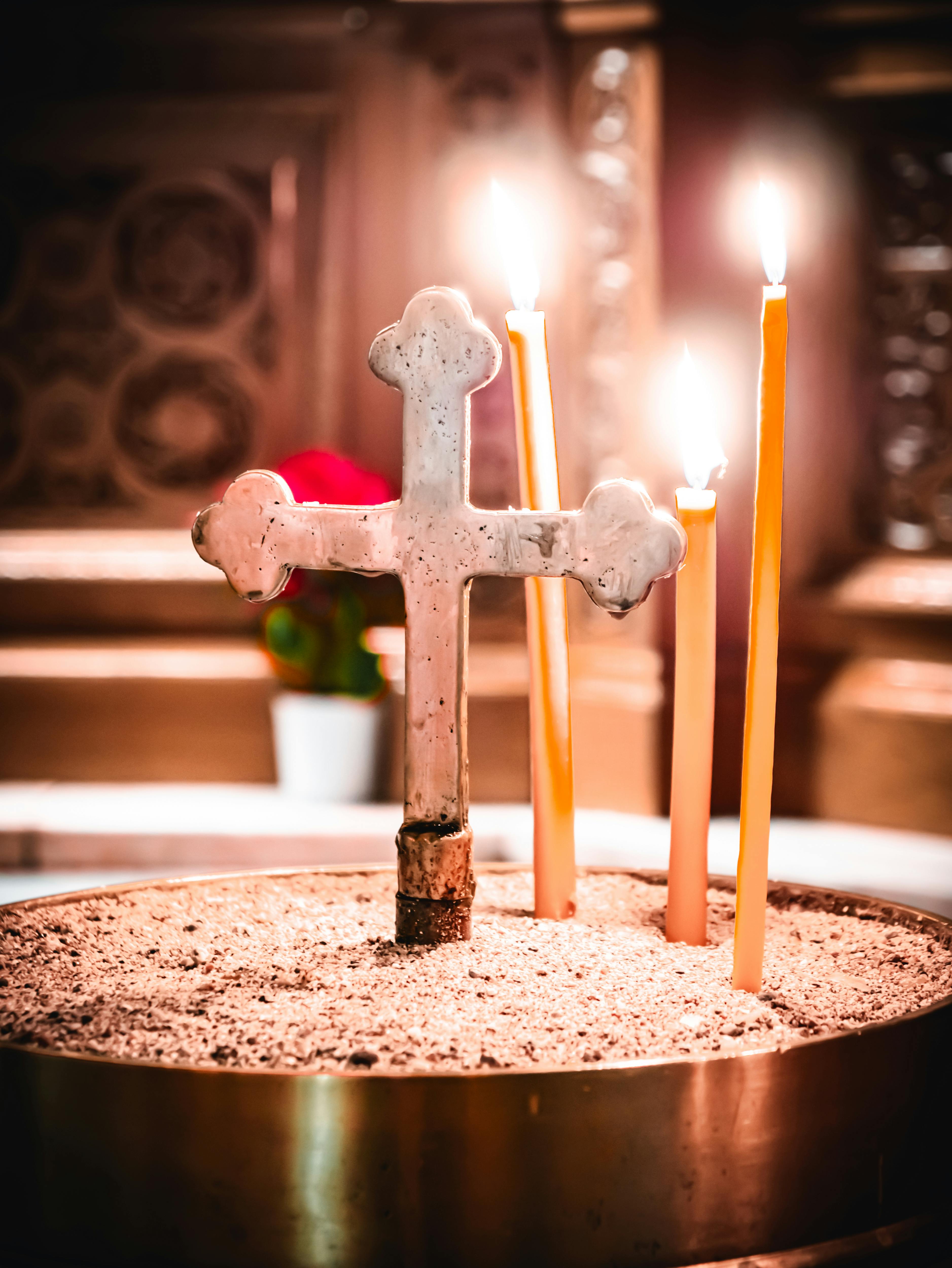
Photo – Greek Orthodox Easter Church decorations from Greek Gateway Facebook page

Posted on

The God Within – Something Personal 

In discussion with an Anglican friend earlier in the year, I suggested that the liturgy of the Church of England, even the modern versions, contains very little of the God within. It tends to look to God above, to God looking down, to gratitude, confession and petition. Prayer is surely about nurturing a relationship.  

 
Teresa of Avila, however, has much to say about the God within: “Settle yourself in solitude and you will come upon God in yourself”. And, as a child, I remember being impressed by a saying of Mahatma Gandhi: “I believe God is closer to me than fingernails to the flesh”. Admittedly, being of the Quaker persuasion, I stand towards the edge of the Christian tradition and I look towards waiting in silence, to experiencing moments of transcendence, however simple and fleeting, to assist me in my way through life. 

 
Earlier this year our family spent a week in the hills in mid-Wales. We stayed in an old farmhouse where the view from the yard provided a sublime vision of quiet: meadow, trees, blue mountains, a few silent sheep and, blessedly blue sky. Occasional flights of goldfinches feasting on the purple thistle heads only contributed to the peace. Early each morning I would sit and marvel at the quality of the silence. One morning, indeed, I felt “caught up” in a moment of timelessness. It has come into my mind often since and I have remembered a beginning of a poem by R. S. Thomas which fits completely: 

 
And God said: How do you know? 

And I went out into the fields 

At morning and it was true. 

 
Such intimations are of inestimable value in helping us to navigate a world which contains so much destruction, suffering and inequality. It is all too easy to feel overwhelmed by news, to feel that one’s own puny efforts at supporting others, ‘saving the planet,’ are so miniscule as to be useless. For most of us we might say with T.S.Eliot: 

 
there is only the unattended 

Moment, the moment in and out of time, 

The distraction fit, lost in a shaft of sunlight 

The wild thyme unseen, or the winter lightning 

Or the waterfall, or music heard so deeply 

That it is not heard at all, but you are the music 

While the music lasts. These are only hints and guesses, 

Hints followed by guesses; and the rest 

Is prayer, observance, discipline, thought and action. 

The hint half guessed, the gift half understood, is Incarnation. 

Janet Robinson (JM member) 

[Poem by R.S. Thomas is Amen. Quote from T.S.Eliot from Four Quartets ] 

Photo Tondi Johnston, CC BY 3.0 https://creativecommons.org/licenses/by/3.0, via Wikimedia Commons https://commons.wikimedia.org/wiki/File:Pregnancy_Week_22_by_Tondi_Johnston.jpg

Posted on

Shalom

We had wandered.

All over the place.

We came to John.

Listening to him, talking to him,

Fed the hunger, the need inside.

A way station. Respite. But not home.

The yearning persisted.

When Jesus appeared and John said:

“Look, the Lamb of God.”

We just knew.

We followed him,

And sat and listened,

And drank in his Spirit, his life,

The hope, the joy: his shalom.

Wholeness of being beckoned us

On a journey into belonging;

The healing of our minds;

Peace to our hurting souls.

Love that reaches deep enough

All the way in.

What do I want?

I have sought many things,

And been angry, disgruntled and resentful.

But my want led me to my true desire,

Where what I want, really want, became Jesus.

And nothing else mattered.

Not really.

Not when you arrive home forever.

© Angela Scott 2024

Photo
Larry D. Moore
CC BY 4.0, via Wikimedia Commons

Posted on

We See Differently at Night

We see differently at night

Shadows fall in dark corners

And then the moon appears

Bright, round but silently

  Oh, so silently.

We hear differently at night

Small noises sound louder

And then the owl appears

Flying low but silently

  Oh, so silently.

We touch differently at night

Softly, afraid to make a sound

Light footsteps on the ground

Each foot, light and softly

 Oh, so silently.

We smell differently at night

Ground smells damp and wet

Breathe deeply with each step

breaths momently pause

  Oh, so silently.

We taste differently at night

Our lips savour the taste

We drink the silent moment

And we stop and wait

  Oh, so silently.

We believe differently at night

Our quiet souls begin to see

Our minds and ears stop hearing

And we reach out to God

  Oh, so silently.

© Poem and Photo by Ann Ridout

Posted on

Freedom

Christ_on_the_Cross_by_Frantisek_Bilek

Christ_on_the_Cross_by_Frantisek_Bilek wiki commons

Contemplation and meditation are often thought of as activities, which don’t really relate to everyday life or the life of the wider community.  This is a mistake.  The iconic image of contemplation, maybe, is the monk or the nun alone in prayer in their cell.  But such people know the connection that what they are doing has with the rest of the world.  Thomas Merton, himself a monk who wrote extensively about contemplative practice, was also much concerned with the world’s social and moral problems.  In He is Risen, he wrote in 1975 about freedom of action and thought in the context of spending time with God:

“Too may Christians are not free because they submit to the domination of other people’s ideas. They submit passively to the opinion of the crowd. For self- protection they hide in the crowd, and run along with the crowd – even when it turns into a lynch mob. They are afraid of the aloneness, the moral nakedness, which they would feel apart from the crowd.

But the Christian in whom Christ is risen dares to think and act differently from the crowd.

He has ideas of his own, not because he is arrogant, but because he has the humility to stand alone and pay attention to the purpose and grace of God, which are often quite contrary to the purposes and plans of an established human power structure.”