Posted on

The Language of Prayer

An opening meditation and closing prayer used at the Bexhill Julian Meeting.

The language of prayer, as with all forms of communication, is deeper than just words; it is layered with meaning. It is the language of love, of the heart. When I speak to someone who is dear to me it’s not necessarily what they are saying that I love, it’s that I love the fact that they want to say it to me. In a loving relationship there are underlying depths, of joy, love, a harmony of heart and mind. 

When we come to God with all our neediness, hopes and aspirations there is a resonance beyond dialogue. When we surrender into stillness and silence it is as if God would say ‘I’m so glad you are here’ and we would respond ‘I’m so glad I am here’. 

Such love is contingent on nothing, we are fully known and yet fully loved not just with, but for all our imperfections because they drive us to God. Such a love reaches beyond actions or words, it is much more an affair of the heart which longs to know and be known. 

Over time there is a sense in which we become the prayer, the lived understanding that we are accepted as we are which frees us to accept others as they are. This communion is how we come to know oneness both with God and with all of creation. With continued practice the awareness of this wordless communion remains with us beyond our times of quiet reflection and we can draw on the inner peace throughout our day. It becomes to us, an endless resource in times of both joy and tribulation. 

Closing prayer: 

May rivers of peace, harmony, security, equality and freedom flow to all humanity. May your sacred light dispel all spiritual darkness and ignorance. And may harmony between spirit, mind and body found by the one, extend to the many. Water the seeds of peace among nations, and spiritual awakening to the people of the world.  Amen 

JM  Meditation  20 August 2024. Text and Photo © K Marsh ( Bexhill meeting) Photo of statue at Herstmonceux Castle close to the Village of Herstmonceux in East Sussex

Posted on

My Dream

When I was a boy of about seven, I had a recurring dream which, at the time, was quite perplexing. It is difficult to describe, the words do not do it justice, but I seemed to be floating, and I remember there being some kind of ‘wire’. It was the sensations which were most odd; there seemed to be a sensation of ‘tingling’ and weightlessness. A sense of ‘being ‘ without any volition or thought. All that there seemed to be was an awareness of space without beginning or end. I could recall it in my awakened state but, over time, the dream faded.

Later in life, in my mid thirties to forties, I went through a phase of writing poetry. It was a period of my life when I found this form a way of exorcising powerful emotions both positive and negative, a way to release physical, emotional and spiritual, joy and trauma.  I remembered the dream and believed it to be a memory of being in the womb, the ‘wire’ being the umbilical cord. My description of it at that time was ‘The place of pins and needles’; because of the remembered tingling sensation. As with so many experiences and ideas, ‘life’ seems to overtake and bury some of one’s deepest sensitivities.

I now find myself reconnected to the dream. Often when I sit to meditate the memory surfaces and I have come to believe that what I was experiencing was my earliest contemplative experience. I simply knew myself ‘to be’, in the most primal way. This state required no conscious knowing or understanding, no words or description.

Now, as I think of it, there are significant parallels with being a manifestation of the divine essence. It makes sense of the way in which I feel ‘held’, almost a feeling of being cocooned, safe, at one with both ‘God’ and the universe. This seems to be the underlying feeling of peace which Jesus described as ‘beyond understanding’:    a sort of divine umbilical cord, the sustaining source of my being, my life. All this whilst experiencing and witnessing the best and worst of human endeavour, including my own.

Just as, in the womb, I was fully alive but yet to experience consciousness and self, whilst the universe was  unfolding about me, So now I find myself able to access this sacred encapsulation, this inner sanctum which, in which God, in the words of James Finley, ‘protects us from nothing and yet sustains us through everything’.

What I draw from this is that nothing was required from me, either at the moment of conception or during the gestation period. Everything required, not just to sustain me but to set up every conceivable possibility for the unfolding of my life in the world, was there from the beginning. I, and the divine source of my being, are one. And, this oneness is as true today as it was then.

That stage of being which all of us experienced in the womb, whether remembered or not, I believe has parallels in our relationship with who and how we conceive God to be. To meditate on, or contemplate the fact that all we ever need is, and always has been provided, by our source, for our being, to bring us to our destination. We, in essence, float in the endless abundance of the Divine life which is the source of all that we will ever need, physically, emotionally and spiritually. Just as in the womb everything required was supplied to us, no conscious request, no words, hopes or desires were necessary, so in this moment we can rest in being; certain that all we need  for the fulfilment of our life’s unfolding is constantly ours. Such is the power of letting go into stillness and silence. The silence is, as it were, the womb, the perfect encapsulation of our being. As we originally emerged from the womb to become who we are, so we emerge from the silence restored and renewed; in order to manifest the one Divine life: to live the silence, to carry the stillness and bring the Divine essence into the world and those around us.

Text and Photo © K. Marsh Bexhill Julian Meeting

Photo taken at Scotney Castle UK. A National Trust property just off the A21, it is listed as in Tunbridge Wells but is close to the border of East Sussex.

Posted on

I Am That I Am

Is-ness’s recognition by Am-ness is expressed in the Ocean and Wave.  

Existence self-reflected by Awareness; Presence self-recognised by Knowing.  

The Ocean is I; Am, the Wave; simply a modulation of One.  

From which, in which and to which One shall return to One.  

Never two, even in multiplicity.  

The spirit of any expression beholds both rest and movement; at its depths is stillness yet as this, the source of all activity.  

Thus each utterance of phenomena is a sonorous tolling invitation to recognise its reality.  

The wave was, is, shall ever and only be the Ocean.  

There is not no self, there is simply no separate self; there is only Self-self, I-i; Ocean-wave.  

Ocean, Wave, Current; in trinitarian coexistence. 

Text and Photo ©️Jamie Robson https://jamierobson.com

Inspired by Exodus 3:14

Posted on

What May Befall

A somewhat dark reflection but our hope for all is for a peaceful, joyful and blessed year.

The following is a possible lead-in for a Julian Meeting taken from ‘Moon in Scorpio’, by Robert Neill. A novel set in 1679, when Catholics and Protestants were at odds with each other and rebellion against Charles II was a real threat.  The words are spoken by a Catholic priest – liable to be hung, drawn and quartered if he were caught by the authorities – to a fellow citizen. His words seem to speak also to our times and situations, and where God may be in them 

What may befall you I do not know, and you may find what the world calls harm.  These are very dark and troubled days, and the things of earth are none of them secure.  There is rancour, and greed, and fear, and much else that is from hell.  In the seats of power there are men of evil heart, and daily men die who seemingly should not.  Which does not mean that a man should turn his back, and seek for himself alone.  Happiness is not found that way, and what is found is empty.  You may thank God that a path is open before you, even though you like it not.  For it is better to be called than not to be called. You will not, in the end of things, be the less happy for having done what was set before you.  That is the Law.  It is to be heeded or not heeded, as men do choose.  But it is not to be balked or changed.   

From a JM member.

Photo John Doyle, CC0, via Wikimedia Commons

Posted on

The God Within – Something Personal 

In discussion with an Anglican friend earlier in the year, I suggested that the liturgy of the Church of England, even the modern versions, contains very little of the God within. It tends to look to God above, to God looking down, to gratitude, confession and petition. Prayer is surely about nurturing a relationship.  

 
Teresa of Avila, however, has much to say about the God within: “Settle yourself in solitude and you will come upon God in yourself”. And, as a child, I remember being impressed by a saying of Mahatma Gandhi: “I believe God is closer to me than fingernails to the flesh”. Admittedly, being of the Quaker persuasion, I stand towards the edge of the Christian tradition and I look towards waiting in silence, to experiencing moments of transcendence, however simple and fleeting, to assist me in my way through life. 

 
Earlier this year our family spent a week in the hills in mid-Wales. We stayed in an old farmhouse where the view from the yard provided a sublime vision of quiet: meadow, trees, blue mountains, a few silent sheep and, blessedly blue sky. Occasional flights of goldfinches feasting on the purple thistle heads only contributed to the peace. Early each morning I would sit and marvel at the quality of the silence. One morning, indeed, I felt “caught up” in a moment of timelessness. It has come into my mind often since and I have remembered a beginning of a poem by R. S. Thomas which fits completely: 

 
And God said: How do you know? 

And I went out into the fields 

At morning and it was true. 

 
Such intimations are of inestimable value in helping us to navigate a world which contains so much destruction, suffering and inequality. It is all too easy to feel overwhelmed by news, to feel that one’s own puny efforts at supporting others, ‘saving the planet,’ are so miniscule as to be useless. For most of us we might say with T.S.Eliot: 

 
there is only the unattended 

Moment, the moment in and out of time, 

The distraction fit, lost in a shaft of sunlight 

The wild thyme unseen, or the winter lightning 

Or the waterfall, or music heard so deeply 

That it is not heard at all, but you are the music 

While the music lasts. These are only hints and guesses, 

Hints followed by guesses; and the rest 

Is prayer, observance, discipline, thought and action. 

The hint half guessed, the gift half understood, is Incarnation. 

Janet Robinson (JM member) 

[Poem by R.S. Thomas is Amen. Quote from T.S.Eliot from Four Quartets ] 

Photo Tondi Johnston, CC BY 3.0 https://creativecommons.org/licenses/by/3.0, via Wikimedia Commons https://commons.wikimedia.org/wiki/File:Pregnancy_Week_22_by_Tondi_Johnston.jpg

Posted on

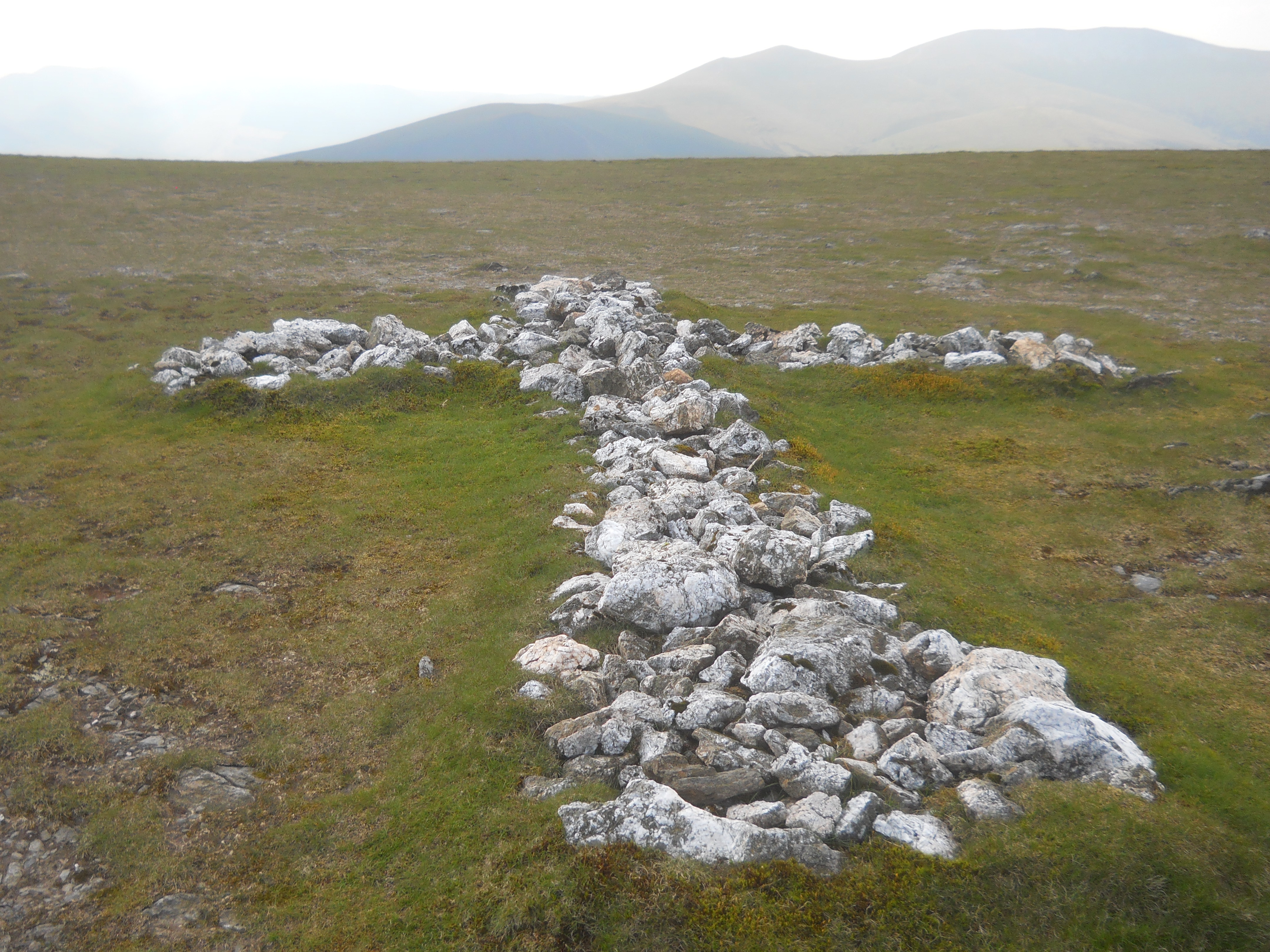
In the Wilderness

 The three Abrahamic faiths all have wilderness as a fundamental experience of their faith: Abraham’s wanderings; Israelites 40 years in the desert; John the Baptist; Jesus.   

Why is the desert significant?  What characteristics make it important? 

Empty; silent; barren.   

A place of struggle and survival.   

Finding a sense of self in relation to God and to creation. 

When Haggar fled she went to the wilderness and God found her by a spring he asked her: 

Who are you? Where are you going? 

We all need the God of the desert to find us.  

The desert can offer us three gifts: 

Learning to see 

Empty space 

Solitariness and meeting 

Moses could not fail to see the burning bush because, in the wilderness, such a thing cannot be hidden. Deserts are places where pretence is no longer possible, only the truth suffices.   

Deserts are places to learn new truths about yourself. 

From a JM member who wishes to remain anonymous

Picture Ivan Kramskoi, Public domain, via Wikimedia Commons

Posted on

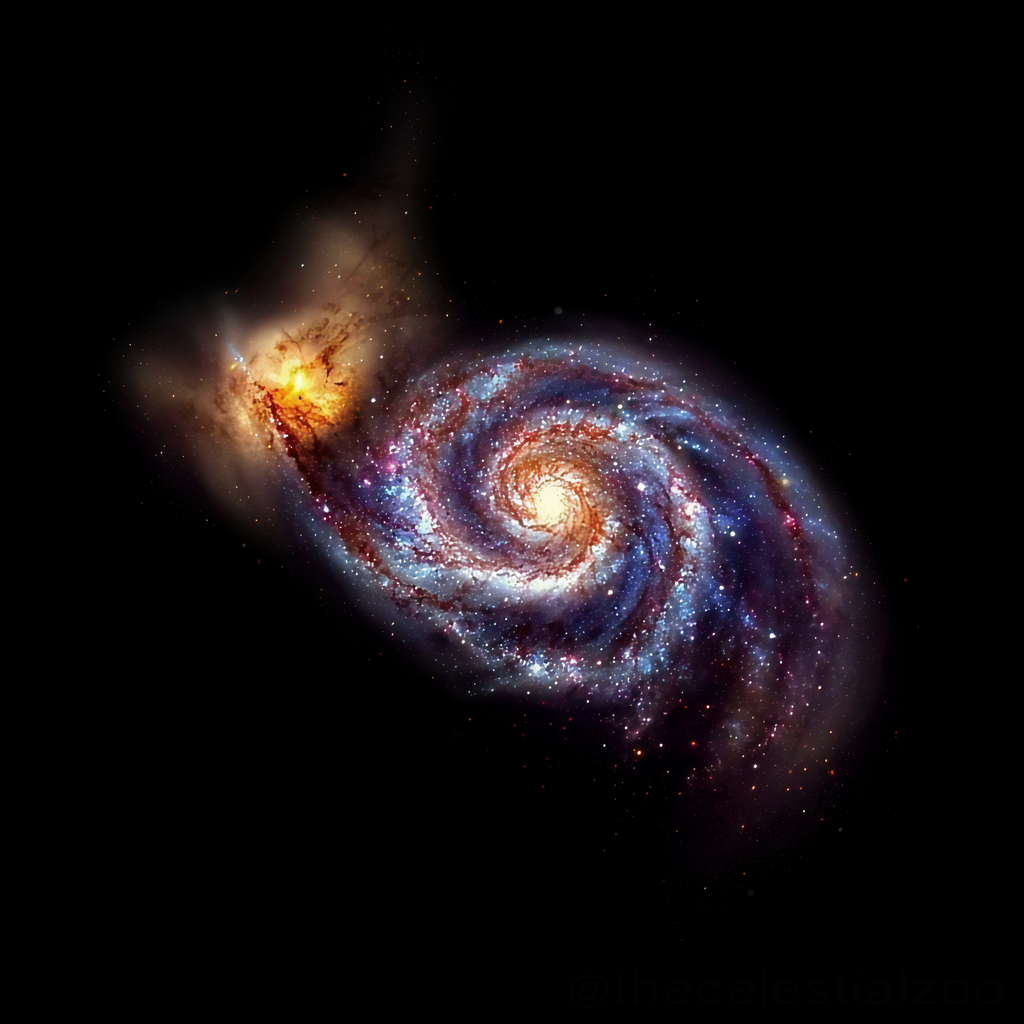
The God-Shaped Hole

It is a well-known phrase, and the experience that we lack something without the presence of God is central to Christian life (and the life of many other faiths).  In the Christian tradition it is, perhaps, most famously expressed in St Augustin’s Confessions, where almost the first statement in his autobiographical account of his faith is about a yearning for God:

You made us for yourself, and our heart is restless, until it rests in you…Since I exist, why do I seek that you should enter into me, since I am not, unless you are in me?

Yet this puzzlement in his first chapter about where to find God and who God is, is also a profound expression of our own puzzlement.  How does one fill a God-shaped hole if one cannot find the thing that will fill it?

The language, of course, gives the game away.  One is not looking for a ‘thing’, but for ‘no-thing’; in Augustine’s view, for ‘that without which I would not exist.’  The realisation that we are not looking for a ‘thing’ to complete us, not looking for something to ‘put in’ the God-shaped hole is expressed by Blaise Pascal in his Pensées, which is the source of the phrase.  The phrase is a misquote; ‘hole’ is better translated as ‘abyss’, or ‘void’, and in his discussion of a search for true happiness, Pascal goes through a list of all those things that will not make the void disappear, ranging from the stars to cabbages.  He writes:

What is it that this desire for happiness and this inability to acquire it proclaim to us, other than that there was once in man a true happiness of which there now remains to him only the mark and empty trace, which he in vain tries to fill from all his surroundings, seeking from things absent the help he does not obtain in things present? But these are all inadequate, because the infinite abyss can only be filled by an infinite and immutable object, that is to say, only by God Himself.

Pascal’s use of the word ‘object’ to describe God, is, of course misleading, but language is always strained to the limit in referring to that without which nothing would exist, without which the world and everything we know would disappear like a bursting soap bubble.  Fortunately, the belief that God is eternal – indeed beyond eternity – means that this is something we do not have to worry about.  Grammatically, though, God is never the object, he is always the subject, without whom nothing happens and no sentence that makes any sense is possible.

We are left, however, with the unknowability.  Maybe the most difficult thing to acknowledge in a life of faith is that the void or hole, the abyss, to some extent remains, and resting there, both in activity and inactivity, waiting for God’s presence is the work we are called to.  It sounds bleak, but it is not so in experience.  It is a faithful waiting for God, who does come, at his initiative and not ours, to show us that we do not exist separately from him.

text © Jonathan Smith Shoreham-by-Sea Julian Meeting

image Pablo Carlos Budassi, CC BY-SA 4.0 https://creativecommons.org/licenses/by-sa/4.0, via Wikimedia Commons

Posted on

A reflection on contemplative prayer

“Prayer should not be transactional, rather it should be transformational” 

In a lifetime our prayer may take many forms of expression. Some of which will be words and actions, others heartfelt joy or deep suffering to which we yield in the spirit (as best we can). We may experience everything from bliss to abject misery. In these times our prayer may change from songs of joy to tears of despair. 

It may seem, particularly in relation to specific requests, that our words go unheeded and unanswered. The issue does not lie with God but with our thoughts and attitudes regarding the best outcome of our prayer. 

Though we express ourselves in words and actions, prayer is a relationship in which the communion rather than the mental, physical or verbal content is transformative. God is unchanging. It is we who are refined by the ever deepening relationship which contemplative prayer enables.  

This is why silence and surrendered stillness is so powerful. When we let go of the desire to direct our own destiny, we enter a sacred space in which the Holy Spirit communes with our Spirit and we may rest; as the Divine work of transformation and ever deepening love and trust helps us transcend our physical, emotional and spiritual limitations. It is the nature of seeds, in time, to break ground and bear fruit, in the same way this unseen, unfelt miracle of growth in the ground of our being can lead to the manifestation of the fruits of the Spirit in our lives. 

Text © K. Marsh 01/11/2023 

Photo © H Lems

Posted on

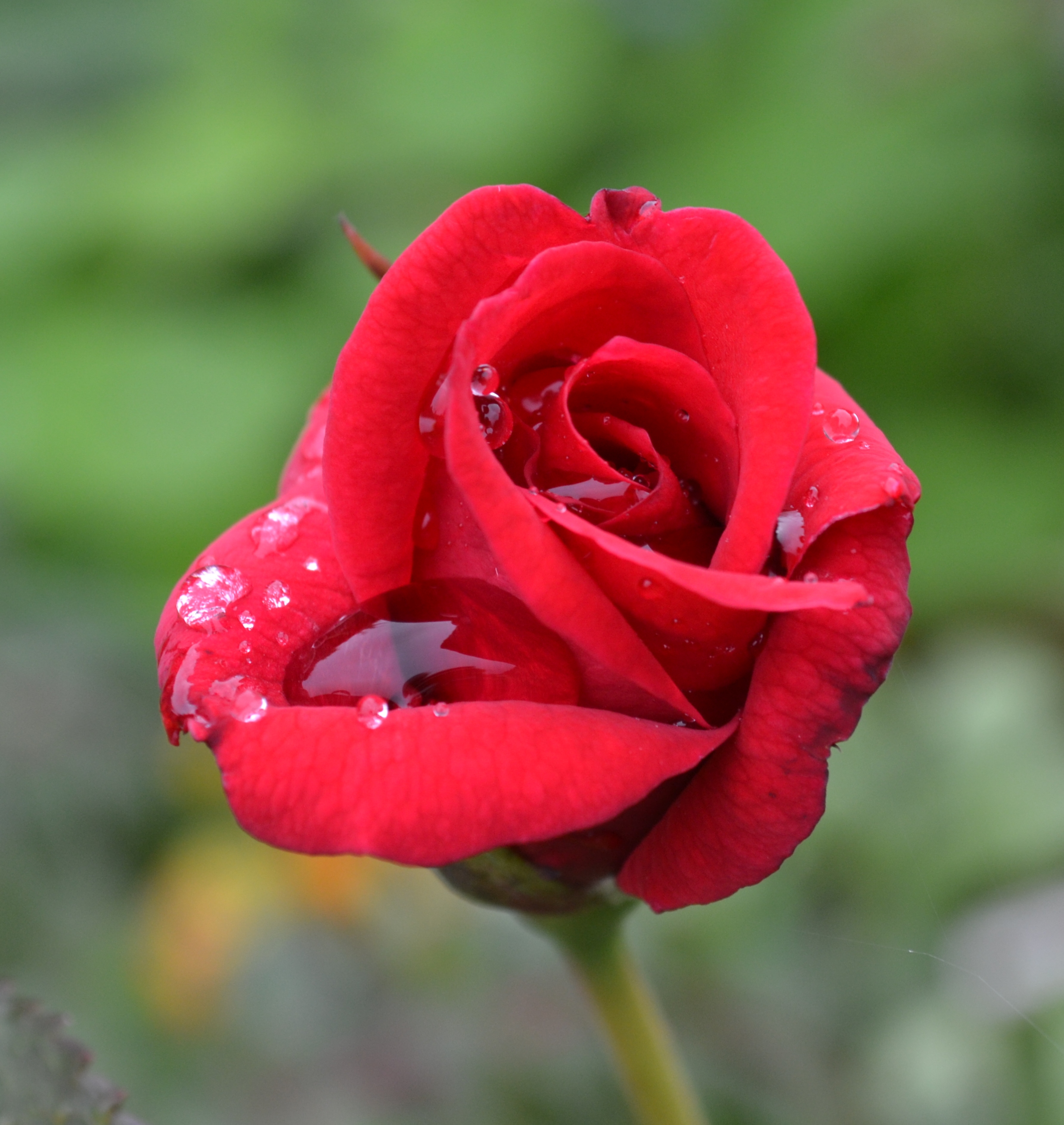
The Fire and the Rose are One

©Keren Dibbens-Wyatt

Picture and text © Keren Dibbens-Wyatt

If you gaze into the fire of the Sacred Heart, your own core will be broken into tiny pieces every day. Even if you decided not to watch the news, not to open the scrolls, if you closed your eyes and sat, maybe especially if you closed your eyes and sat, with your small yes in the silence, wouldn’t your heart be shattered by the presence of the loveliness of a hurting world? By the soft crying of the swifts circling in the air, searching for home, and the beauty of roses, spilling out their flames onto the ground?

Couldn’t you sense, then, the heart you are breaking with and into? There is a centre, a fulcrum, a crossways, a holding, an anchor. It is here, at the heartwood, in the groans of Spirit, a pained love so magnanimous that it never ceases to be cracked open, over and over, like a flower that blooms and opens to harshness, and chooses to blossom again the next day, knowing the effort will force death? Like eggshells hatching over and again inside one another, without seeing the freedom they are birthing, as cosmic Russian dolls.

And each of these mortalities, the quiet and the vicious, creates another layer, another crinoline surround, a nebula within those crinkling into fire before it, till this heart is full and overflowing into other universes, even as its centre burns to ash and rises again. An outpouring, a constant cataract of seeing, feeling, bursting, and from all of this, a love unthinkable, too enduring to grasp. And yet we sit and sense the edges of it, in our small pauses for prayer. We offer our song and our cries and our petals to this One, this Everything, this Love. And we too, become flame.

Picture and text © Keren Dibbens-Wyatt

About Keren Dibbens-Wyatt

Keren Dibbens-Wyatt is a chronically ill writer and artist with a passion for poetry, mysticism, story and colour. She is a contemplative in the Christian tradition who writes to encourage others into knowing the Lord more intimately, as well as to share the poetic ponderings of her heart. Keren suffers from M.E. (myalgic encephalomyelitis) which keeps her largely out of the trouble she would doubtless get into otherwise.

Keren’s work features regularly on spiritual blogs and in literary journals. She has published a number of books which can be found on Amazon and all the usual booksellers. Keren lives in South East England and is mainly housebound by her illness.

Posted on

God of Wholeness

O God of wholeness, we rest in you.

You listen with us to the sound of running water.

You sit with us under the shade of the trees of our healing.

You walk once more with us in the garden in the cool of the day.

The oil of your anointing penetrates the cells of our being.

The warmth of your hands steadies us and gives us courage.

O God of wholeness, we rest in you.

From the April 2024 magazine