Posted on

Musing on Lent and Easter music. 

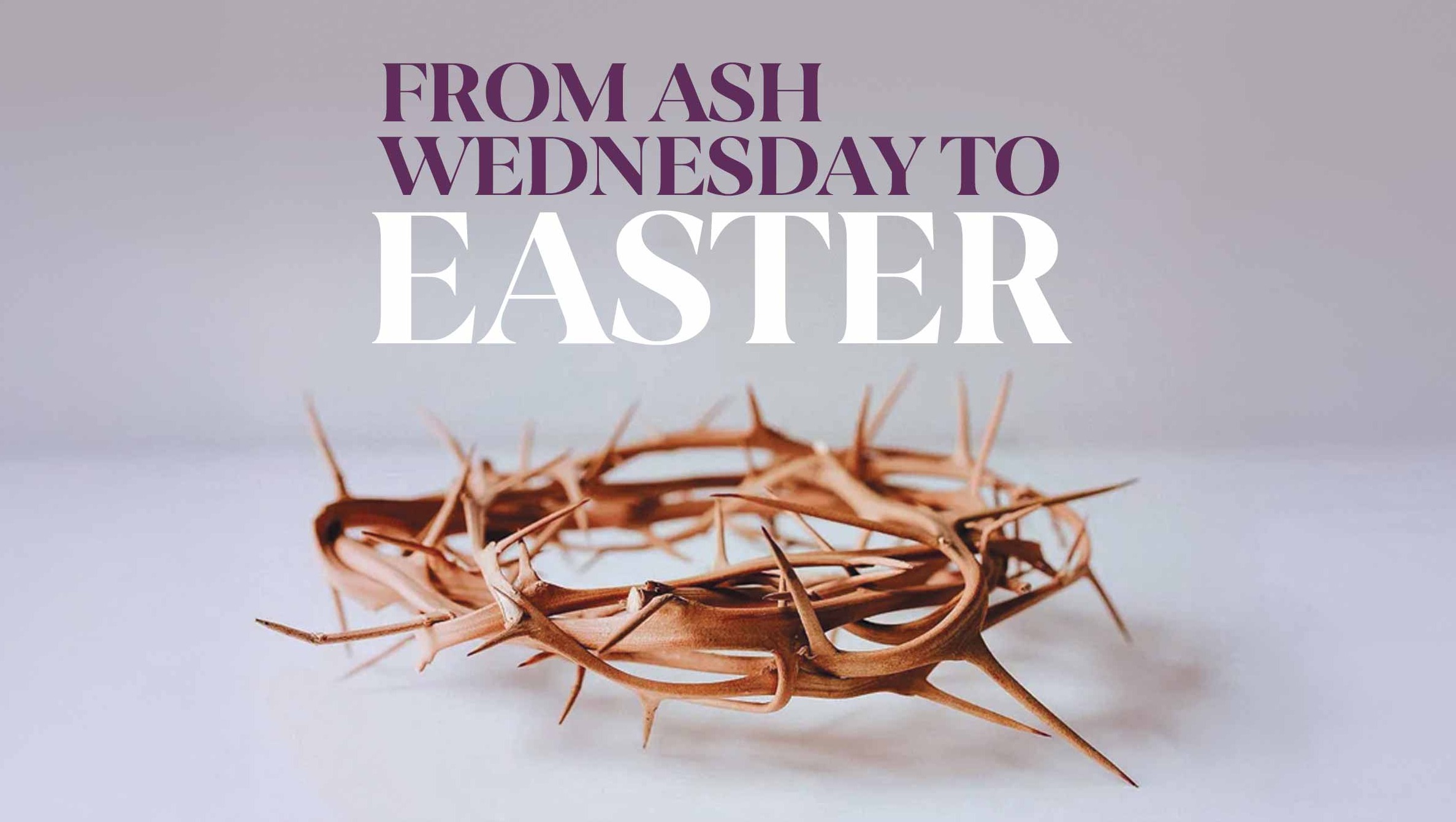
crown of thorns with title lent and easter © Blackburn Cathedral

During the installation of Abp. Sarah Mullally, lines were sung from the words of Julian of Norwich. The composer Joanna Marsh had compiled these words in her anthem All Shall Be Well in 2021. Lyrics and music © Joanna Marsh

Without love we may not live 

And in this love our life is everlasting.                                            

Love was without beginning, is and shall be without ending. 

All shall be well and all manner of thing shall be well. 

Ah! Good Lord, how might it all be well? 

For wickedness hath been suffered to rise  
contrary to the Goodness. 

 I it am, the Might and the Goodness of the Fatherhood; 

 I it am, the Wisdom of the Motherhood; 

 I it am, the Light and the Grace that is all blessed Love. 

The Blackburn Chamber Choir sang a programme of music for Lent and Easter. Various pieces gave different views of God and his work with us.  

One prayed that God “will not hide his face from us or cast us off in displeasure.” It pleaded with God to forgive all our sins. Another, by the same composer (Richard Farrant d. 1580), asked God to remember his tender mercy and loving kindness, instead of “the sins and offenses of our youth.”  

A twentieth century piece, “Solus ad Victinam”, by Kenneth Leighton (d.1988) used words by Peter Abelard who died in 1142. It reflected on Christ giving himself as a sacrifice for our sin. It asked that we will suffer Christ’s pain for the 3 days. By doing so, we aim to win his mercy. This allows us to share his glory and “the laughter of his Easter day”.

These concepts seem alien today. The idea of pleading for forgiveness seems foreign. The sense that God is displeased with us and would punish us is also unfamiliar. The yearning to suffer with Christ is even more so.  

Our Bishop said that Jesus had sought us. He saved us. Then, He sat down after completing His task (Hebrews 1:3). God is all loving kindness. We do not need to plead for what he has already given. 

Another more popular piece from the Romantic era (Mendlesson d. 1847), asked God to listen because the godless and wicked oppress the writer. It then yearned for ‘the wings of a dove: far away would I rove… In the wilderness build me a nest to remain there for ever at rest’. It felt like sheer escapism, more the self-indulgence of the composer than the spiritual resourcing of the listeners.  

Do we come to Julian meetings or meditate at home, to have time ‘at rest’? Or do we meditate because, as another piece (Ubi Caritas Ola Gujielo b. 1978) reminded us, “where love is, there is God,” who binds us together in unity? in Christ we are one with each other and with God. We come to experience that, not merely assert it .  

Richard Rohr and others expand that unity. In Christ, we are one with people of any ethnic background. We are one with those who speak any language. We are united with people of any religion. We are at one with both the poor and the rich. We are at one with God. Despite our current wars, we are at one with Ukrainian and Russian, American, Israeli, Palestinian and Iranian.  The is no duality between God and people, and no ‘us’ and ‘them’ between people groups.

The broad range of Christian prayers use many pictures of God and his action on us. In silence, we allow God simply to be himself. We open ourselves to a new, simple vision. We discover the tranquility underlying the discords and upsets of the world. We also drop the chaos of our minds. This is not to ‘remain forever at rest,’ but to face with confidence whatever comes next. 

Text © Philip Tyers.  

Image © Blackburn Cathedral, used with permission

 The Julian Meetings support in-person and online groups around the country. We make teaching on Contemplative Prayer and Meditation as easily and widely accessible as we can. Articles and reviews express the views only of their respective authors.
Posted on

Fast for Peace Cultivating Inner Harmony and Love

For there to be peace in the world, there first has to be peace in our hearts and minds. With war, famine, disease, poverty, corruption and polarised political differences being rife, world peace could seem an impossible goal. Yet there is something that we all can do to make a significant contribution wherever we are. Whilst we may have little or no control over world events, we have influence over what happens in our own minds, lives, families and communities. Whatever change we wish to see in our world requires us to embody it. So, if we want more peace we need to be more peaceful; if we want more love, then more loving etc. 

Our thoughts give rise to our words and actions therefore we need to pay attention to what is going on in our minds. We also need to be aware of what we fill our minds with. In these days of endless news feeds, television and social media it is easy for us to lend a false authenticity to what we choose to listen to as being a true account of an event or the actions of world leaders, politicians, the rich and powerful. However, everything we read and hear is someone’s opinion. The problem is that if we accept such accounts at face value, we are likely to repeat them. It is so easy, particularly when we are in conversation, to agree with statements which are negative or of uncertain origin, and to repeat them. We may have no other frames of reference as to their ‘truth’. 

Jesus said, ‘The mouth speaks what the heart is full of’. We can thus discern from the conversation of others something of the content of their hearts. More importantly, we can become aware of our own hearts through self examination and attention to our thoughts which give rise to the words that we speak.                                             

True peace is not something that can be fought for or won. It is a state of being, an inner sense of wellbeing and benevolence towards others, including those with whom we may disagree. In order to pray authentically for peace, I believe it is necessary to adopt a position of neutrality. If we judge or condemn another (be it an individual, a group or a country) we risk losing our own inner peace. If we truly believe that the God in us serves the God in others we cannot take sides. The suffering of one is no less than that of the other, (no matter how it appears to us) and therefore we cannot wish one side to prevail over the other. We need the inner freedom to desire peace, love and healing for all, whether in local, national or international conflict or in our daily lives. Otherwise all that is achieved is a standoff. True peace is not simply a cessation of violence, rather it is the setting aside of grievances and the coming together of both sides with a mutual desire to live in harmony, to offer and receive forgiveness, e.g. the Truth and Reconciliation Commission in post apartheid South Africa. The extent of our openness to being non judgemental, loving, peaceful and forgiving in our daily lives determines whether we are part of the solution or part of the problem. 

At this time of year as we come towards lent, instead of, (or perhaps, as well as), foregoing something that we enjoy, we could address the deeper transformation of our minds which the apostle Paul spoke of to the Roman church when he said, ‘Do not conform to this world, but be transformed by the renewing of your minds’. Through a process of self examination we might seek to abstain from judgement and criticism, and temper our political and ideological preferences. We could address our leanings toward negativity and seek to be positive and encouraging in our speech. We could be attentive to our thoughts and words, the ways in which we nourish our minds and be mindful of what comes in through our eyes and ears via the media, what we read; our political, religious, ideological and social affiliations. We could, in fact, begin to, fast for peace.      

© K Marsh 10 February 2026 

Image from: https://www.pexels.com/@the-daphne-lens-2151762624

Posted on

Freedom

Christ_on_the_Cross_by_Frantisek_Bilek

Christ_on_the_Cross_by_Frantisek_Bilek wiki commons

Contemplation and meditation are often thought of as activities, which don’t really relate to everyday life or the life of the wider community.  This is a mistake.  The iconic image of contemplation, maybe, is the monk or the nun alone in prayer in their cell.  But such people know the connection that what they are doing has with the rest of the world.  Thomas Merton, himself a monk who wrote extensively about contemplative practice, was also much concerned with the world’s social and moral problems.  In He is Risen, he wrote in 1975 about freedom of action and thought in the context of spending time with God:

“Too may Christians are not free because they submit to the domination of other people’s ideas. They submit passively to the opinion of the crowd. For self- protection they hide in the crowd, and run along with the crowd – even when it turns into a lynch mob. They are afraid of the aloneness, the moral nakedness, which they would feel apart from the crowd.

But the Christian in whom Christ is risen dares to think and act differently from the crowd.

He has ideas of his own, not because he is arrogant, but because he has the humility to stand alone and pay attention to the purpose and grace of God, which are often quite contrary to the purposes and plans of an established human power structure.”