Posted on

Overcoming Distraction in Contemplative Prayer

The practice of contemplative prayer in the face of distraction


So here in the midst of the world
With all its present pain and madness
You are not the sponge soaking up carbon emissions
Rather you are the channel of God‟s peace
Let that peace arise within you
Deeper than the sea of your own need or desire
Let that peace be a purity
A swept room
A tidied house
A simple order
An inner spaciousness
A forgiven, merciful place
Released from clawing need
Let go of the castles you have dug for yourself in the churned sand
Be washed flat by the beauty of the incoming waves
Let God‟s goodness in
Like a sparkling incoming tide
Smoothing the sand
And leaving a sheen of silver
Now you have cleared your near distance of the debris of your mind

See the expanse
Where heaven and earth meet
And all, all from east to west
From north to south
Is filled with light


Richard Carter
From ‘The City is my Monastery’
published by Canterbury Press ISBN: 9781786222138
© Used with permission. August 2024 Magazine.

Posted on

Exploring the Spiritual Labyrinth Experience

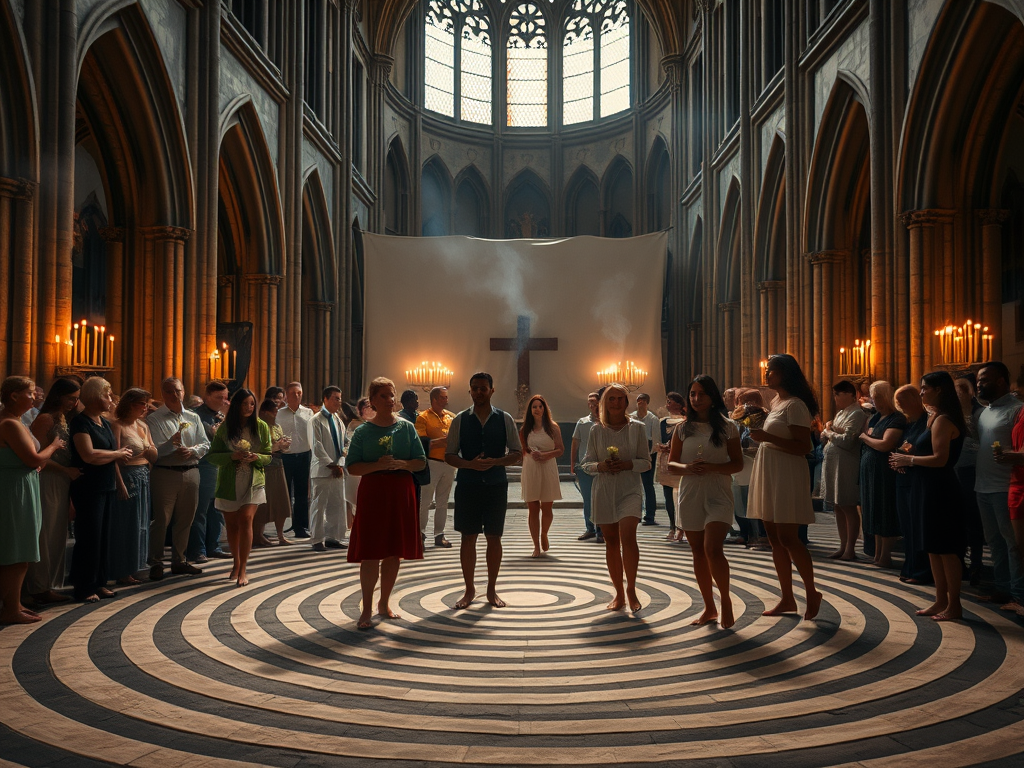
Saturday 4 August 7.30pm. The cathedral nave is clear of chairs, the lighting is subdued. Two dozen of us gather in a circle in the north transept. At the centre of our chairs is a bunch of carnations, and a ball of twine with its free end curling in a spiral away from the flowers. A flautist quietly plays variations on Taize chants.

Judith, the Cathedral chaplain, welcomes us and explains the history of labyrinths and mazes as spiritual aids. Following the path occupies your mind, while walking occupies your body, and your spirit is free to be with God. For some there is great significance in working towards the centre – of yourself, of God, of… – and then working outwards again back to your everyday world.

The labyrinth we are to walk is laid out in the centre of the nave. It is a 36-feet diameter canvas on which is a copy of the labyrinth at Chartres Cathedral. Because it is on canvas we are asked to remove our shoes before we enter it. While Judith is explaining to us, a verger is walking the labyrinth, censing it as he goes.

We are each given a flower, to be a symbol of whatever we choose and to do with as we choose. Judith explains that we are free to use all the cathedral, the cloisters, the cloister garden and the crypt as we choose, and to join in with others as much or as little as we wish. She then picks up the end of the twine and sets off slowly out of the transept and down the north aisle. Each of us in turn picks up and holds on to the twine so that eventually we are spread out along it like beads on a string. It gives me an unusual experience of connectedness.

Judith leads us down to the back of the nave, across to the west doors and then up the centre of the cathedral towards the labyrinth. In the subdued lighting the labyrinth looks very mystical, surrounded as it is with nightlight candles and wreathed in the smoke of incense.

There is a limit to how many people can physically walk the maze at any one time, and I am a long way down the line, so I leave the string and walk quietly out to the cloisters and the garden. In the evening light the stones glow, while the pool at the centre is darkly reflective.

When I return to the nave I remove both my shoes and my socks. It seems right to walk the labyrinth barefoot. It is a tightly interlocking pattern. At first I head towards the centre, and then the path turns away from it, and continues on a complicated twisting route. I need to concentrate, or I wobble or nearly miss the path. I try looking up and out across the labyrinth, but this confuses my eyes as there are so many lines. So, unless I am very near the edge of the maze, I keep my gaze within quite close limits. I am short­sighted: I wonder how it feels to someone with long sight?

As I walk I keep passing some people regularly, others I never encounter, and yet more are near at intervals and then at a distance. I often have to turn sideways, or dip aside so that someone on an adjacent path and I can pass without knocking each other off our route. One lady is dancing her way around the labyrinth, swaying along to the music she can obviously hear in her head.

It takes a surprisingly long time to reach the centre – it is quite a long walk. Most people seem to stop there for a while, sitting or standing in the small space to pray, or reflect. I feel quite claustrophobic at the centre of the labyrinth, perhaps because of the number of people in a small space.

I would like to walk it alone, or with one or two others only, to see how different an experience it might be.

Some people have placed their flowers round the edge of the labyrinth. Many leave them at the centre, but mine is still in my hand as I start on my return walk. I have realised what it signifies for me, and therefore where I wish to leave it. There are fewer people on the labyrinth as I walk back. At times I go quite a distance without meeting anyone, and I am aware of the pattern stretching away from me, and then the shadowy spaces of the cathedral beyond. I feel a sense of relief when I reach the end, almost as though I am escaping…

Perhaps I am escaping to something. Still barefoot, I walk across the cold stone floor, and up the steps into part of the cathedral that is unlit. But I know where I am going, and there is enough light shining through the arches and tracery to find my way. I take my flower and place it quietly, gently, in my chosen place, and open my heart to God, and make a promise. This is why I came. This is why I am here.

After a while I return to the nave and reclaim my shoes and socks. I walk towards the west door and sit in one of the stone seats built into the west wall. The building is transformed by the dim light, the wafts of incense: the lack of chairs or furnishing. A lady is dancing quietly, caught up in the atmosphere of this magical, mystical space. One person is walking the labyrinth alone, moving within the circle of lights and flowers.

We all move towards the maze, and gather round it. We can just reach to hold hands and encircle it. There is chance for people to speak, to pray, to share. Then we bless each other in the words of the Grace, eyes meeting eyes across the maze, the candle flames flickering on our hands, on our faces. We know we have been blessed indeed.


©Deidre Morris August 2001 magazine

Image generated with AI

Posted on

Poems by Angelus Silesius OFM,  1624 – 1677

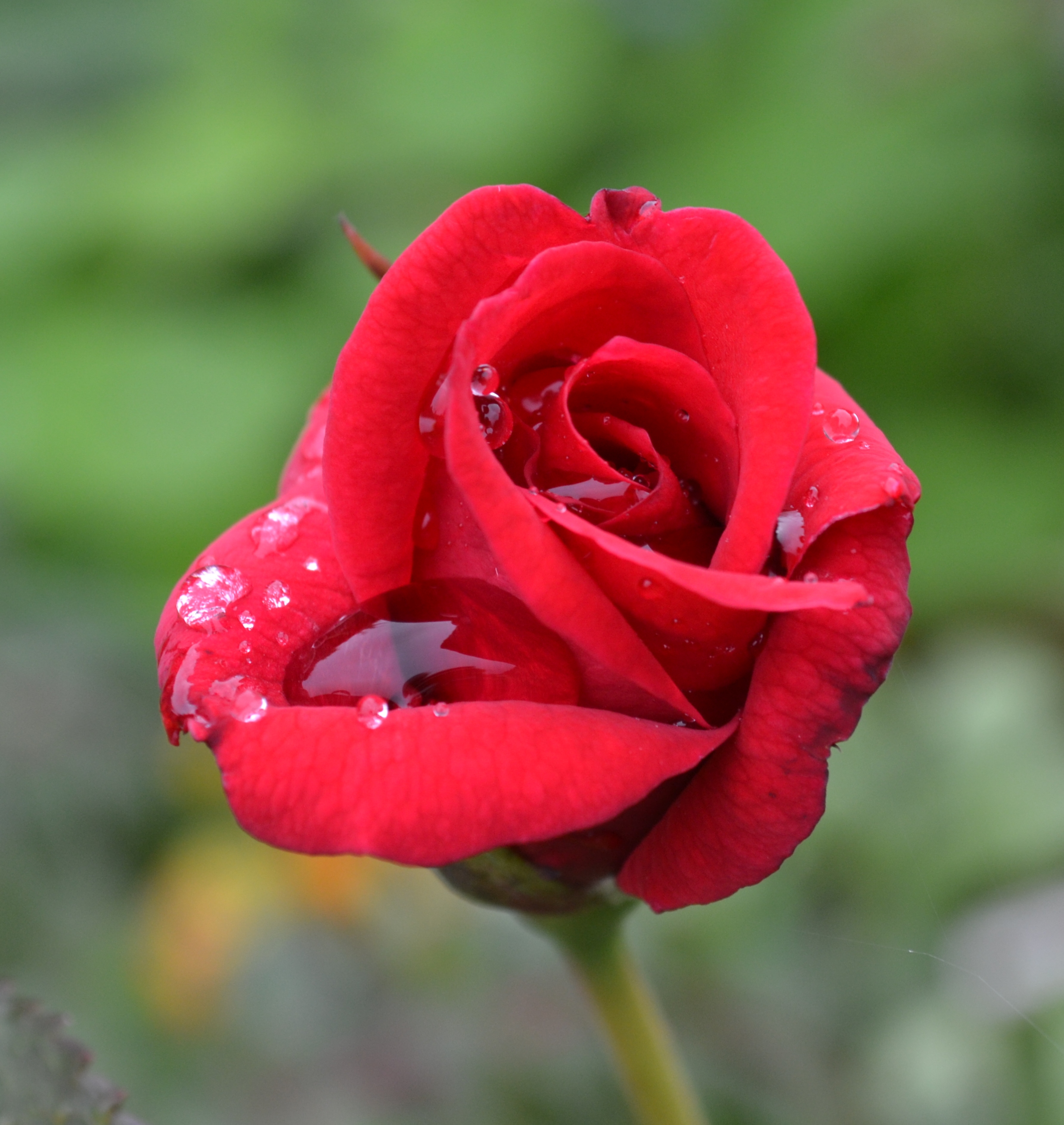
Red Rose with raindrops by K Marsh

These are two lovely, contemplative poems by Angelus Silesius, a 17th century Franciscan whose theology has similarities with that of Meister Eckhart, the 14th century Dominican mystic who said:  ‘God is God and has no why. God has no why but yet he is the why of everything.’

The rose:

The rose is without why, it blooms because it blooms. It does not pay attention to itself, asks not whether it is seen.

The heart:

Thy heart receives thy God and all that with Him goes when it expands towards Him as does an opening rose.

K Marsh    

Text & Photo ©K Marsh

Posted on

Moments of Love by John Mann

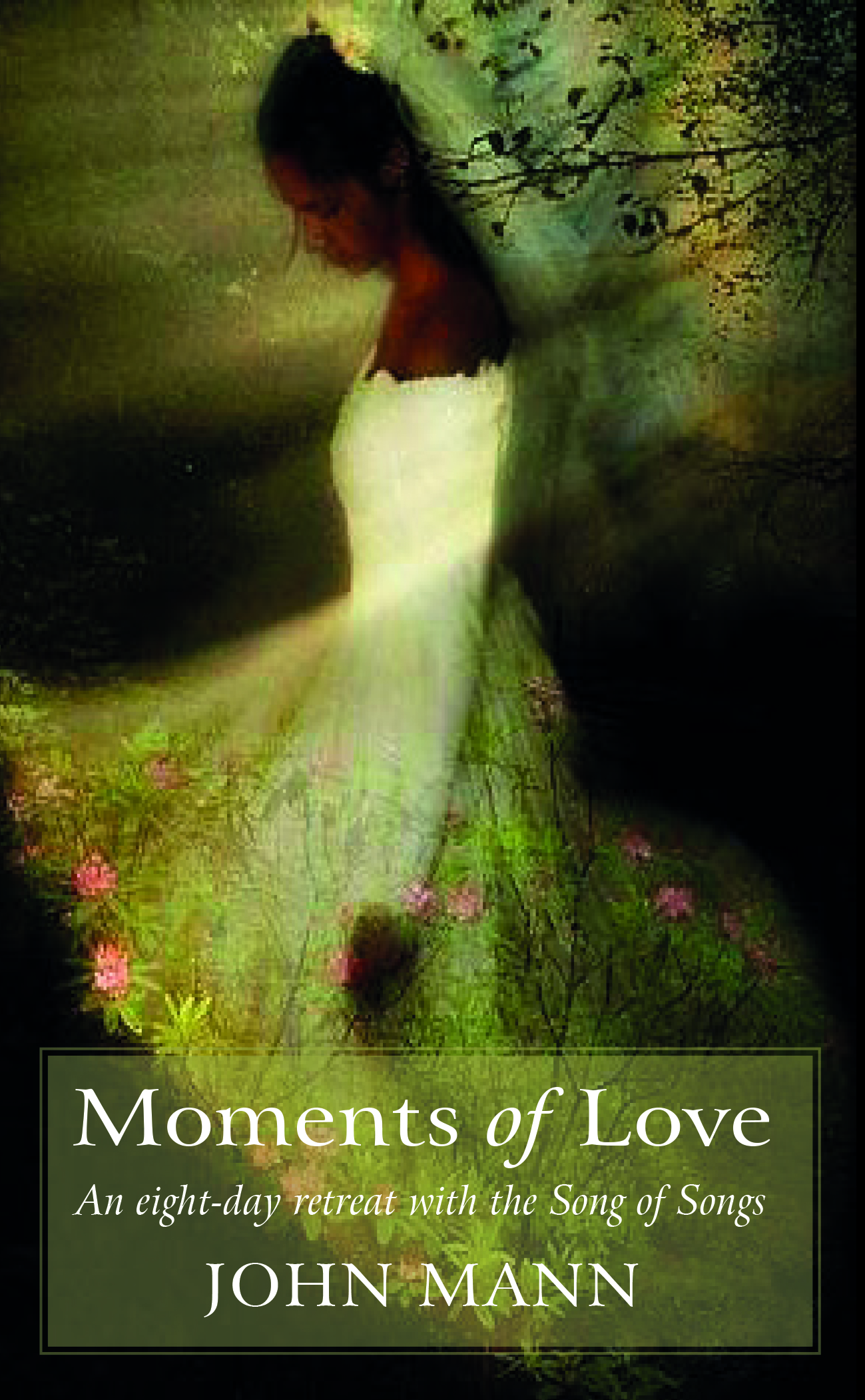
Book cover Moments of Love by John Mann

An Eight-Day Retreat with the Song of Songs 

Information from the publisher:

This attractive little book offers an eight-day retreat through the Bible’s poetic allegory of divine love, the Song of Songs. Four times a day for eight days, for Morning, Midday, Evening and Night, the book presents a short passage from the Song of Songs (NRSV) and a 300-500 word reflection. Each reflection is designed according to the time of day. Readers should put aside 20-30 minutes four times a day for the duration of this eight-day period – for the purpose of creating a focused and rewarding meditation upon personal prayer in loving fellowship with God. With a Foreword by Michael Burrows, the Bishop of Limerick (Church of Ireland). 

John Mann has served as a full-time stipendiary Anglican priest for almost all his working life, much of it in Belfast. He was Dean of Belfast Cathedral from 2011 to 2017, having spent many years in parish life and as examining chaplain to the Bishop of Connor.  He has written four other books. 

https://www.dltbooks.com/titles/2408-9781917362009-moments-of-love

If you would like to review this book please contact our Book Review Editor

Posted on

Healed by Love Daniel Chowning OCD. Review

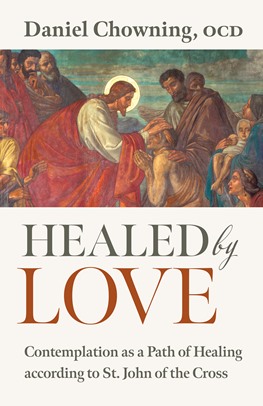
Daniel Chowning: Healed by Love: Contemplation as a path of healing according to St John of the Cross

Liturgical press 2025

Blackwells £18.99. Amazon Kindle £16                                   ISBN: 9798400800122, 0012244
            eISBN: 9798400800139, E00139

The title of this book engaged my interest since, while a beginner in accessing the work of St John of the Cross, I have found the foothills of his work inspiring.

Written by a fellow Carmelite who has immersed himself in St John’s life and writings it offers a deep reflection on the healing power of contemplation to be found in his work. My review only touches the surface of the work as I will need so much more time and prayer to absorb and benefit from its teaching.

Initially I was attracted by the account of the saint’s life. Born into a very poor family and as a teenager employed as a nurse’s aide and alms seeker for the sick poor of a charitable hospital, he learned compassion and tenderness at first hand. He cared for the physically and the spiritually ill to the end of his life. Encouraged to study he was drawn to the Carmelite order and made his profession in 1564. His religious life and thought was much bound with the thinking and inspiration of Teresa of Avila and though of very different personalities they supported each other through difficult times. There being much opposition within the Church to the reforms which Teresa instigated, John was “kidnapped” and imprisoned for nine months in extreme deprivation. He escaped and lived for ten years in Andalusia where he was confessor and spiritual director to both religious and laity and there wrote all his major works. Later he became prior of a monastery in Segovia.

To the end of his life he was hounded by traditionalists who tried to destroy his reputation. He died in 1591 at the age of 49. As the author says: “He responded in love to every circumstance in life, good or bad, joyful or painful” His abiding words were

“Where there is no love, put love, and you will draw out love.”

So far, I have described only the first chapter of this remarkable book. The remaining ten chapters are a serious investigation of John’s understanding of the spiritual and psychological ills of we humans and how, despite the fact that he lived more than 400 years ago, he can still offer guidance and help for healing and forgiveness. As Sr.Elizabeth Obbard writes in her review (and I cannot do better):

“In this beautiful and very readable book, Fr. Daniel Chowning has distilled the teaching of St. John of the Cross for a new generation, linking it with his own personal, pastoral, and psychological insights. Under St. John’s guidance all are encouraged to surrender to the process of healing and transformation in Christ. It is a contemplative journey that leads to freedom and the integration of the whole person. Chowning’s writing is the fruit of many years of studying and teaching the Carmelite saints, and I was hooked from page one. Be enthused, inspired, and challenged to make the journey of contemplative love a way of life ‘costing not less than everything.’ It’s never too late to set out.”

(© 2025 by Daniel Chowning, OCD. Published by Liturgical Press, Collegeville, Minnesota. Used with permission.)

Janet Robinson

Posted on

Becoming

Although we often see life as a series of beginnings and endings; life and death, the seasons of the year, night and day, we are really in a constant state of becoming. The apostle Paul says that we were ‘chosen before the creation of the world’ Ephesians 1:4. The Psalmist says ‘You (God) created my inmost being; you knit me together in my mother’s womb’ Psalm 139:13. Our ‘seeding’ and ‘flowering’ is an intrinsic and ongoing part of God’s eternal outpouring of love. All that is required of us is an ‘awakening’ to and an acceptance of the presence of God not just in creation but in us individually and corporately.  

In contemplative practice we come to stillness and silence and, in the words of Thomas Keating, “Recognise the presence and action of God and consent to it. We do not have to go anywhere; God is already with us… Faith tells us that we already have God – the divine indwelling”.  From: The daily reader for contemplative living by Thomas Keating. 

And so, as we stand at the ‘end’ of 2024 and the ‘beginning’ of 2025 we are simply in the eternal present moment and the eternal presence of God. And in our surrender to and growing awareness of His will we are each in a state of becoming the unique manifestation of His presence according to His eternal plan. 

Closing prayer: 

Lord we thank you for the gifts of life and love and fellowship; with you, each other and with all creation. And as we reflect on our lives we thank you for your grace at work in and amongst us and we echo the prayer of Dag Hammarskjold.  ‘For all that has been, thanks. And for all that is to come, Yes’………Amen 

Text ©K Marsh 29 December 2024. Bexhill JM 

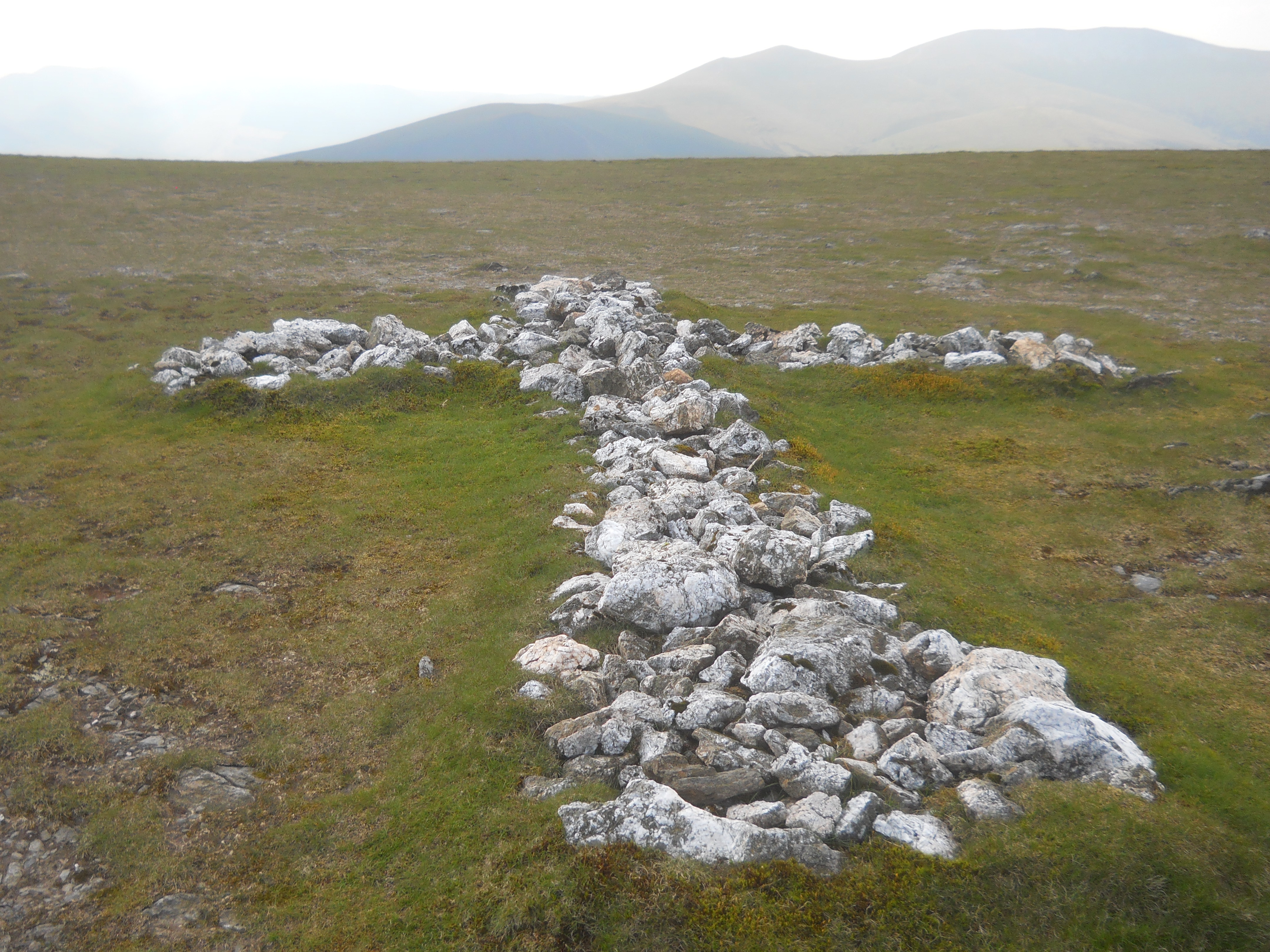
Photo©K Marsh.  White quartzite stone cross, Lake District. 

Posted on

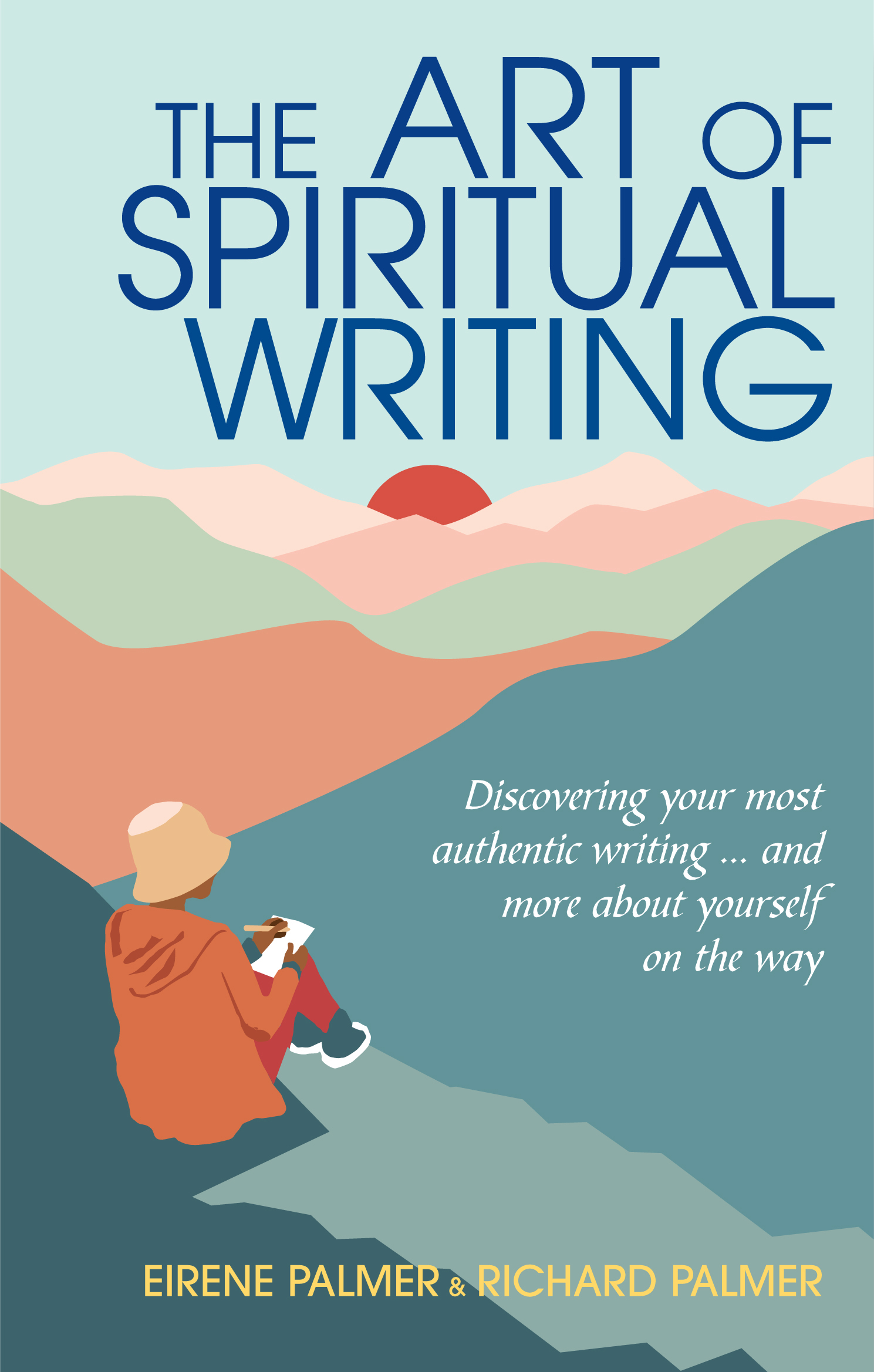
Book Review The Art of Spiritual Writing

Authors Eirene Palmer and Richard Palmer. Published by DLT (Darton, Longman, Todd)

Reviewed by Angela May

This book is the work of a couple who are both authors and retreat leaders, experienced in helping others to write, specifically including writing about things that I’m interested in:  life’s journey, one’s spiritual life, and journalling in general.  I’ve always found it difficult to find the time to keep a diary, but in recent years I’ve wanted to write my autobiography, however briefly, and to take up the practice of spiritual journalling.  But somehow life always gets in the way. 

So it seemed a good idea to read this ‘transformative book (which) offers a treasure trove of ideas to help you write about your spiritual life …. maybe recording your story for others …. (providing) invaluable advice, good journalling practices, and tips for encouraging readers to get into the habit of daily writing and reflection’.  This book is all about finding yourself and finding your voice, writing from ‘that deep reflective place inside each of us’.

The authors make it clear that we don’t need to worry about perfect grammar or punctuation:  we just need to write and get things down.  Also that all writing can be considered spiritual.  
The authors encourage us to begin with the use of story-telling as a means of getting into writing, delving into our own lives, and writing things down for the interest of other people.  They recommend starting a story with a small detail.  This immediately grabbed my attention, because I’d thought to begin my biography in exactly that way, with a tiny flower.  So I was only a few pages into reading this book when I managed to write down the title of my autobiography for the first time, having carried it in my head for at least a decade.  I had taken the first step!

The book is full of prompts and tips, including the basic advice to have a notebook with you always, including at your bedside, to capture stray thoughts and ideas, interesting dialogue, dreams, etc, which you think you’ll remember but don’t.  These are good resources for writing about.  

Another prompt:  undertake a simple Examen, a technique used in Ignatian spirituality, and write about it.  Also suggested:  a SWOT exercise, writing some paragraphs on one’s Strengths, Weaknesses, Opportunities, and Threats.  Undertaking this, the Opportunities section reminded me of all the exciting potential for developments in my area..  The advice to write about anything you are passionate about got me writing about my favourite colour, how it all began, and its long-term impact on my happiness.  The book is full of interesting thoughts and ideas.  

Eirene’s apparent preference for referring to God as ‘She’ made me begin to consider the feminine side of God, who is after all El Shaddai, the All Sufficient, encompassing everything, and I wondered whether I might relate better to God as Her rather than Him.  I began a prayer to El Shaddai, using the free-writing technique, just relaxing, open to God, and letting thoughts and images emerge into my mind and putting them down on paper, to be honed later into a completed prayer.  There are sections on free-writing, which gives you access to your subconscious, and on writing prayers, and also encouragement to try writing psalms relating to your own life.

Keeping a journal is a long-established way of getting to understand more about ourselves, and keeping track of how far we have come, and what God has been doing in our lives.  It was encouraging to be told that one doesn’t have to write a spiritual journal every day, and I’ve managed to complete a few entries in my new journal since starting to read this book, inspired by events.  Success with this will come down to prioritizing, and it is important. 

This easy-to-read book has been interesting and encouraging, and has helped me to get going in several areas of writing.  Hopefully, it will also be helpful for others who are having trouble pinning themselves down or who could do with some encouragement and nudges.

Posted on

Easter Greetings

Blessings to all our readers as we celebrate the resurrection of our Lord. Orthodox, Catholic and Protestant churches all celebrate Easter this weekend as the calendars align. Except possibly the Ethiopian Orthodox Church as that is too complicated for me to work out.

An Easter message from the JM National Council:

The Julian Meetings works to support the one-hundred-and-forty local meetings across the UK in which anyone and everyone can share in the experience of silent prayer in the company of others.

JM also seeks to promote and publicise this ancient and essential strand of the Christian tradition through our website, social media, and simple and accessible publications.

The organisation is run by a small group of volunteers, with no paid staff.  We keep expenses to a minimum.  There are, however, costs in equipment, postage and other essentials.

JM is seeking to increase its individual membership. Members are able to participate in the discussions on the future work and development of JM and get advance notice of books recently published and available to review.   Usually the only regular communication that members receive is a monthly update about what has been added to the website.  A discretionary donation is requested.

If you are able either to become a member, or would prefer just to make a donation, we would be very grateful.  Your support will give us confidence, as a small core group of volunteers, that The Julian Meetings can continue its work into the future.  We believe that silent contemplation with God is a foundation of our Christian belief.  Sadly, the world has never needed this more.

Join Us Here

You can also subscribe to receive these blog posts by email as they are published. You do not have to join formally. Use the subscribe link at the top of the blog page.

Donate

Photo – Greek Orthodox Easter Church decorations from Greek Gateway Facebook page

Posted on

Books Recently Published

Here are three books recently published which might interest you. Click on the picture to go to the publisher’s page. These are from an American publisher, you can find price and purchase information in other currencies from the usual online sellers and bookshops.

If you are able to review one of these books, email bookreviews@thejulianmeetings.net. A review copy may be available.

Posted on

The Language of Prayer

An opening meditation and closing prayer used at the Bexhill Julian Meeting.

The language of prayer, as with all forms of communication, is deeper than just words; it is layered with meaning. It is the language of love, of the heart. When I speak to someone who is dear to me it’s not necessarily what they are saying that I love, it’s that I love the fact that they want to say it to me. In a loving relationship there are underlying depths, of joy, love, a harmony of heart and mind. 

When we come to God with all our neediness, hopes and aspirations there is a resonance beyond dialogue. When we surrender into stillness and silence it is as if God would say ‘I’m so glad you are here’ and we would respond ‘I’m so glad I am here’. 

Such love is contingent on nothing, we are fully known and yet fully loved not just with, but for all our imperfections because they drive us to God. Such a love reaches beyond actions or words, it is much more an affair of the heart which longs to know and be known. 

Over time there is a sense in which we become the prayer, the lived understanding that we are accepted as we are which frees us to accept others as they are. This communion is how we come to know oneness both with God and with all of creation. With continued practice the awareness of this wordless communion remains with us beyond our times of quiet reflection and we can draw on the inner peace throughout our day. It becomes to us, an endless resource in times of both joy and tribulation. 

Closing prayer: 

May rivers of peace, harmony, security, equality and freedom flow to all humanity. May your sacred light dispel all spiritual darkness and ignorance. And may harmony between spirit, mind and body found by the one, extend to the many. Water the seeds of peace among nations, and spiritual awakening to the people of the world.  Amen 

JM  Meditation  20 August 2024. Text and Photo © K Marsh ( Bexhill meeting) Photo of statue at Herstmonceux Castle close to the Village of Herstmonceux in East Sussex