Posted on

A reflection on contemplative prayer

“Prayer should not be transactional, rather it should be transformational” 

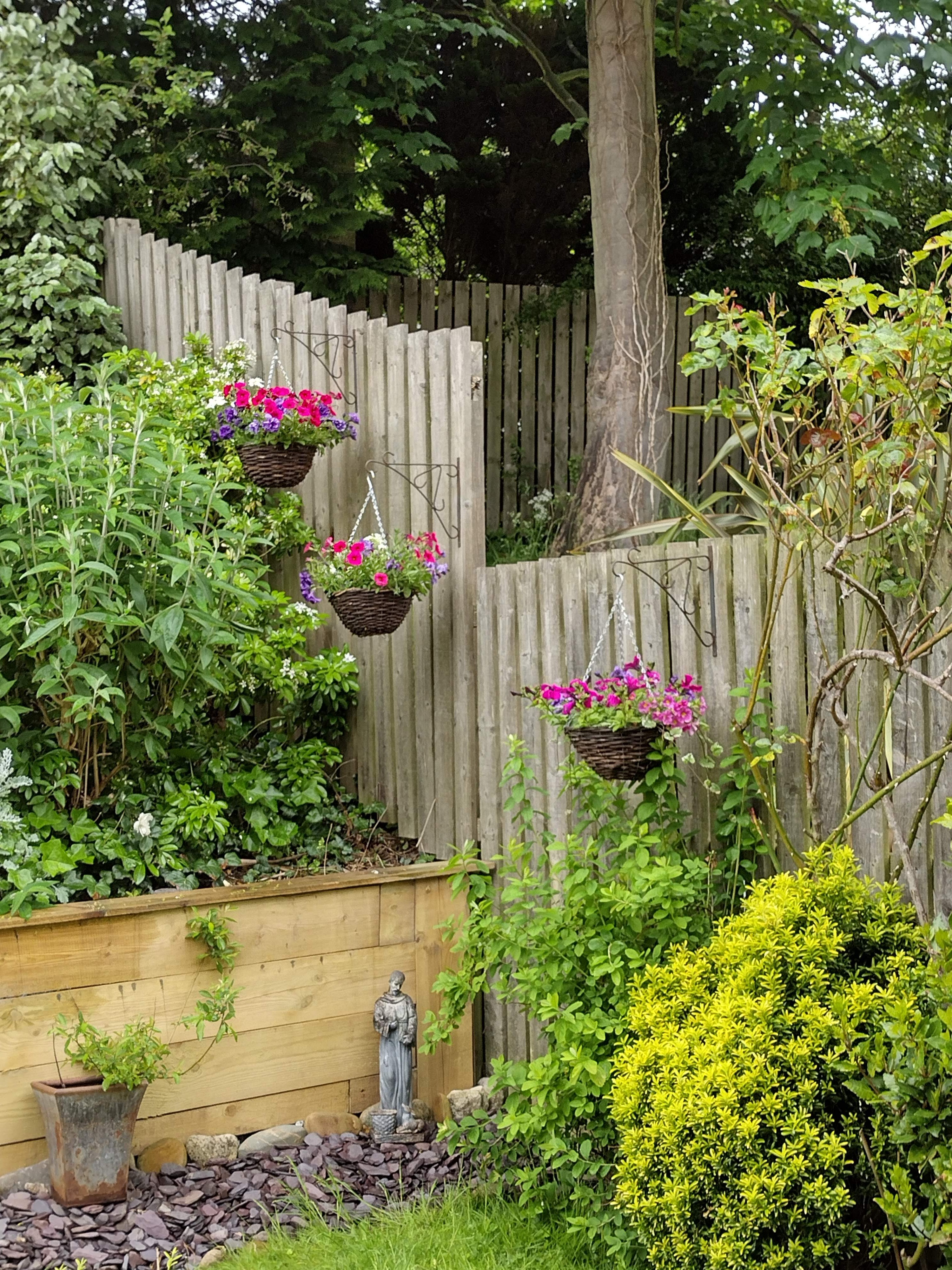
In a lifetime our prayer may take many forms of expression. Some of which will be words and actions, others heartfelt joy or deep suffering to which we yield in the spirit (as best we can). We may experience everything from bliss to abject misery. In these times our prayer may change from songs of joy to tears of despair. 

It may seem, particularly in relation to specific requests, that our words go unheeded and unanswered. The issue does not lie with God but with our thoughts and attitudes regarding the best outcome of our prayer. 

Though we express ourselves in words and actions, prayer is a relationship in which the communion rather than the mental, physical or verbal content is transformative. God is unchanging. It is we who are refined by the ever deepening relationship which contemplative prayer enables.  

This is why silence and surrendered stillness is so powerful. When we let go of the desire to direct our own destiny, we enter a sacred space in which the Holy Spirit communes with our Spirit and we may rest; as the Divine work of transformation and ever deepening love and trust helps us transcend our physical, emotional and spiritual limitations. It is the nature of seeds, in time, to break ground and bear fruit, in the same way this unseen, unfelt miracle of growth in the ground of our being can lead to the manifestation of the fruits of the Spirit in our lives. 

Text © K. Marsh 01/11/2023 

Photo © H Lems

Posted on

The Fire and the Rose are One

©Keren Dibbens-Wyatt

Picture and text © Keren Dibbens-Wyatt

If you gaze into the fire of the Sacred Heart, your own core will be broken into tiny pieces every day. Even if you decided not to watch the news, not to open the scrolls, if you closed your eyes and sat, maybe especially if you closed your eyes and sat, with your small yes in the silence, wouldn’t your heart be shattered by the presence of the loveliness of a hurting world? By the soft crying of the swifts circling in the air, searching for home, and the beauty of roses, spilling out their flames onto the ground?

Couldn’t you sense, then, the heart you are breaking with and into? There is a centre, a fulcrum, a crossways, a holding, an anchor. It is here, at the heartwood, in the groans of Spirit, a pained love so magnanimous that it never ceases to be cracked open, over and over, like a flower that blooms and opens to harshness, and chooses to blossom again the next day, knowing the effort will force death? Like eggshells hatching over and again inside one another, without seeing the freedom they are birthing, as cosmic Russian dolls.

And each of these mortalities, the quiet and the vicious, creates another layer, another crinoline surround, a nebula within those crinkling into fire before it, till this heart is full and overflowing into other universes, even as its centre burns to ash and rises again. An outpouring, a constant cataract of seeing, feeling, bursting, and from all of this, a love unthinkable, too enduring to grasp. And yet we sit and sense the edges of it, in our small pauses for prayer. We offer our song and our cries and our petals to this One, this Everything, this Love. And we too, become flame.

Picture and text © Keren Dibbens-Wyatt

About Keren Dibbens-Wyatt

Keren Dibbens-Wyatt is a chronically ill writer and artist with a passion for poetry, mysticism, story and colour. She is a contemplative in the Christian tradition who writes to encourage others into knowing the Lord more intimately, as well as to share the poetic ponderings of her heart. Keren suffers from M.E. (myalgic encephalomyelitis) which keeps her largely out of the trouble she would doubtless get into otherwise.

Keren’s work features regularly on spiritual blogs and in literary journals. She has published a number of books which can be found on Amazon and all the usual booksellers. Keren lives in South East England and is mainly housebound by her illness.

Posted on

God of Wholeness

O God of wholeness, we rest in you.

You listen with us to the sound of running water.

You sit with us under the shade of the trees of our healing.

You walk once more with us in the garden in the cool of the day.

The oil of your anointing penetrates the cells of our being.

The warmth of your hands steadies us and gives us courage.

O God of wholeness, we rest in you.

From the April 2024 magazine

Posted on

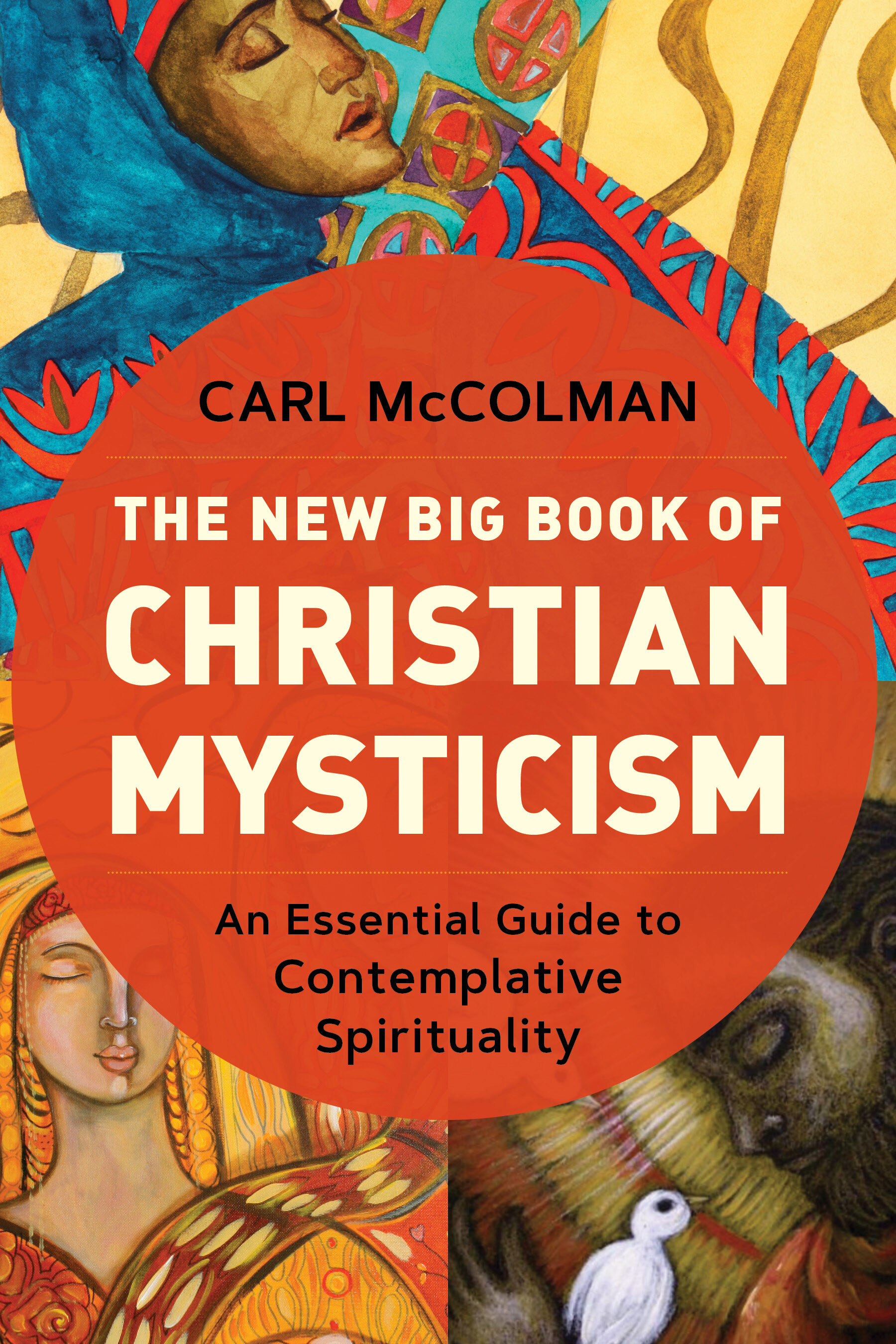
The New Big Book of Christian Mysticism

A Guide to Contemplative Spirituality By Carl McColman (Author) Aug 2023

Information from the Publisher, Broadleaf Books:

“This revised and expanded edition offers a big possibility: the hope of achieving real, experiential union with God.

‘The Christian of the future will be a mystic—or will not exist.’ This word of warning from theologian Karl Rahner was uttered half a century ago, and today, Christianity is indeed in crisis. Is mysticism necessary for the survival of Christianity? What exactly is Christian mysticism? How can it be relevant in our crisis-ridden world? Questions like these inspire The New Big Book of Christian Mysticism, a newly updated edition from beloved spiritual teacher and bestselling author Carl McColman.

The New Big Book of Christian Mysticism serves as both introduction and practical instruction for a living contemplative practice today. In addition to the overview of mysticism, spiritual and prayer practices in mysticism, the various types of mysticism in Christian tradition, and influential mystics through the millennia, this second edition offers an embodied understanding of the mystic life with a more diverse range of voices and perspectives, from Howard Thurman to Pauli Murray. It also includes new chapters and themes that address embodied mysticism, contemplation and social justice, and the ongoing relevance of Jesus’s message of radical equality and inclusivity.

This bigger book introduces both Christians and non-Christians to the contemplative tradition within Christianity, a tradition that has often been marginalized or cloistered (to the church’s detriment). As a practice-oriented book, this is an invitation to embrace the mystical element within Christianity—a practice that can equip faithful persons with a joyful sense of divine intimacy, not just for personal benefit but as a foundation to a life of service and activism in the interest of justice.

McColman’s overview of mysticism shows how it has been practiced and lived through the centuries and will prove inspirational for today’s seekers, regardless of their faith tradition. At its heart, Christian mysticism is an ancient practice that incorporates meditation, contemplation, worship, philosophy, the quest for enlightenment, the thirst for a better world, and the experience of divine presence.”

“The mystic is not a special kind of person; every person is a special kind of mystic.” –William McNamara 

Posted on

St Theresa of Avila 

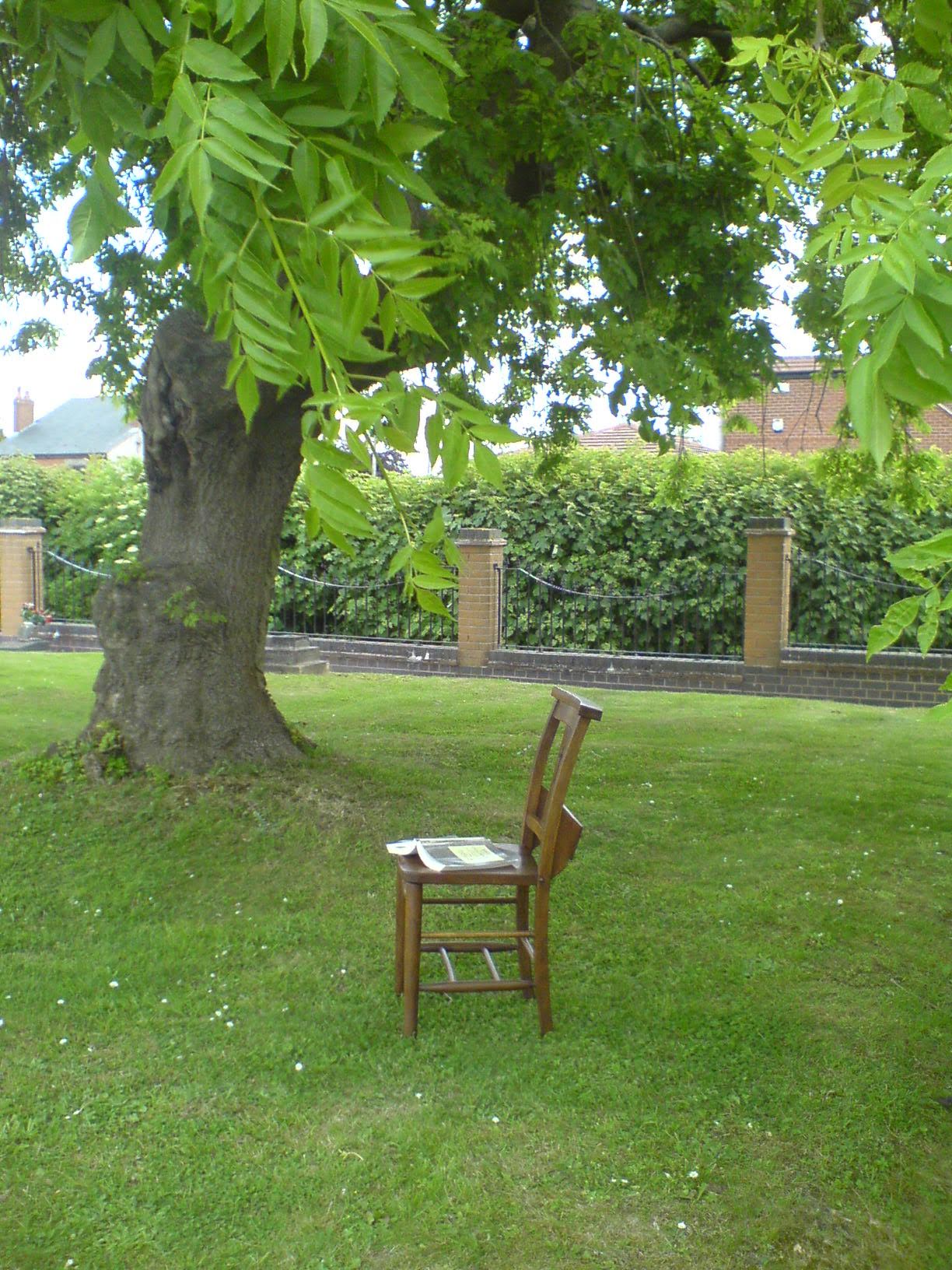
“You know that God is everywhere; and this is a great truth, for, of course, wherever the king is, or so they say, the court is too: that is to say, wherever God is, there is Heaven. No doubt you can believe that, in any place where His Majesty is, there is fulness of glory.

Remember how Saint Augustine tells us about his seeking God in many places and eventually finding Him within himself. Do you suppose it is of little importance that a soul which is often distracted should come to understand this truth and to find that, in order to speak to its Eternal Father and to take its delight in Him, it has no need to go to Heaven or to speak in a loud voice?

However quietly we speak, He is so near that He will hear us: we need no wings to go in search of Him but have only to find a place where we can be alone and look upon Him present within us. Nor need we feel strange in the presence of so kind a Guest; we must talk to Him very humbly, as we should to our father, ask Him for things as we should ask a father, tell Him our troubles, beg Him to put them right, and yet realize that we are not worthy to be called His children.”

From The Way to Perfection, Chapter 28 

Posted on

To pray where prayer has been valid 

More than an order of words

If you came this way,  
Taking any route, starting from anywhere, 
At any time or at any season,  
It would always be the same: you would have to put off  
Sense and notion. You are not here to verify, 
Instruct yourself, or inform curiosity  
Or carry report. You are here to kneel  
Where prayer has been valid. And prayer is more  
Than an order of words, the conscious occupation 
Of the praying mind, or the sound of the voice praying.  
And what the dead had no speech for, when living,  
They can tell you, being dead: the communication 
Of the dead is tongued with fire beyond the language of the living.  
Here, the intersection of the timeless moment 
Is England and nowhere. Never and always. 

T.S. Eliot, Little Gidding 

Image attribution istolethetv, CC BY 2.0 https://creativecommons.org/licenses/by/2.0, via Wikimedia Commons

a person paying their respects at hong kong cemetary during qing ming festival, happy valley, hong kong.

Posted on

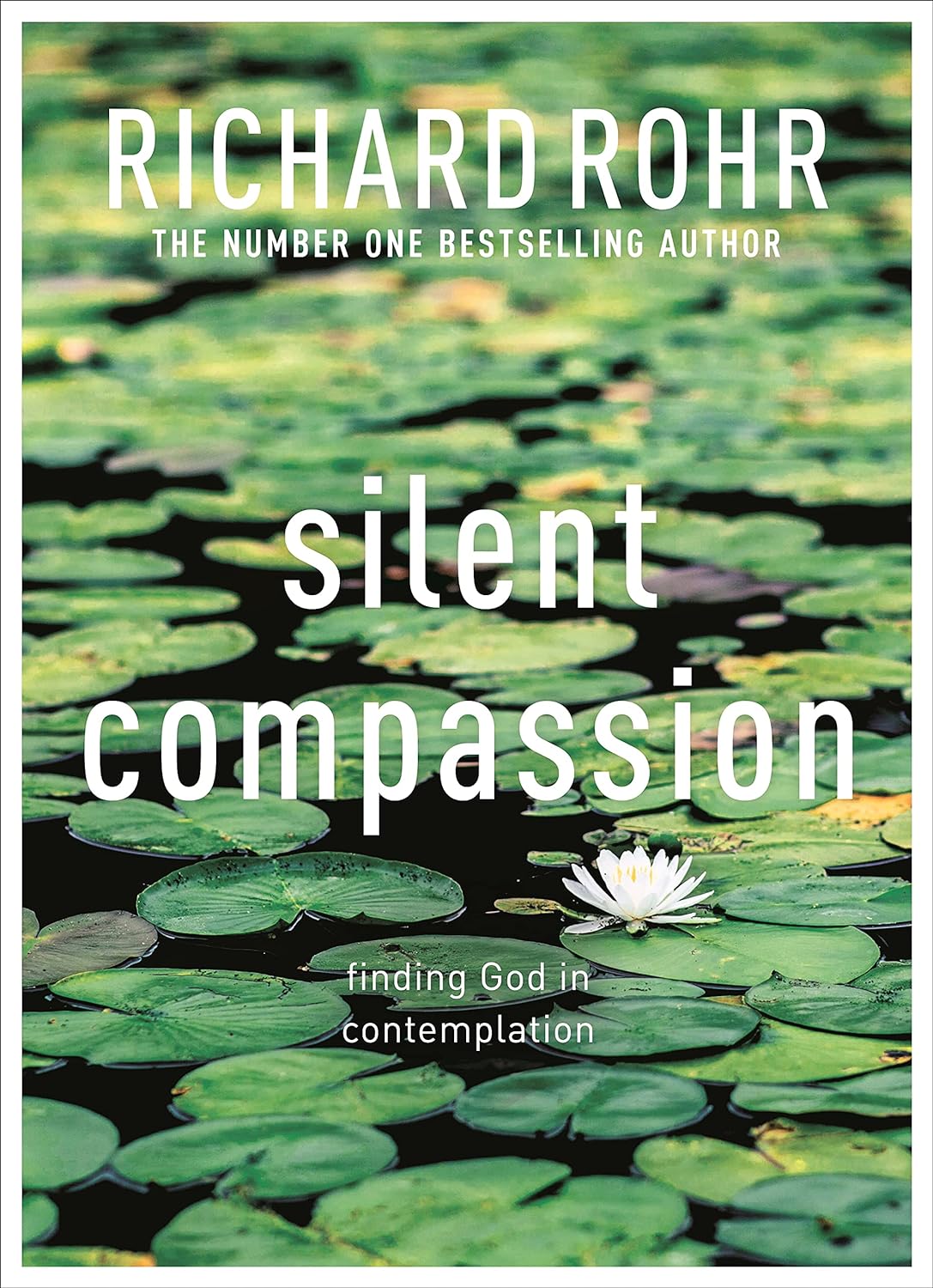
Silent Compassion: finding God in contemplation by Richard Rohr

Richard Rohr OFM (b. 1943) hardly needs any introduction. He is an American Franciscan priest and communicator. Based in Albuquerque, New Mexico, he was the founding director and academic dean of the Living School for Action and Contemplation, founded in 2013. In 2023 he retired and is now Faculty Emeritus. Having published over 30 books (17 in print at the time of writing through SPCK) – most notably, perhaps, The Universal Christ and Falling Upward – he is undoubtedly one of the most popular authors and speakers on spirituality in the world.

Silent Compassion was published first by Franciscan Media in the USA back in 2014. It came on the heels of the City of Louisville’s occasional Festival of Faiths, attended by Buddhists, Christians, Hindus, Jews, and Muslims, including Richard Rohr and the Dalai Lama. Nearby, in Kentucky, is the Roman Catholic monastery of Gethsemani whence Thomas Merton travelled across the world to South-East Asia for another interfaith event some fifty years previously, where he met the younger Dalai Lama. Again, not far away, is the corner of Fourth and Muhammad Ali Boulevard where Merton had a mystical experience concerning the oneness of humanity.

The book has a Preface by John Feister, Editor in Chief of St Anthony Messenger magazine, an Introduction focusing on the Perennial tradition (‘affirm[ing] that there are some constant themes, truths, and recurrences in all the world religions’ (xi)), five short chapters, a really helpful Appendix listing an interfaith timeline of mystics, Notes, and Sources for the chapters. The chapters are headed (1) Finding God in the Depths of Silence, (2) Sacred Silence, Pathway to Compassion, (3) The True Self is Compassion, Love Itself, (4) Looking Out in Prayer with Contemplative Eyes, and (5) The Path to Non-Dual Thinking. Each is sourced either from the talks given by Richard Rohr, together with their Q and A sessions, at the conference, or from interviews given by Fr Richard published in the St Anthony Messenger magazine. Chapters that assuredly feed our minds – and our hearts.

SPCK, 2022. Paperback ISBN 978 0 281 08660 3. Price £8.99.
Luke Penkett

Posted on

God is in this place

When I think on God’s Kingdom, I am compelled to be silent because of its immensity, because God’s Kingdom is none other than God Himself with all His riches. God’s Kingdom is no small thing: we may survey in imagination all the worlds of God’s creation, but they are not God’s Kingdom. In whichever soul God’s Kingdom appeareth, and which knoweth God’s Kingdom, that soul needeth no human preaching or instruction; it is taught from within and assured of eternal life. Whoever knows and recognizes how near God’s Kingdom is to him may say with Jacob, “God is in this place, and I knew it not.”

(Sermons, by Meister Eckhart.  The Nearness of the Kingdom)

Photo attribution Hugo Sundström, CC BY 4.0 https://creativecommons.org/licenses/by/4.0, via Wikimedia Commons

Posted on

Freedom

Christ_on_the_Cross_by_Frantisek_Bilek

Christ_on_the_Cross_by_Frantisek_Bilek wiki commons

Contemplation and meditation are often thought of as activities, which don’t really relate to everyday life or the life of the wider community.  This is a mistake.  The iconic image of contemplation, maybe, is the monk or the nun alone in prayer in their cell.  But such people know the connection that what they are doing has with the rest of the world.  Thomas Merton, himself a monk who wrote extensively about contemplative practice, was also much concerned with the world’s social and moral problems.  In He is Risen, he wrote in 1975 about freedom of action and thought in the context of spending time with God:

“Too may Christians are not free because they submit to the domination of other people’s ideas. They submit passively to the opinion of the crowd. For self- protection they hide in the crowd, and run along with the crowd – even when it turns into a lynch mob. They are afraid of the aloneness, the moral nakedness, which they would feel apart from the crowd.

But the Christian in whom Christ is risen dares to think and act differently from the crowd.

He has ideas of his own, not because he is arrogant, but because he has the humility to stand alone and pay attention to the purpose and grace of God, which are often quite contrary to the purposes and plans of an established human power structure.”

Posted on

The Word Within the Words Malcolm Guite

Darton, Longman & Todd 2021 £8.99 ISBN 978 1 913657 38 3

Given that Julian meetings are held in silence, ‘The Word within the Words’ may seem an odd choice for reading. We forget that words are distinguished by the silence, however brief, between them, which gives them space for their meaning to emerge. John’s gospel begins, ‘In the beginning was the Word’; and what follows tells us that this word is a verb, not a noun. It does not describe God; it opens the path for God to act, and interact, with His creation.

And this is the theme which runs through Malcolm Guite’s book. He draws on his experiences as a scholar working on medieval poetry, much of which had a religious context, which led him to discover his faith. He uses poetry, both his own and that of a variety of other sources, to illustrate the power of words, provided they are given the silence they need to grow in our hearts and minds, and to enable God to act in and through us.

This is a short book – less than 90 small pages – and can be read in about an hour and a half. But I should have said, ‘mis-read’; it is not a book to be read and then gather dust on the shelf; you need to allow the spaces between the words to have their effect, too. Think of it as a spiritual fertiliser, to be thinly spread and dug in; its effects will be seen later, in ways we may not have anticipated. Because, for words to grow and bear fruit, silence is essential.

Brian Morris