Posted on

The God Within – Something Personal 

In discussion with an Anglican friend earlier in the year, I suggested that the liturgy of the Church of England, even the modern versions, contains very little of the God within. It tends to look to God above, to God looking down, to gratitude, confession and petition. Prayer is surely about nurturing a relationship.  

 
Teresa of Avila, however, has much to say about the God within: “Settle yourself in solitude and you will come upon God in yourself”. And, as a child, I remember being impressed by a saying of Mahatma Gandhi: “I believe God is closer to me than fingernails to the flesh”. Admittedly, being of the Quaker persuasion, I stand towards the edge of the Christian tradition and I look towards waiting in silence, to experiencing moments of transcendence, however simple and fleeting, to assist me in my way through life. 

 
Earlier this year our family spent a week in the hills in mid-Wales. We stayed in an old farmhouse where the view from the yard provided a sublime vision of quiet: meadow, trees, blue mountains, a few silent sheep and, blessedly blue sky. Occasional flights of goldfinches feasting on the purple thistle heads only contributed to the peace. Early each morning I would sit and marvel at the quality of the silence. One morning, indeed, I felt “caught up” in a moment of timelessness. It has come into my mind often since and I have remembered a beginning of a poem by R. S. Thomas which fits completely: 

 
And God said: How do you know? 

And I went out into the fields 

At morning and it was true. 

 
Such intimations are of inestimable value in helping us to navigate a world which contains so much destruction, suffering and inequality. It is all too easy to feel overwhelmed by news, to feel that one’s own puny efforts at supporting others, ‘saving the planet,’ are so miniscule as to be useless. For most of us we might say with T.S.Eliot: 

 
there is only the unattended 

Moment, the moment in and out of time, 

The distraction fit, lost in a shaft of sunlight 

The wild thyme unseen, or the winter lightning 

Or the waterfall, or music heard so deeply 

That it is not heard at all, but you are the music 

While the music lasts. These are only hints and guesses, 

Hints followed by guesses; and the rest 

Is prayer, observance, discipline, thought and action. 

The hint half guessed, the gift half understood, is Incarnation. 

Janet Robinson (JM member) 

[Poem by R.S. Thomas is Amen. Quote from T.S.Eliot from Four Quartets ] 

Photo Tondi Johnston, CC BY 3.0 https://creativecommons.org/licenses/by/3.0, via Wikimedia Commons https://commons.wikimedia.org/wiki/File:Pregnancy_Week_22_by_Tondi_Johnston.jpg
Posted on

Shalom

We had wandered.

All over the place.

We came to John.

Listening to him, talking to him,

Fed the hunger, the need inside.

A way station. Respite. But not home.

The yearning persisted.

When Jesus appeared and John said:

“Look, the Lamb of God.”

We just knew.

We followed him,

And sat and listened,

And drank in his Spirit, his life,

The hope, the joy: his shalom.

Wholeness of being beckoned us

On a journey into belonging;

The healing of our minds;

Peace to our hurting souls.

Love that reaches deep enough

All the way in.

What do I want?

I have sought many things,

And been angry, disgruntled and resentful.

But my want led me to my true desire,

Where what I want, really want, became Jesus.

And nothing else mattered.

Not really.

Not when you arrive home forever.

© Angela Scott 2024

Photo
Larry D. Moore
CC BY 4.0, via Wikimedia Commons

Posted on

We See Differently at Night

We see differently at night

Shadows fall in dark corners

And then the moon appears

Bright, round but silently

  Oh, so silently.

We hear differently at night

Small noises sound louder

And then the owl appears

Flying low but silently

  Oh, so silently.

We touch differently at night

Softly, afraid to make a sound

Light footsteps on the ground

Each foot, light and softly

 Oh, so silently.

We smell differently at night

Ground smells damp and wet

Breathe deeply with each step

breaths momently pause

  Oh, so silently.

We taste differently at night

Our lips savour the taste

We drink the silent moment

And we stop and wait

  Oh, so silently.

We believe differently at night

Our quiet souls begin to see

Our minds and ears stop hearing

And we reach out to God

  Oh, so silently.

© Poem and Photo by Ann Ridout

Posted on

There

There 

There, in that other world, what waits for me? 
What shall I find after that other birth?     
No stormy, tossing, foaming, smiling sea, 
          But a new earth. 

No sun to mark the changing of the days, 
No slow, soft falling of the alternate night, 
No moon, no star, no light upon my ways, 
        Only the Light. 

No grey cathedral, wide and wondrous fair, 
That I may tread, where all my fathers trod. 
Nay, nay, my soul, no house of God is there, 
        But only God. 

Mary Coleridge 1861-1907

Mary Coleridge is a very interesting person, perhaps not as well known as she should be. Known for “the rare gift of being in love with the moment”  https://www.poetryfoundation.org/poets/mary-elizabeth-coleridge

Photo See page for author, Public domain, via Wikimedia Commons

Posted on

A Sound of Sheer Silence

From the earliest years of Christianity to the present day, the practice of silent prayer is where many have sought, and found, the presence of God. But it is not always as simple as it sounds. In this video The Revd Richard Carter offers a ‘beginner’s guide’ to silence, reflecting on its nature, practice, joys and pitfalls, and how we can find it in our noisy city and busy lives. Richard was for many years a member of the Melanesian Brotherhood in the Solomon Islands where silence was a daily part of the spiritual life of the community. In London he is the founder and leader of the Nazareth Community where contemplative prayer is the basis for their contemporary rule of life. He is Associate Vicar for Mission at St Martin-in-the-Fields in central London, and the author of ‘The City is my Monastery: A contemporary rule of life’.

Posted on

“Lectio Divina – The Sacred Art” Book Review

Paintner, Christine Valters, Lectio Divina – the Sacred Art: Transforming Words & Images Into Heart-Centered Prayer, SPCK,  2012

Publisher’s Information:

Lectio divina, which means sacred reading, is an ancient contemplative practice of listening deeply to the voice of God in sacred texts. In recent years there has been a reclaiming of the riches of contemplative prayer forms of Western traditions. Through the practice of lectio divina you become present to each moment in a heart-centred way. Gradually, the practice of lectio expands your capacity to sense God’s presence until all of life becomes a cascade of prayer. Drawing on her own experience as a monk in the world, Christine Valters Paintner breaks open the movements of this spiritual practice. She makes them accessible to the contemporary reader who longs for a more pervasive experience of the holy in the everyday but lives far away from the sanctuary of a monastery.

Sample review from Amazon.co.uk

“I found this book to be a very helpful refresher on the practice of Lectio Divina. I have followed this practice on and off for several years, but this book applied the ideas and practice to a wide range of texts and also introduced ways of applying it to visual arts, music, nature, and our own life stories. The afterword says: ‘The whole world is, in fact, a text of sacred revelation. All experience has the potential to be revelatory, and God is singing one unending song seducing each of our hearts. So the call is to listen, to attune to the words God utters in the world.’
Every chapter has a suggested way of practising the ideas that have been discussed. If you are looking for a book that will give you practical help in refreshing your prayer life, or a book to take away on retreat, this would be a good start.”

Photo-Monique, CC BY-SA 3.0 <https://creativecommons.org/licenses/by-sa/3.0&gt;, via Wikimedia Commons

Posted on

In the Wilderness

 The three Abrahamic faiths all have wilderness as a fundamental experience of their faith: Abraham’s wanderings; Israelites 40 years in the desert; John the Baptist; Jesus.   

Why is the desert significant?  What characteristics make it important? 

Empty; silent; barren.   

A place of struggle and survival.   

Finding a sense of self in relation to God and to creation. 

When Haggar fled she went to the wilderness and God found her by a spring he asked her: 

Who are you? Where are you going? 

We all need the God of the desert to find us.  

The desert can offer us three gifts: 

Learning to see 

Empty space 

Solitariness and meeting 

Moses could not fail to see the burning bush because, in the wilderness, such a thing cannot be hidden. Deserts are places where pretence is no longer possible, only the truth suffices.   

Deserts are places to learn new truths about yourself. 

From a JM member who wishes to remain anonymous

Picture Ivan Kramskoi, Public domain, via Wikimedia Commons

Posted on

The God-Shaped Hole

It is a well-known phrase, and the experience that we lack something without the presence of God is central to Christian life (and the life of many other faiths).  In the Christian tradition it is, perhaps, most famously expressed in St Augustin’s Confessions, where almost the first statement in his autobiographical account of his faith is about a yearning for God:

You made us for yourself, and our heart is restless, until it rests in you…Since I exist, why do I seek that you should enter into me, since I am not, unless you are in me?

Yet this puzzlement in his first chapter about where to find God and who God is, is also a profound expression of our own puzzlement.  How does one fill a God-shaped hole if one cannot find the thing that will fill it?

The language, of course, gives the game away.  One is not looking for a ‘thing’, but for ‘no-thing’; in Augustine’s view, for ‘that without which I would not exist.’  The realisation that we are not looking for a ‘thing’ to complete us, not looking for something to ‘put in’ the God-shaped hole is expressed by Blaise Pascal in his Pensées, which is the source of the phrase.  The phrase is a misquote; ‘hole’ is better translated as ‘abyss’, or ‘void’, and in his discussion of a search for true happiness, Pascal goes through a list of all those things that will not make the void disappear, ranging from the stars to cabbages.  He writes:

What is it that this desire for happiness and this inability to acquire it proclaim to us, other than that there was once in man a true happiness of which there now remains to him only the mark and empty trace, which he in vain tries to fill from all his surroundings, seeking from things absent the help he does not obtain in things present? But these are all inadequate, because the infinite abyss can only be filled by an infinite and immutable object, that is to say, only by God Himself.

Pascal’s use of the word ‘object’ to describe God, is, of course misleading, but language is always strained to the limit in referring to that without which nothing would exist, without which the world and everything we know would disappear like a bursting soap bubble.  Fortunately, the belief that God is eternal – indeed beyond eternity – means that this is something we do not have to worry about.  Grammatically, though, God is never the object, he is always the subject, without whom nothing happens and no sentence that makes any sense is possible.

We are left, however, with the unknowability.  Maybe the most difficult thing to acknowledge in a life of faith is that the void or hole, the abyss, to some extent remains, and resting there, both in activity and inactivity, waiting for God’s presence is the work we are called to.  It sounds bleak, but it is not so in experience.  It is a faithful waiting for God, who does come, at his initiative and not ours, to show us that we do not exist separately from him.

text © Jonathan Smith Shoreham-by-Sea Julian Meeting

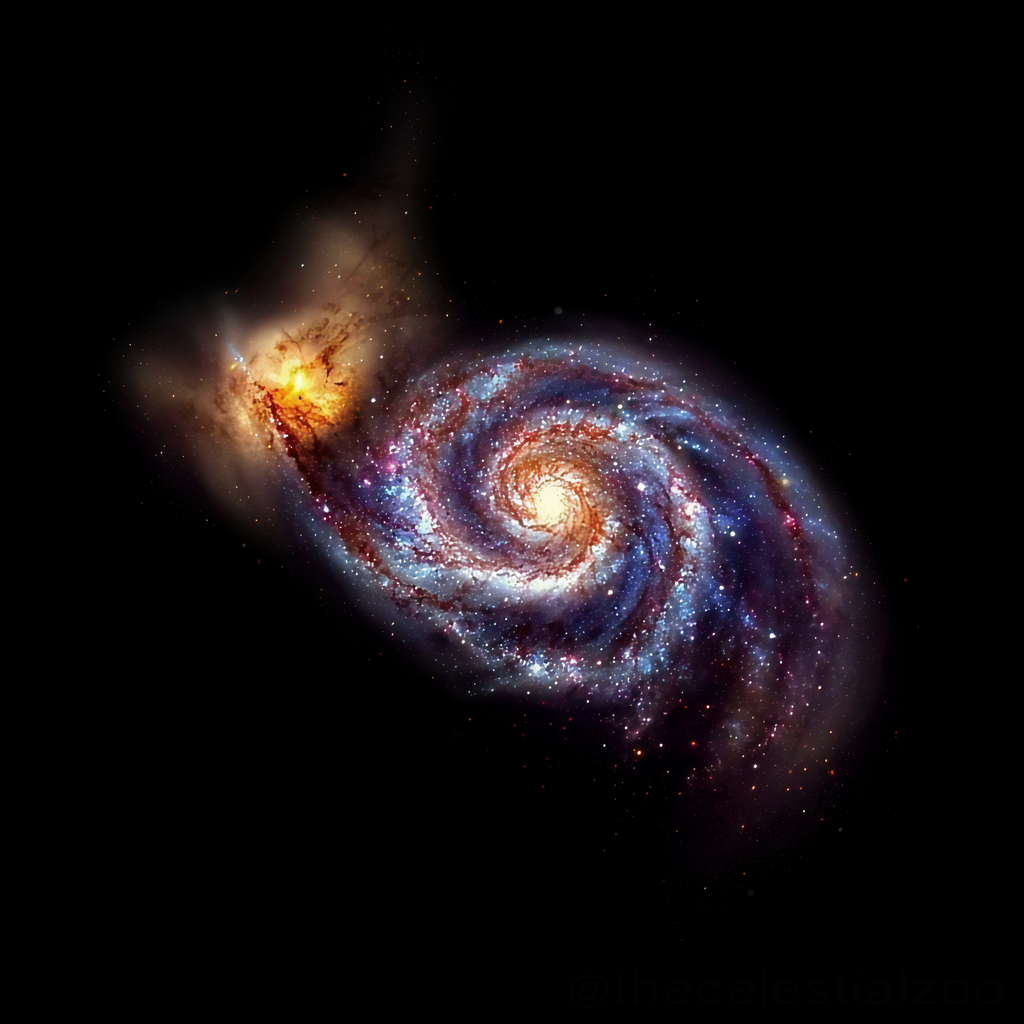
image Pablo Carlos Budassi, CC BY-SA 4.0 https://creativecommons.org/licenses/by-sa/4.0, via Wikimedia Commons

Posted on

August Magazine

Our August magazine is now available and the printed copy is with our Meetings and individual members. It is our last printed magazine. Details of how we plan to replace it are all in the magazine. You can read it online here together with our April magazine which also contains information about our plans for the future. We do need help to make that future happen. Details are all in the magazine pages 17 & 20.

If you subscribe to this blog to receive new posts as they are published but have not joined our membership please consider becoming a member to to receive news and updates and contribute to the discussions on the future of JM. This is free.