
Posted on

A Reflection for Advent

Lead-in at a Julian Meeting in Australia in December 2013 

An Advent message in the Book of Lamentations? Unlikely as it seems, some verses seem to hold a messianic significance.  

In Lamentations the first four chapters are written in acrostic form: each verse – or in chapter 3, each triplet of verses – starts in order with a letter of the Hebrew alphabet. The book, attributed to Jeremiah, comes just after his prophecies. The poetic form of lament is common in the Old Testament, and there are more laments than praises in the Psalms.  

Jeremiah and Lamentations is a tale of judgment on God’s chosen people because of their sin and rebellion. However there are promises that some will be saved, that God has not utterly abandoned them and they will be restored. Their very existence was testimony to God keeping his promises. While the people agreed that they deserved punishment, they were impatient for the good bits of the prophecy to take place.  

Chapter 3: 22-26: Because of the LORD’s great love we are not consumed, for his compassions never fail. they are new every morning: great is your faithfulness. I say to myself, The LORD is my portion; therefore I will wait for him.The LORD is good to those whose hope is in him, to the one who seeks him; it is good to wait quietly for the salvation of the LORD.  

Jeremiah is expressing his hope in God. Prophecies can have multiple fulfilments and so the prophecy fulfilled in Jeremiah’s time has its ultimate fulfilment in the birth of Jesus Christ.  

Advent is a season of preparation and waiting. We wait for the One who brings salvation to the world. An angel tells Joseph, Mary’s betrothed, in a dream you are to name him Jesus, because he will save his people from their sins. (Matthew 1:21)  

It is good to wait quietly for the salvation of the LORD.  

Two things come together to make Christmas necessary. The first is our need to be saved – not a popular idea today. We are self-made men and women who can chart our own course and settle our own destiny. We believe the hollow promise that ‘anyone can change the world.’ But it just isn’t true. We don’t all have the opportunity, the ability, or the desire to do that. Our desire is the problem – not only do we desire the wrong things, but we do not desire the One who made us, do not desire to know Him or honour Him. We cannot escape our web of guilt, decay and death. We cannot change ourselves, let alone the world. And we need someone to save us.  

Yet that alone would not explain Christmas. We could have been left to take the consequences of our own decisions. But Christmas is necessary because God won’t give up on us. He is true to Himself, and won’t abandon us. His determination to rescue his people, to eventually gather them round His throne and shower them with his blessings, is the great explanation of why Mary fell pregnant and Christ was born.  

So let us focus on God’s gracious gift of love and salvation that came to us in Jesus Christ, our Lord and Saviour.  

I conclude with the beautiful words from Isaiah 9:6,7. Notice how often the word “will” appears in this passage. These are the Lord’s precious promises to us, to encourage us in a confused and turbulent world.  

For unto us a child is born,  

to us a son is given,  

and the government will be on his shoulders.  

And he will be called  

Wonderful Counsellor, Mighty God,  

Everlasting Father, Prince of Peace.  

Of the increase of his government and peace  

there will be no end.  

He will reign on David’s throne  

and over his kingdom,  

establishing and upholding it  

with justice and righteousness  

from that time on and forever.  

The zeal of the LORD Almighty  

will accomplish this.  

©John Ryall 
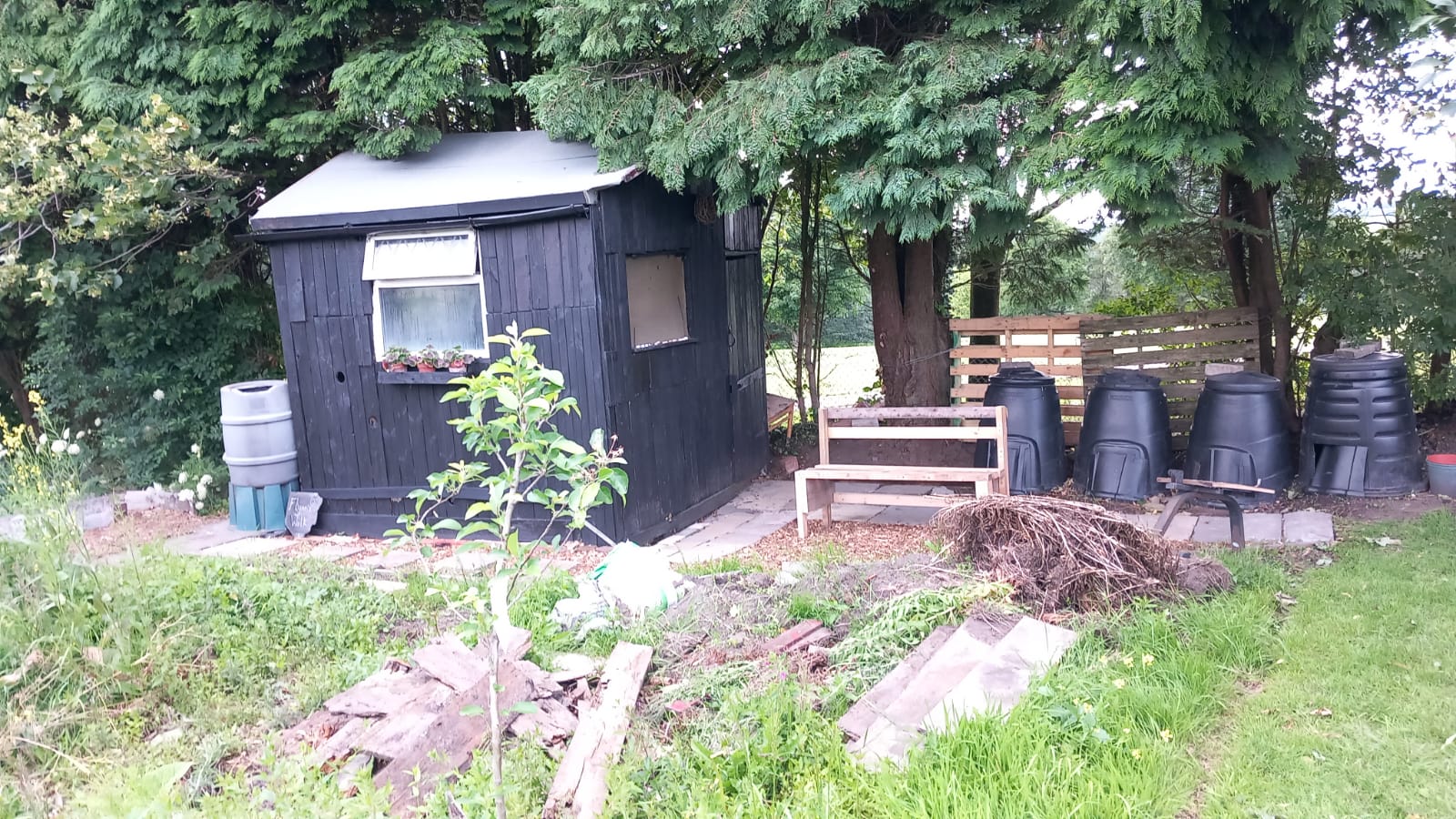
Photo https://www.pexels.com/@nubikini/

Posted on

Pondering the Julian Meetings

But when the Lord comes, will he find faith on earth? Luke 18:8

I was sitting in my allotment, pondering what I should be doing. I noticed that there was a slight slope and the earth at the top kept on wandering down to the bottom, where the shed is. The soil had enveloped the bottom of the shed and it was rotting. So I loaded the wheelbarrow up with the excess soil and took it to the beds higher up. It sounded like a command. Prevent soil erosion!. I made sides for the beds to keep the soil still.

I also heard it as a call to the next stage of my life. What acts as a barrier to prevent the continuing erosion of the soil of faith? Prayer. Maintaining the continual link with God. I could be like marram grass, anchoring the shifting sands of faith, giving my neighbours something to cling to. That is one reason I asked the Dean whether I could start a contemplative prayer group in Blackburn Cathedral. He put the Canon Missioner onto me, and we agreed a monthly time, and started up. 

Recently, the Archbishop, Stephen Cotterill, conducted a series called ‘faith in the North’, where he visits each diocese with instruction on the Lord’s Prayer. It is one of the few bits of the Bible many people have memorised. He said that it is a guide not only for prayer, but also for Christian living. The first word is ‘Our’. A Christian lives in the presence of other people, and FOR other people. And God if father of all people. His kingdom invites all to benefit, ‘on earth as in heaven’. 

Matthew precedes it with Jesus’ instructions on private prayer. There seems an implicit with those who make a show of prayer within a religious culture. Today in England we have a predominantly non religious culture. There are sizable pockets of Muslims and other where things are different, but the main flavour of our society excludes religion. That does not mean that we should therefore change Jesus’ teachings. The cathedral itself is a private space, where one can be hidden. The staff and congregation do all they can to ensure open public access and run events that encourage all sorts of people to come in. 

In the contemplative prayer group we come together and sit down. Each of us goes into our private space inside, and closes the door. We focus on God, knowing that around us others are doing the same. Instead of being closed off, we come together into the shared space, but each is in their own heart, where we always meet not only our Lord and ourselves, but The World. By going in, we reach out. And when we go out, we reach in. It is by paying serious attention to what is going on around us, seeing how it is all held in God, that we meet God as He is. We find he is in our individual hearts and in everyone else too.The Creator is always at work. By tuning in to the One, we find the All.

So what is the future of Julian meetings? Our founder pondered this in her Fiftieth Anniversary address, She recalled how in the early days, she had contacted the other groups exploring and teaching Contemplative Prayer. She found they were elderly and dwindling. She asked us whether we felt we should continue, and gave us silence to invite the Spirit to guide us.

The future will start where we are. My impression is that we are a group of individuals, continuing silent prayer, and some of us are lucky enough to belong to a group. The improving material on our web page is our gift to the Church, especially to those exploring silent prayer.

I’m not sure about the future concrete fulfilment of the coming of the Lord. I have always felt he is here and now, in a different mode to Judah AD 30, but as real. I expect this to continue. But to answer the hypothetical question, “if he came, would he find faith on earth?”, Julian meetings do their bit to ensure the answer ‘yes’. We do not impose faith. We open ourselves to the One in whom faith may be had. We discover, in the silence, what he has to offer. We give ourselves to the waiting, turning back again and again as our attention drifts, to the source of life itself. We are like Marram grass, anchoring the sand dune of faith against erosion.

Text and image ©Philip Tyers

Blackburn Cathedral Contemplative Prayer Meeting

November 2025

NB Philip Tyers is a JM member. The Blackburn Cathedral Contemplative Prayer Group is not a registered Julian Meeting but is organised on similar principles as appropriate for the Cathedral.