Posted on

Becoming

Although we often see life as a series of beginnings and endings; life and death, the seasons of the year, night and day, we are really in a constant state of becoming. The apostle Paul says that we were ‘chosen before the creation of the world’ Ephesians 1:4. The Psalmist says ‘You (God) created my inmost being; you knit me together in my mother’s womb’ Psalm 139:13. Our ‘seeding’ and ‘flowering’ is an intrinsic and ongoing part of God’s eternal outpouring of love. All that is required of us is an ‘awakening’ to and an acceptance of the presence of God not just in creation but in us individually and corporately.  

In contemplative practice we come to stillness and silence and, in the words of Thomas Keating, “Recognise the presence and action of God and consent to it. We do not have to go anywhere; God is already with us… Faith tells us that we already have God – the divine indwelling”.  From: The daily reader for contemplative living by Thomas Keating. 

And so, as we stand at the ‘end’ of 2024 and the ‘beginning’ of 2025 we are simply in the eternal present moment and the eternal presence of God. And in our surrender to and growing awareness of His will we are each in a state of becoming the unique manifestation of His presence according to His eternal plan. 

Closing prayer: 

Lord we thank you for the gifts of life and love and fellowship; with you, each other and with all creation. And as we reflect on our lives we thank you for your grace at work in and amongst us and we echo the prayer of Dag Hammarskjold.  ‘For all that has been, thanks. And for all that is to come, Yes’………Amen 

Text ©K Marsh 29 December 2024. Bexhill JM 

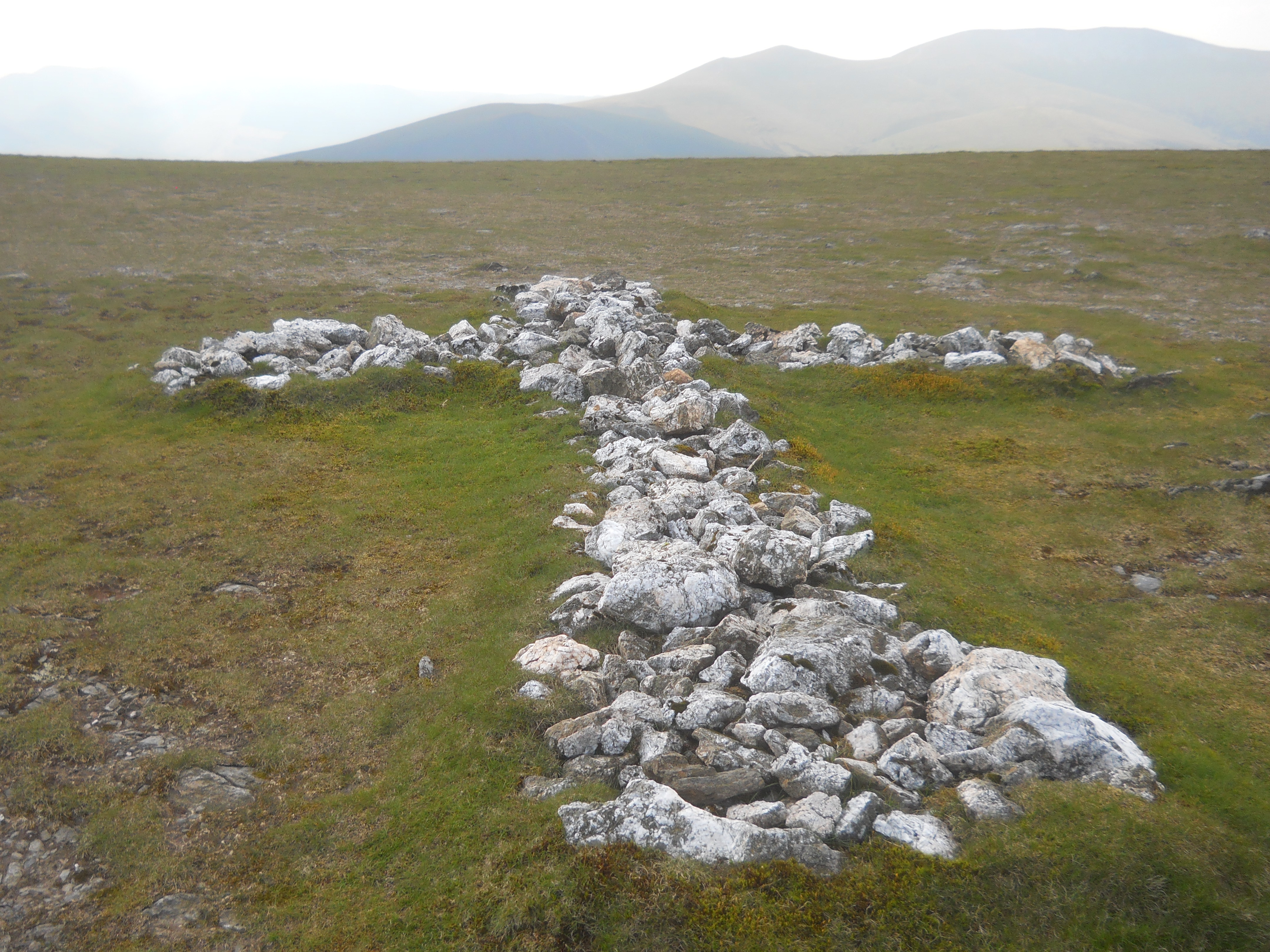
Photo©K Marsh.  White quartzite stone cross, Lake District. 

Posted on

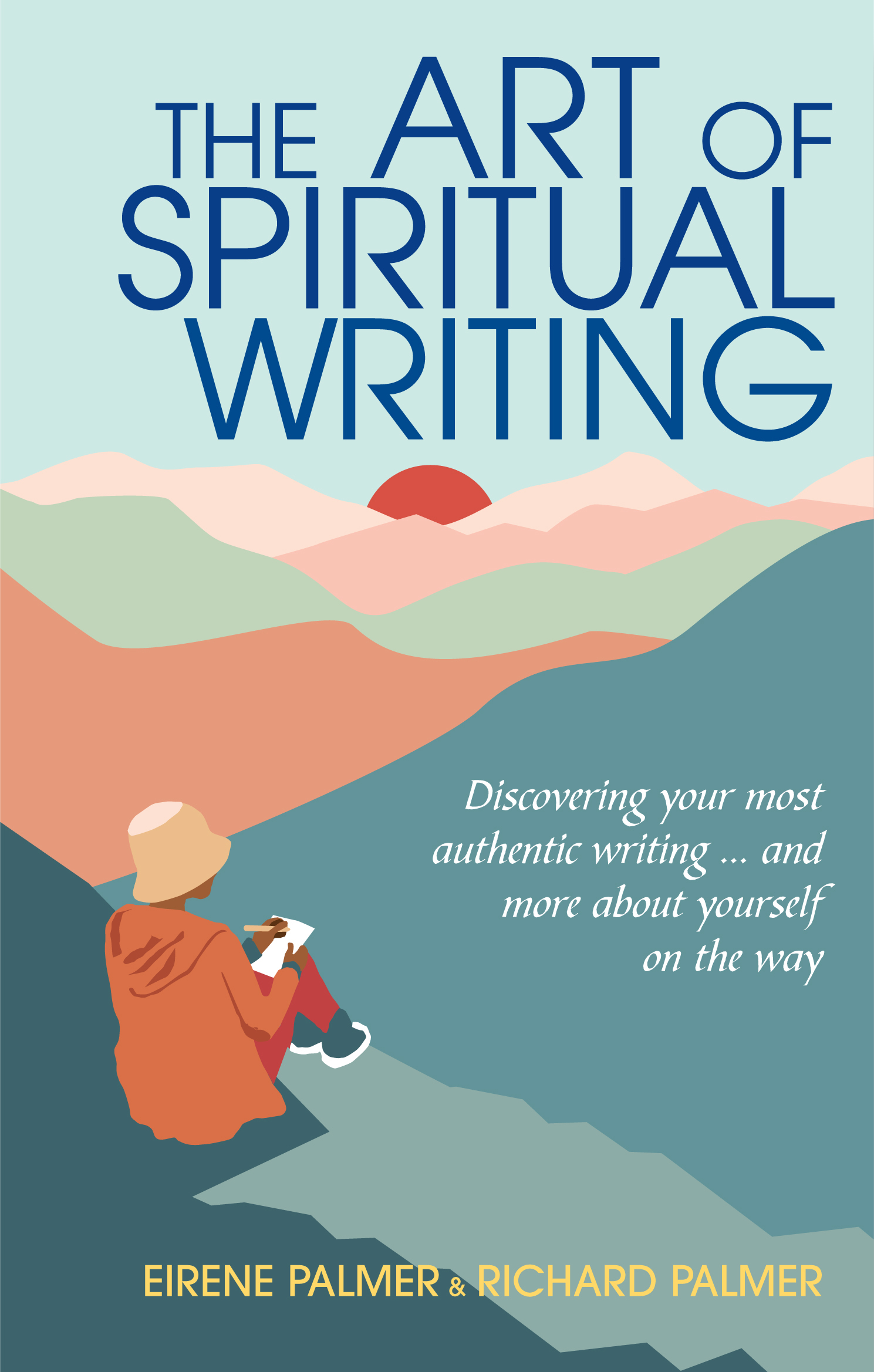
Book Review The Art of Spiritual Writing

Authors Eirene Palmer and Richard Palmer. Published by DLT (Darton, Longman, Todd)

Reviewed by Angela May

This book is the work of a couple who are both authors and retreat leaders, experienced in helping others to write, specifically including writing about things that I’m interested in:  life’s journey, one’s spiritual life, and journalling in general.  I’ve always found it difficult to find the time to keep a diary, but in recent years I’ve wanted to write my autobiography, however briefly, and to take up the practice of spiritual journalling.  But somehow life always gets in the way. 

So it seemed a good idea to read this ‘transformative book (which) offers a treasure trove of ideas to help you write about your spiritual life …. maybe recording your story for others …. (providing) invaluable advice, good journalling practices, and tips for encouraging readers to get into the habit of daily writing and reflection’.  This book is all about finding yourself and finding your voice, writing from ‘that deep reflective place inside each of us’.

The authors make it clear that we don’t need to worry about perfect grammar or punctuation:  we just need to write and get things down.  Also that all writing can be considered spiritual.  
The authors encourage us to begin with the use of story-telling as a means of getting into writing, delving into our own lives, and writing things down for the interest of other people.  They recommend starting a story with a small detail.  This immediately grabbed my attention, because I’d thought to begin my biography in exactly that way, with a tiny flower.  So I was only a few pages into reading this book when I managed to write down the title of my autobiography for the first time, having carried it in my head for at least a decade.  I had taken the first step!

The book is full of prompts and tips, including the basic advice to have a notebook with you always, including at your bedside, to capture stray thoughts and ideas, interesting dialogue, dreams, etc, which you think you’ll remember but don’t.  These are good resources for writing about.  

Another prompt:  undertake a simple Examen, a technique used in Ignatian spirituality, and write about it.  Also suggested:  a SWOT exercise, writing some paragraphs on one’s Strengths, Weaknesses, Opportunities, and Threats.  Undertaking this, the Opportunities section reminded me of all the exciting potential for developments in my area..  The advice to write about anything you are passionate about got me writing about my favourite colour, how it all began, and its long-term impact on my happiness.  The book is full of interesting thoughts and ideas.  

Eirene’s apparent preference for referring to God as ‘She’ made me begin to consider the feminine side of God, who is after all El Shaddai, the All Sufficient, encompassing everything, and I wondered whether I might relate better to God as Her rather than Him.  I began a prayer to El Shaddai, using the free-writing technique, just relaxing, open to God, and letting thoughts and images emerge into my mind and putting them down on paper, to be honed later into a completed prayer.  There are sections on free-writing, which gives you access to your subconscious, and on writing prayers, and also encouragement to try writing psalms relating to your own life.

Keeping a journal is a long-established way of getting to understand more about ourselves, and keeping track of how far we have come, and what God has been doing in our lives.  It was encouraging to be told that one doesn’t have to write a spiritual journal every day, and I’ve managed to complete a few entries in my new journal since starting to read this book, inspired by events.  Success with this will come down to prioritizing, and it is important. 

This easy-to-read book has been interesting and encouraging, and has helped me to get going in several areas of writing.  Hopefully, it will also be helpful for others who are having trouble pinning themselves down or who could do with some encouragement and nudges.

Posted on

Easter Greetings

Blessings to all our readers as we celebrate the resurrection of our Lord. Orthodox, Catholic and Protestant churches all celebrate Easter this weekend as the calendars align. Except possibly the Ethiopian Orthodox Church as that is too complicated for me to work out.

An Easter message from the JM National Council:

The Julian Meetings works to support the one-hundred-and-forty local meetings across the UK in which anyone and everyone can share in the experience of silent prayer in the company of others.

JM also seeks to promote and publicise this ancient and essential strand of the Christian tradition through our website, social media, and simple and accessible publications.

The organisation is run by a small group of volunteers, with no paid staff.  We keep expenses to a minimum.  There are, however, costs in equipment, postage and other essentials.

JM is seeking to increase its individual membership. Members are able to participate in the discussions on the future work and development of JM and get advance notice of books recently published and available to review.   Usually the only regular communication that members receive is a monthly update about what has been added to the website.  A discretionary donation is requested.

If you are able either to become a member, or would prefer just to make a donation, we would be very grateful.  Your support will give us confidence, as a small core group of volunteers, that The Julian Meetings can continue its work into the future.  We believe that silent contemplation with God is a foundation of our Christian belief.  Sadly, the world has never needed this more.

Join Us Here

You can also subscribe to receive these blog posts by email as they are published. You do not have to join formally. Use the subscribe link at the top of the blog page.

Donate

Photo – Greek Orthodox Easter Church decorations from Greek Gateway Facebook page

Posted on

Books Recently Published

Here are three books recently published which might interest you. Click on the picture to go to the publisher’s page. These are from an American publisher, you can find price and purchase information in other currencies from the usual online sellers and bookshops.

If you are able to review one of these books, email bookreviews@thejulianmeetings.net. A review copy may be available.

Posted on

The Language of Prayer

An opening meditation and closing prayer used at the Bexhill Julian Meeting.

The language of prayer, as with all forms of communication, is deeper than just words; it is layered with meaning. It is the language of love, of the heart. When I speak to someone who is dear to me it’s not necessarily what they are saying that I love, it’s that I love the fact that they want to say it to me. In a loving relationship there are underlying depths, of joy, love, a harmony of heart and mind. 

When we come to God with all our neediness, hopes and aspirations there is a resonance beyond dialogue. When we surrender into stillness and silence it is as if God would say ‘I’m so glad you are here’ and we would respond ‘I’m so glad I am here’. 

Such love is contingent on nothing, we are fully known and yet fully loved not just with, but for all our imperfections because they drive us to God. Such a love reaches beyond actions or words, it is much more an affair of the heart which longs to know and be known. 

Over time there is a sense in which we become the prayer, the lived understanding that we are accepted as we are which frees us to accept others as they are. This communion is how we come to know oneness both with God and with all of creation. With continued practice the awareness of this wordless communion remains with us beyond our times of quiet reflection and we can draw on the inner peace throughout our day. It becomes to us, an endless resource in times of both joy and tribulation. 

Closing prayer: 

May rivers of peace, harmony, security, equality and freedom flow to all humanity. May your sacred light dispel all spiritual darkness and ignorance. And may harmony between spirit, mind and body found by the one, extend to the many. Water the seeds of peace among nations, and spiritual awakening to the people of the world.  Amen 

JM  Meditation  20 August 2024. Text and Photo © K Marsh ( Bexhill meeting) Photo of statue at Herstmonceux Castle close to the Village of Herstmonceux in East Sussex

Posted on

Loss of Silence – Dealing with Tinnitus 

First published in the April 2002 magazine but still very relevant. 

“Avoid very noisy places and totally silent places”… so reads an article on tinnitus and hearing problems. 

And yet for years silence for me has been a natural environment – a bit like putting a fish back in water – and prayer largely silent. If there were times when I found silence difficult I could take comfort in or be inspired by the wisdom of the Bible, of our spiritual writers or of personal friends, especially within a local Julian Meeting. 

Recently, however, I have experienced a more intractable problem. The slight hearing loss which began to be apparent in my early forties is worsening and for two or three years I have been increasingly bothered by tinnitus. At first the noise – variously described as ringing, tinkling, roaring, a hissing sound like escaping gas – was not too intrusive and did not greatly affect my times of quiet meditation. But the noise and the deafness are worsening and silence is becoming quite difficult.  

When the opportunity came of spending a few days with a small community with a listening ear available, I decided that I wanted to try to address the hearing problems and the increasingly distracted quiet times and try to find some coping mechanisms. Being away from a busy life and staying with very caring people was a good beginning. Someone to talk it over with was a real help and it left me feeling a shift in my position and renewed hope. I could actually do something positive about this. I came away with practical suggestions, for example learning to lip read and with details of a chaplain for deaf people who proved to be a valuable source of suggestions and encouragement and who has supplied literature and addresses. 

The breathing space and support of the community left me in a better position to address the problem of the loss of silence in prayer. I realised how thin and short my set-aside prayer time had become since the problem worsened and that l was in fact beginning to avoid much silence. One of the difficulties is that though more apparent at some times than others the tinnitus is always there. I realised I was beginning just to sit and listen to the noise and it did not feel as if much loving attention was going on. 

“Quiet time” was becoming an endurance test. Strangely I would have expected the solution to be rather similar to managing a noisy external environment, but I found this approach was no help. The noise was interior and I seemed to have lost the inner silence that can exist regardless of noise outside. It was more akin to managing chronic pain or grief than to managing a noisy environment. 

All sorts of difficulties such as health problems or family worries affect our prayer, but for me a significant part of the difficulty of managing tinnitus, which makes it different from life’s other difficulties, is that my own body seemed to be destroying the essence of prayer – silence – and to be in conflict with my deepest desires. And the result was a sense of guilt and frustration. I even wondered if I should give up silent meditation. Was I making an idol of silence? God is not bound by our silence any more than he is defined by our words. Nor are his love and power. Everything changes and our relationships change and hopefully grow so perhaps the quiet times needed to change. 

As I thought and prayed about this I became convinced that I needed a different place – not necessarily physically; but if I used my imagination I could perhaps create a place where I could more comfortably meet God – a place where the background noise would mask the distracting racket going on in my head and make it less obvious. I experimented with this over a period of a few weeks. Two environments have been persistently helpful and have remained a resource now that the problem has eased. They had almost a “given” quality. The first was a high waterfall in a tropical setting – very damp, green and bright with colourful birds and a roar in the background which blended with the unwelcome noise, making it almost unnoticeable. As I revisited this place during successive prayer times I noticed that the site was now inhabited by two people standing not far from the falling water. In fact close enough to be getting rather wet from the spray. I could not recognise them. Their features were not discernible and they were rather stylised. One had his arm round the other, inclining his head to try to hear what the other was saying. Intuitively I knew these for Christ – who was the listener – and myself. On further reflection it seemed that in this picture Christ was saying “I will accept your limitations and inhabit your noisy place.” 

The second place was on a shingle beach in an English winter where the breaking waves were crashing on the beach, pounding the shingle and sucking the stones backwards as they retreated. There was wind and salt spray. Unlike the first place there was an absence of colour – sea, sky and beach being various shades of grey. Again, after a few visits there, the scene began to be peopled this time with a group of people – either a family group or friends usually walking but not attempting to say much as the wind took their words away. An atmosphere of quiet companionship invariably settled on the group. They have come to symbolise the people who over the years have shared the silent spaces with me and the people who do so still. 

As all these things had their good effect and I felt more at ease, I began to resume my normal habit of using relaxation and centring exercises as a way of settling into silence before any words or reading, though giving more time to this than before. Gradually the sense of loss has faded and a feeling of thankfulness is returning and sheer relief. There are good days and bad days. On bad days alternating silence with slow reading helps. 

Wakeful nights are rather different. The quiet of the night and the horizontal position seem to make the noise of tinnitus more pronounced. My most useful aid is not vision but touch: a holding cross loosely held in one hand. Holding a cross is also helpful to me in a group meditation if I cannot hear the reading properly and a visual focus is not being used. 

The following resources have helped: 

People Need stillness by Wanda Nash. DLT, 1992 (there is also a relaxation tape with the same title)

At Ease with Stress by Wanda Nash. DLT, 1988  

Prayer in the shadows by Angela Ashwin. Fount, 1990 

Some of these may be out of print – copies may be available from:

Abe Books https://www.abebooks.co.uk/

World of Books https://www.worldofbooks.com/en-gb

Amazon sellers. 

RNID Royal National Institute for the Deaf https://rnid.org.uk/information-and-support/tinnitus/ 

© Gail Ballinger.  First published in the April 2002 magazine. 

Photo. Not edited.

Jason Rogers, CC BY 2.0, via Wikimedia Commons

Comments

If this is a problem that you share we would be interested to hear how you deal with it. In your personal quiet times, or in a group, what helps and what hinders?  What resources have you found? 

We have opened comments for our subscribers.  Your email address is not published. Comments are moderated before publication so there may be a small delay.

Posted on

My Dream

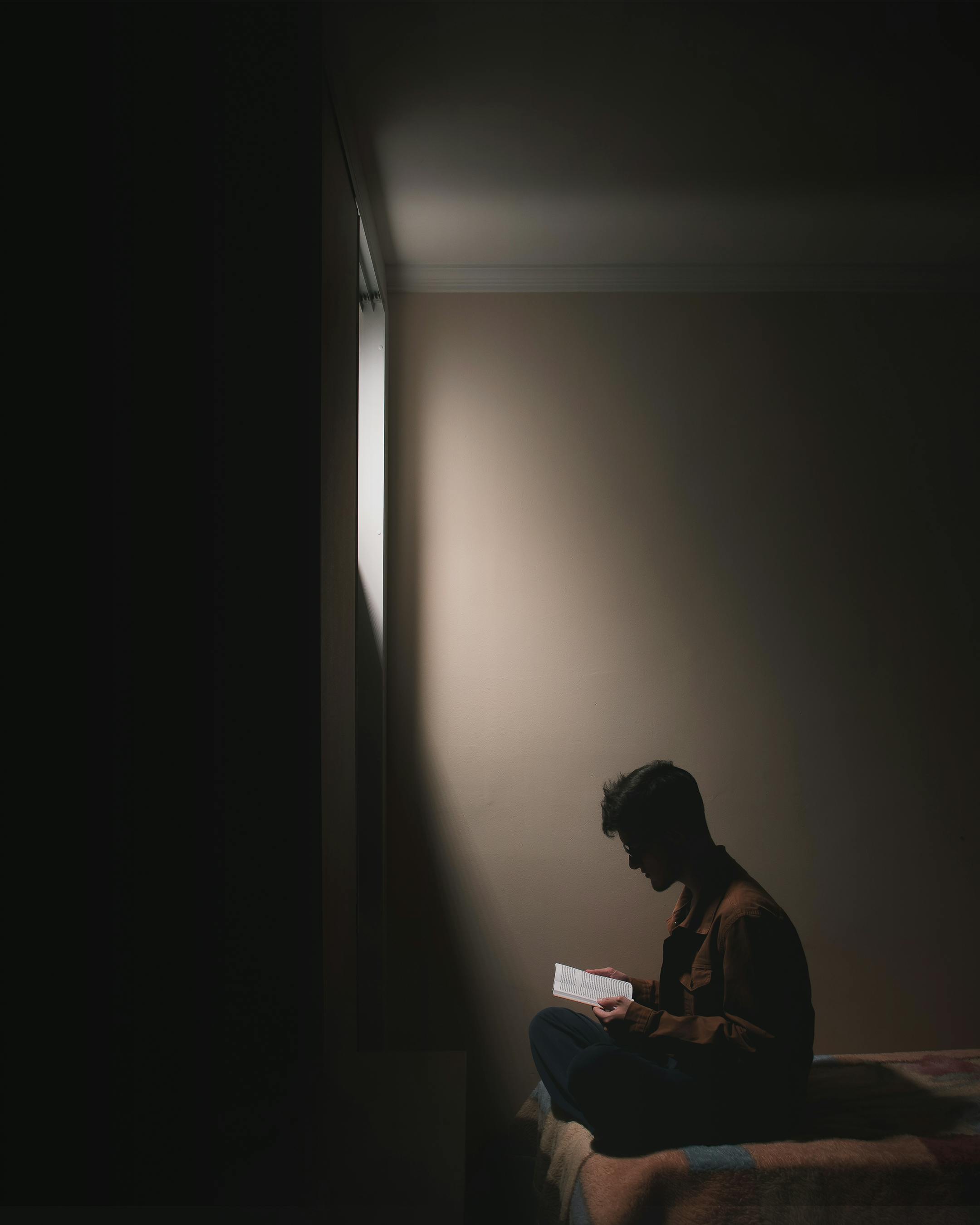
When I was a boy of about seven, I had a recurring dream which, at the time, was quite perplexing. It is difficult to describe, the words do not do it justice, but I seemed to be floating, and I remember there being some kind of ‘wire’. It was the sensations which were most odd; there seemed to be a sensation of ‘tingling’ and weightlessness. A sense of ‘being ‘ without any volition or thought. All that there seemed to be was an awareness of space without beginning or end. I could recall it in my awakened state but, over time, the dream faded.

Later in life, in my mid thirties to forties, I went through a phase of writing poetry. It was a period of my life when I found this form a way of exorcising powerful emotions both positive and negative, a way to release physical, emotional and spiritual, joy and trauma.  I remembered the dream and believed it to be a memory of being in the womb, the ‘wire’ being the umbilical cord. My description of it at that time was ‘The place of pins and needles’; because of the remembered tingling sensation. As with so many experiences and ideas, ‘life’ seems to overtake and bury some of one’s deepest sensitivities.

I now find myself reconnected to the dream. Often when I sit to meditate the memory surfaces and I have come to believe that what I was experiencing was my earliest contemplative experience. I simply knew myself ‘to be’, in the most primal way. This state required no conscious knowing or understanding, no words or description.

Now, as I think of it, there are significant parallels with being a manifestation of the divine essence. It makes sense of the way in which I feel ‘held’, almost a feeling of being cocooned, safe, at one with both ‘God’ and the universe. This seems to be the underlying feeling of peace which Jesus described as ‘beyond understanding’:    a sort of divine umbilical cord, the sustaining source of my being, my life. All this whilst experiencing and witnessing the best and worst of human endeavour, including my own.

Just as, in the womb, I was fully alive but yet to experience consciousness and self, whilst the universe was  unfolding about me, So now I find myself able to access this sacred encapsulation, this inner sanctum which, in which God, in the words of James Finley, ‘protects us from nothing and yet sustains us through everything’.

What I draw from this is that nothing was required from me, either at the moment of conception or during the gestation period. Everything required, not just to sustain me but to set up every conceivable possibility for the unfolding of my life in the world, was there from the beginning. I, and the divine source of my being, are one. And, this oneness is as true today as it was then.

That stage of being which all of us experienced in the womb, whether remembered or not, I believe has parallels in our relationship with who and how we conceive God to be. To meditate on, or contemplate the fact that all we ever need is, and always has been provided, by our source, for our being, to bring us to our destination. We, in essence, float in the endless abundance of the Divine life which is the source of all that we will ever need, physically, emotionally and spiritually. Just as in the womb everything required was supplied to us, no conscious request, no words, hopes or desires were necessary, so in this moment we can rest in being; certain that all we need  for the fulfilment of our life’s unfolding is constantly ours. Such is the power of letting go into stillness and silence. The silence is, as it were, the womb, the perfect encapsulation of our being. As we originally emerged from the womb to become who we are, so we emerge from the silence restored and renewed; in order to manifest the one Divine life: to live the silence, to carry the stillness and bring the Divine essence into the world and those around us.

Text and Photo © K. Marsh Bexhill Julian Meeting

Photo taken at Scotney Castle UK. A National Trust property just off the A21, it is listed as in Tunbridge Wells but is close to the border of East Sussex.

Posted on

I Am That I Am

Is-ness’s recognition by Am-ness is expressed in the Ocean and Wave.  

Existence self-reflected by Awareness; Presence self-recognised by Knowing.  

The Ocean is I; Am, the Wave; simply a modulation of One.  

From which, in which and to which One shall return to One.  

Never two, even in multiplicity.  

The spirit of any expression beholds both rest and movement; at its depths is stillness yet as this, the source of all activity.  

Thus each utterance of phenomena is a sonorous tolling invitation to recognise its reality.  

The wave was, is, shall ever and only be the Ocean.  

There is not no self, there is simply no separate self; there is only Self-self, I-i; Ocean-wave.  

Ocean, Wave, Current; in trinitarian coexistence. 

Text and Photo ©️Jamie Robson https://jamierobson.com

Inspired by Exodus 3:14

Posted on

What May Befall

A somewhat dark reflection but our hope for all is for a peaceful, joyful and blessed year.

The following is a possible lead-in for a Julian Meeting taken from ‘Moon in Scorpio’, by Robert Neill. A novel set in 1679, when Catholics and Protestants were at odds with each other and rebellion against Charles II was a real threat.  The words are spoken by a Catholic priest – liable to be hung, drawn and quartered if he were caught by the authorities – to a fellow citizen. His words seem to speak also to our times and situations, and where God may be in them 

What may befall you I do not know, and you may find what the world calls harm.  These are very dark and troubled days, and the things of earth are none of them secure.  There is rancour, and greed, and fear, and much else that is from hell.  In the seats of power there are men of evil heart, and daily men die who seemingly should not.  Which does not mean that a man should turn his back, and seek for himself alone.  Happiness is not found that way, and what is found is empty.  You may thank God that a path is open before you, even though you like it not.  For it is better to be called than not to be called. You will not, in the end of things, be the less happy for having done what was set before you.  That is the Law.  It is to be heeded or not heeded, as men do choose.  But it is not to be balked or changed.   

From a JM member.

Photo John Doyle, CC0, via Wikimedia Commons