Posted on

A Modern Psalm

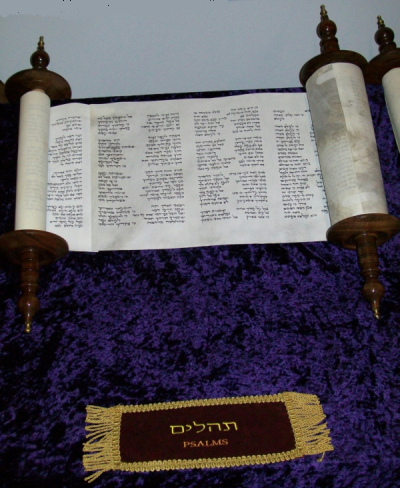
Pete unseth Creative Commons CC0 1.0 Universal Public Domain Dedication Wikimedia

Members of the Julian Meeting on the Isle of Man decided to follow the advice of Abbot Christopher Jamieson, in his book ‘Finding the Language of Grace’.  So they had a go at writing their own psalms, and one of these is reproduced below

My Lord, my saviour, Comforter and friend: you protect me under your wings like a mother hen, and yet give me the freedom to emerge from the feathery warmth in order to go forth to explore your wonderful creation.

When you lead me up high mountains you guide my footsteps: when you plunge me down deep, dark tunnels you walk beside me.

When I stray from your desired path you reprimand me gently, like a loving parent, until I return to the straight and narrow.

Sometimes you withdraw your presence from me and I cry out in desolation: but you only do this in order to strengthen my faith and trust in you.

You have given me the sense of sight in order to see colour, shape and perspective: but also the see the plight of war-torn countries and the expression on the faces of starving children.

You have given me the sense of hearing in order to delight in the sound of music and birdsong; but also to hear the sound of heavy traffic polluting the atmosphere.  You have also given me the ability to listen to silence.

You have given me the sense of smell in order to inhale the scent of incense spiraling upwards towards heaven, taking my prayers with it: but also to smell the stench of death and rot in the mountain of waste rubbish thrown away by a profligate and affluent society.

You have given me the sense of taste in order to enjoy the good fruits of your land: but also to notice the ‘green-eyed monster’ of envy, jealousy and hatred in the world, which leave a bitter taste in the mouth.

You have given me the sense of touch in order to feel the sun on my face and the wind in my hair: but also to BE touched by feelings of empathy and unity with all my fellow men and women, heedless of gender, colour or creed.

For all this I praise and magnify your Holy Name
Help me, in my small way, to care for your universal ‘Garden of Eden’: to work to prevent the damage of climate change and to comfort all those who suffer.

Glory be to the Father, Son and Holy Spirit.  As it was in the beginning, is now and ever shall be, world without end.  Amen.

Posted on

The Lost Key

Christ_Handing_the_Keys_to_St._Peter_by_Pietro_Perugino_crop.jpg

Christ Handing the Keys to St. Peter by Pietro Perugino Public domain, via Wikimedia Commons

The Lost Key

Sufism, which is sometimes described as the mystical tradition in Islam, has a tradition of the ‘wise fool’.  Stories about Sufi teachers often tell a tale of the master acting in a foolish way in order to give a lesson about spirituality, and about the misunderstanding of those with less knowledge.  The fictional Mullah Nasruddin, who appears, among other texts, in South Asian children’s books, is such a teacher.  The tradition of the fool, the truth-teller, is also deep in western culture.  The following is a story told in many different forms in the Sufi tradition.

A Sufi master had lost the key to his house and was looking for it outside. He got down on his hands and knees in the field outside his house, searching for the key. Some of his disciples came along and asked what he was doing.

He said, “I have lost the key to my house.”

 “Can we help you find it?” they responded

“By all means”, he replied.

So they all got down on their hands and knees and started desperately searching, covering a wide area between them.

One of the disciples, after a fruitless search, said, “Master, do you know where you might have lost the key?”

“Yes,” he replied.  “I lost it in the house.”

Then why are we looking for it out here?”

“Isn’t it obvious? There is more light here.”

We have all lost the key to our house. We don’t live there anymore. We don’t experience the divine indwelling. We don’t live with the kind of intimacy with God that Adam and Eve reportedly enjoyed in the Garden of Eden and the Sufi master seems to have enjoyed before he lost his key.

The house in the story is the place where we should be living, close to God, aware of his love and care. Living elsewhere, in a world of confusion and distraction, is only forced on us because the key to our happiness has been lost.  It has not been lost outside of ourselves, but within.  Through the contemplative dimension of life, we need to look for it inside ourselves, where our true link with the divine is to be found.

Posted on

Life on a Spin a Reflection by Gary Bowness

Image Attribution Ian Tresman Wikimedia Creative Commons Licence 3.00

Image Attribution Ian Tresman Wikimedia Creative Commons Licence 3.00

Many years ago, at Blackpool Pleasure Beach, one ‘ride’ was strictly for the physically fit. It was a flat wooden disc about 20 feet in diameter and set at an angle of 45 degrees in the floor. When it began to rotate, the aim was to get to the pole at the centre.  As the disc rotated faster, anyone who failed to get to the pole got flung off. It is now banned as far too dangerous!

The principle of the ride was a basic law of physics: when any wheel rotates, the outer rim moves fastest of all. Half way to the centre and you are moving a lot more slowly. In theory, at the absolute centre, is a point which is totally still. So anyone who reached the centre pole could stand there quite safely.

This ride can remind us that in our own rapidly spinning world, God is the still centre. 

All around God is motion, sound, change, growth and decay – galaxies circling, seasons and years rotating, life developing and decaying. And at the still centre, where there is no variableness, is God, the same yesterday, today and forever.

One great characteristic of Jesus was His stillness. Busy, harassed, injured people found someone with neither clever chat nor idle gossip, neither vulgar boasting nor loud opinion. His life always seemed to rotate round a still central point, which gave Him balance and authority.

“Be still and know that I am God” wrote the Psalmist.

A Julian Meeting can be a time for us to try and do just that – to find the still centre of God in our own individual lives.

Of course, we’re all very much in the world, and its busyness. But it may do none of us any harm to be a little more silent than we often are: to be quick to listen and slow to speak. 

And the more silent spaces we give ourselves, the more we’ll give that still, small voice within each one of us the chance to be heard.
                                                                                                Gary Bowness